
Original Article
Eduweb, 2026, abril-junio, v.20, n.2. ISSN: 1856-7576
Doi: https://doi.org/10.46502/issn.1856-7576/2026.20.02.24
Digital technology integration for developing professional literacy among higher education students
Olga Chashechnikova
Doctor of Pedagogical Sciences, Professor, Head of the Department of Mathematics, Physics and Teaching Methods, Faculty of Physics and Mathematics, Sumy State Pedagogical University named after A. S. Makarenko, Ukraine.
https://orcid.org/0000-0003-1101-5534
Svitlana Kondratiuk
Candidate of Pedagogical Sciences, Professor of the Department of Preschool and Primary Education, Director of the Educational and Scientific Institute of Pedagogy and Psychology, Sumy State Pedagogical University named after A. S. Makarenko, Ukraine.
https://orcid.org/0000-0002-3850-6731
Iryna Hordiienko
Candidate of Pedagogical Sciences, Associate Professor of the Department of Mathematics and Economics (Faculty of Physics, Mathematics, Economics and Innovative Technologies), Drohobych Ivan Franko State Pedagogical University, Ukraine.
https://orcid.org/0000-0001-6182-4968
Nataliia Kulchytska
Candidate of Pedagogical Sciences, Associate Professor, Chairperson of the Department of Mathematics and Informatics and Methods of Teaching, Faculty of Mathematics and Informatics, Vasyl Stefanyk Carpathian National University, Ukraine.
https://orcid.org/0000-0001-9308-6840
nataliia.kulchytska@pnu.edu.ua
Olena Balalaieva
Candidate of Pedagogical Sciences, Associate Professor, Department of Philosophy and International Communication, National University of Life and Environmental Sciences of Ukraine, Ukraine.
https://orcid.org/0000-0002-2675-5554
Cómo citar:
Chashechnikova, O., Kondratiuk, S., Hordiienko, I., Kulchytska, N., & Balalaieva, O. (2026). Digital technology integration for developing professional literacy among higher education students. Revista Eduweb, 20(2), 414-433. https://doi.org/10.46502/issn.1856-7576/2026.20.02.24
Recibido: 31/04/26 Aceptado: 01/06/26
Resumen
El artículo investiga la integración de las tecnologías digitales como medio para desarrollar la alfabetización profesional entre estudiantes de educación superior en el contexto de la digitalización educativa. La alfabetización profesional se define como un constructo multidimensional que comprende componentes motivacionales, de contenido e información, y de actividad, que permiten a los estudiantes utilizar eficazmente el conocimiento profesional, los recursos digitales, el pensamiento crítico y las habilidades de resolución de problemas basadas en la tecnología en entornos académicos y profesionales. El propósito de este estudio es determinar la efectividad de la integración de las tecnologías digitales en el desarrollo de la alfabetización profesional entre estudiantes de educación superior y verificar experimentalmente las condiciones pedagógicas que facilitan este proceso. La investigación empleó un diseño de métodos mixtos que combina enfoques teóricos, empíricos, cualitativos y cuantitativos. El estudio se llevó a cabo entre 2023 y 2025 e involucró a 380 estudiantes, incluyendo un grupo experimental (n = 190) y un grupo de control (n = 190). Los datos se recopilaron mediante cuestionarios, pruebas, entrevistas, observaciones y tareas de evaluación diagnóstica. El análisis estadístico se realizó utilizando la prueba χ² de Pearson con un nivel de significancia de α = 0,05. Los resultados demostraron mejoras sustanciales en el grupo experimental tras la implementación de plataformas digitales, herramientas de inteligencia artificial, laboratorios virtuales y tecnologías interactivas. La proporción de estudiantes con un alto nivel de alfabetización profesional aumentó del 12,1 % al 47,9 % según el criterio motivacional, del 13,8 % al 46,5 % según el criterio de contenido e información, y del 11,8 % al 47,3 % según el criterio de actividad. En consecuencia, los indicadores de bajo nivel disminuyeron del 39,9 % al 11,1 %, del 45,9 % al 11,1 % y del 51,3 % al 12,2 %, respectivamente. Por el contrario, en el grupo de control solo se observaron cambios menores. Los hallazgos confirman la eficacia de la integración de la tecnología digital para potenciar la alfabetización profesional y la competencia digital de los estudiantes.
Palabras clave: tecnologías digitales, desarrollo de la alfabetización profesional de los estudiantes, instituciones de educación superior, aplicaciones de Internet, tecnologías de inteligencia artificial.
Abstract
The article investigates the integration of digital technologies as a means of developing professional literacy among higher education students in the context of educational digitalization. Professional literacy is defined as a multidimensional construct comprising motivational, content-information, and activity components that enable students to effectively use professional knowledge, digital resources, critical thinking, and technology-based problem-solving skills in academic and professional environments. The purpose of this study is to determine the effectiveness of integrating digital technologies into the development of professional literacy among higher education students and to experimentally verify the pedagogical conditions that facilitate this process. The research employed a mixed-methods design combining theoretical, empirical, qualitative, and quantitative approaches. The study was conducted during 2023–2025 and involved 380 students, including an experimental group (n = 190) and a control group (n = 190). Data were collected through questionnaires, testing, interviews, observations, and diagnostic assessment tasks. Statistical analysis was performed using Pearson’s χ² test at a significance level of α = .05. The results demonstrated substantial improvements in the experimental group following the implementation of digital platforms, artificial intelligence tools, virtual laboratories, and interactive technologies. The proportion of students with a high level of professional literacy increased from 12.1% to 47.9% according to the motivational criterion, from 13.8% to 46.5% according to the content-information criterion, and from 11.8% to 47.3% according to the activity criterion. Correspondingly, low-level indicators decreased from 39.9% to 11.1%, from 45.9% to 11.1%, and from 51.3% to 12.2%, respectively. In contrast, only minor changes were observed in the control group. The findings confirm the effectiveness of digital technology integration in enhancing students’ professional literacy and digital competence.
Keywords: digital technologies, development of professional literacy of students, higher education institutions, Internet applications, artificial intelligence technologies.
Introduction
Despite the recognized benefits of digital technologies for enhancing learning flexibility, accessibility, and personalization, their integration into higher education remains associated with several challenges (Gudonienė et al., 2025). Previous studies indicate that the effectiveness of digital technologies depends not only on their availability but also on the quality of pedagogical implementation, students’ digital readiness, and institutional support. Researchers report that the introduction of artificial intelligence, virtual learning environments, and digital platforms may lead to unequal learning outcomes due to differences in students’ digital competence, motivation, and self-regulation skills (Liu & Zhong, 2025). Furthermore, concerns have been raised regarding excessive reliance on technology, reduced interpersonal interaction, ethical issues related to AI use, and difficulties in assessing the actual impact of digital tools on professional competence development (Dringó-Horváth et al., 2025).
Modern transformation processes in higher education institutions necessitate developing students' professional literacy and rethinking approaches to organizing the educational process. The introduction of digital technologies has become a powerful tool for expanding access to knowledge, improving the quality of higher education, and modernizing traditional didactic practices. However, it is also a challenge (Saúde et al., 2024).
Given the growing role of digital technologies in professional and everyday life, higher education faces the need to develop students' professional literacy, critical thinking, independence, and digital competence appropriate to the profession (Bhuiyan et al., 2021).
The existing body of research also presents inconsistent findings regarding the relationship between technology use and professional competence formation. While many studies report positive effects of digital learning environments on students’ engagement and skill development, others emphasize that technological innovation alone does not guarantee meaningful educational outcomes without appropriate pedagogical conditions and instructional design. In addition, most previous studies have focused on digital competence, AI literacy, or technology acceptance, whereas considerably less attention has been devoted to the systematic development of professional literacy as an integrated construct encompassing motivational, cognitive, and practical dimensions (Tan, 2025).
Therefore, a significant research gap remains concerning the pedagogical conditions under which digital technologies contribute to the comprehensive development of students’ professional literacy. Addressing this gap provides the rationale for the present study and determines its scientific and practical significance.
Literature Review
The integration of digital technologies into higher education has become a significant avenue for enhancing students’ professional literacy and creating adaptive learning environments that respond to contemporary labor market demands. Current research increasingly highlights the role of digital technologies, artificial intelligence (AI), and innovative educational ecosystems in transforming educational processes and strengthening students’ professional competencies required for future careers.
Recent studies emphasize the growing impact of AI and digital technologies on educational transformation. Research demonstrates that AI-based tools can optimize educational processes, improve learning efficiency, and support digital educational environments, while also presenting challenges related to implementation and ethical use. Similarly, studies examining Fourth Industrial Revolution technologies indicate that AI, robotics, and blockchain create opportunities for personalized, scalable, and accessible learning experiences that can significantly influence students’ professional preparation (Chaka, 2023). Furthermore, researchers emphasize the transformative potential of AI for adapting educational processes to individual student needs and enhancing practical training experiences (Prasetya et al., 2025).
Existing evidence also suggests that digital technologies significantly influence the development of cognitive, communicative, and professional competencies associated with professional literacy. Comparative analyses reveal that hybrid learning models positively affect students’ communicative and cognitive development, demonstrating the importance of integrating digital and practical learning experiences (Yoshida et al., 2022). Similarly, distance simulations and digital learning environments have been shown to strengthen cognitive flexibility, psychomotor abilities, self-regulation, and adaptability – competencies considered essential components of professional literacy in contemporary educational contexts (Sancho-Cantus et al., 2023).
Researchers further argue that effective digital integration requires developing comprehensive educational ecosystems that combine synchronous and asynchronous communication tools, gamified learning environments, and flexible assessment systems to enhance motivation, communication, and digital competence (Moundy et al., 2025; Araújo et al., 2025). At the same time, the expansion of generative artificial intelligence creates new competency requirements for both students and educators. Although AI literacy and ethical awareness are increasingly recognized as important educational outcomes, existing studies indicate a lack of unified frameworks that integrate the pedagogical, technical, and ethical dimensions of AI implementation in higher education (Burneo-Arteaga et al., 2025).
Although the concepts of digital competence, digital literacy, professional competence, and professional literacy are frequently used interchangeably in contemporary educational research, they represent distinct theoretical constructs. Digital literacy primarily refers to the ability to access, evaluate, create, and communicate information using digital technologies. Digital competence encompasses a broader set of knowledge, skills, attitudes, and ethical dispositions required for effective and responsible use of digital tools. Professional competence is generally understood as the integrated capacity to perform professional tasks successfully through the application of specialized knowledge, skills, and experience.
In contrast, professional literacy extends beyond technological proficiency and includes the ability to critically interpret professional information, solve professional problems, make informed decisions, engage in continuous learning, and effectively apply knowledge within authentic professional contexts. Therefore, digital competence can be considered one of the components contributing to professional literacy rather than an equivalent concept.
A review of recent studies reveals that most research has concentrated on digital competence development, artificial intelligence literacy, technology acceptance, and the implementation of digital learning environments. These studies consistently demonstrate positive effects on student engagement and technological skills; however, their findings remain fragmented regarding the broader development of professional literacy. Moreover, the literature presents ongoing debates concerning whether digital technologies directly contribute to professional development or whether their effectiveness depends on specific pedagogical conditions, instructional design, and students’ motivational readiness.
Consequently, a theoretical gap remains in understanding professional literacy as a multidimensional construct that integrates motivational, cognitive, informational, and practical dimensions within digitally enriched educational environments. Existing studies rarely examine how digital technologies influence these dimensions simultaneously or identify the pedagogical conditions that facilitate their integrated development. This gap provides the conceptual foundation for the present study.
The purpose of this study is to determine the effectiveness of integrating digital technologies into the development of professional literacy among higher education students and to experimentally verify the pedagogical conditions that facilitate this process.
Methodology
Research Design
This study employed a mixed-methods research design, combining quantitative and qualitative approaches, to investigate the effectiveness of integrating digital technology in developing professional literacy among higher education students. The research was conducted during the 2023–2025 academic years and included two consecutive stages: ascertaining and formative. The ascertaining stage aimed to identify the initial level of students’ professional literacy, whereas the formative stage focused on implementing and evaluating the effectiveness of the developed pedagogical system.
Participants
The study involved 380 undergraduate students enrolled in pedagogical, technical, economic, and social science programmes at Ukrainian higher education institutions during the 2023–2025 academic years. Participants were selected using purposive sampling. The inclusion criteria were: (1) enrolment in a bachelor's degree programme; (2) regular participation in educational activities during the study period; and (3) informed consent to participate in the research. The exclusion criteria included incomplete participation in the educational intervention, absence from more than 20% of learning activities, and incomplete diagnostic data.
The sample consisted of 380 students divided into a Control Group (CG, n = 190) and an Experimental Group (EG, n = 190). Due to organizational constraints within the participating institutions, random assignment was not feasible; therefore, a quasi-experimental design with equivalent groups was employed. Prior to the intervention, both groups demonstrated comparable distributions across all professional literacy criteria, indicating baseline equivalence.
Research Procedure
The study was implemented through two sequential phases.
Stage 1 – Ascertaining pase
Stage 2 – Formative pase
Instruments and Data Collection
Professional literacy was assessed through a comprehensive diagnostic framework that included three components: motivational, content-information, and activity.
The motivational component was assessed using a Professional Literacy Motivation Questionnaire consisting of 20 items rated on a five-point Likert scale. The content-information component was evaluated through a Professional Knowledge and Information Processing Test containing 30 multiple-choice items focused on digital technologies, professional information management, and critical analysis of professional resources. The activity component was assessed through performance-based practical tasks that required students to apply digital technologies to solve professionally oriented problems.
Additional data were collected through questionnaires, interviews, pedagogical observation, and diagnostic assessment tasks. Based on the obtained scores, students were classified into high, average, and low levels according to predefined evaluation criteria and scoring rubrics.
Research Methods
The study employed several groups of methods:
Data Analysis
Quantitative and qualitative analyses were conducted to evaluate differences between groups and determine the effectiveness of the proposed educational intervention. Statistical significance was assessed using Pearson’s chi-square (χ²) test at a significance level of α = .05.
To determine the effectiveness of the intervention, post-experimental distributions of professional literacy levels in the experimental and control groups were compared.
For the motivational criterion, statistically significant differences were identified, χ²(2) = 39.05, p < .001, Cramer's V = 0.32. For the content-information criterion, the analysis revealed significant differences, χ²(2) = 42.83, p < .001, Cramer's V = 0.34. The largest differences were observed for the activity criterion, χ²(2) = 61.07, p < .001, Cramer's V = 0.40. These effect sizes indicate moderate to moderate-to-large practical significance of the intervention.
Reliability and Validity
Content validity of the diagnostic instruments was established through expert evaluation involving seven specialists in higher education pedagogy, educational technology, and digital learning. The experts reviewed the relevance, clarity, and representativeness of all assessment items and confirmed their alignment with the conceptual structure of professional literacy.
The reliability of the instruments was assessed using Cronbach’s alpha coefficient. The obtained values ranged from 0.81 to 0.88 across the three assessment scales, indicating satisfactory internal consistency. Additional reliability was ensured through triangulation of questionnaire data, testing procedures, interviews, observations, and diagnostic tasks. The use of both control and experimental groups strengthened the internal validity of the study and enabled objective evaluation of the intervention outcomes.
Results and Discussion
Content and advantages of using digital technologies and platforms to develop students' professional literacy. Main criteria of professional literacy.
Digital technologies have become an integral part of the modern world, as they influence the development of professional literacy among students at higher education institutions and have a decisive impact on social processes and the economy.
Given the rapid development of social media and the availability of devices, communicative and interpersonal interactions are changing in modern society. Digital technologies are an environment that opens up new perspectives for learning at any time, providing a continuous educational process, defining individual paths for the education of specialists, and transforming users of electronic resources into creators. Digital technologies are now being actively introduced into the field of higher education, which places new demands on the professional training of specialists for teachers and students, which is a necessary condition for effective teaching and mastery of the material (Knysh et al., 2024).
Among the main advantages of using digital technologies and platforms to develop students' professional literacy, several key aspects can be identified: objectivity, interactivity, accessibility, time-saving, personalization, and flexibility (Hizam et al., 2023).
Digital tools, thanks to interactive materials with gamification elements, enable all students to engage in learning, even those with the least interest. It is also possible to adapt content to the individual needs of young students.
The use of digital platforms provides teachers and students with 24-hour access to educational materials, which helps increase teaching efficiency and the adaptability of the educational process to modern requirements (Yulin & Danso, 2025).
Professional literacy today encompasses the ability to work in groups or independently, using modern digital tools, resources, systems, and processes to collect professional information from various media, create new systems and products, and acquire new knowledge (Basilotta-Gómez-Pablos et al., 2022).
Professional literacy, in the context of the digital transformation of the economy, is considered an indicator of human capital assessment and reflects the ability of each individual to effectively and safely use advanced achievements in digital technologies, and also serves as an indicator of readiness for the development of students' professional competence and for integration into the global digital space.
The main criteria for professional literacy are: critical thinking – the ability to distinguish between real facts and disinformation, analyze information, determine the truthfulness and validity of sources of knowledge; the ability to fact-check – the digitalization of the educational process provides students with the opportunity to check the facts before trusting information or distributing it actively; the use of criteria for evaluating information – the evidence base, source, authority, context and objectivity to evaluate information sources (Mejías-Acosta et al., 2024).
Innovative approaches to the development of students' professional literacy: the use of Internet applications, mobile applications, and artificial intelligence technologies.
Mobile applications are popular among Internet resources that help students organize effective independent learning and select the most effective means and methods for self-improvement.
Among the criteria for the convenience of digital platforms, the following factors stand out: the availability of multimedia materials; a clear and simple interface that ensures ease of navigation; interaction between participants in the educational process; the choice of methodically sound electronic content; the possibility of using the free version of the platform; the formation of motivation to achieve high results through elements of competition; a variety of tasks, etc.
The integration of artificial intelligence technologies is an inevitable and strategically necessary step, driven by technological and global economic trends. The use of AI allows you to free up time for more creative automation of test creation, the process of checking tasks, analyzing student performance, and personalized work in higher education.
The use of AI and digital technologies opens up new prospects for improving education in higher education institutions.
The introduction of AI in education is a strategic necessity for continually increasing the competitiveness of future specialists and for generating ideas or processing prior materials.
Based on the above, we formulate recommendations for the integration of digital technologies into the development of professional literacy of students of higher education institutions:
Analysis of the formation of professional literacy of students of higher education institutions.
The purpose of the research and experimental work was to test the development and verify the effectiveness of the system and pedagogical conditions for the formation of students' professional literacy through the integration of digital technologies in higher education institutions.
During the 2023-2025 academic year, research and experimental work were carried out and included the following stages: ascertaining and formative.
The ascertaining stage of the experiment consisted of determining the initial level of students' professional literacy in higher education institutions.
All students had the same educational environment.
The structure of the formation of students' professional literacy through the integration of digital technologies was determined, which includes motivational, content-informational, and activity components.
The motivational component of the formation of students' professional literacy reflects the level of respondents' personal involvement in the process of self-education, their ability to reflect, and the motives behind it.
The content-information component includes the level of mastery of professional knowledge. It determines students' ability to effectively use professional information for professional development and students' professional literacy by integrating digital technologies into higher education institutions.
The activity component provides practical application of knowledge of digital technologies to develop students' professional literacy, contributes to the development of professional flexibility, independence, and the ability to manage one's own educational trajectory.
Let us present the results of the study’s ascertaining stage.
Table 1.
The level of formation of professional literacy of students according to the motivational criterion (ascertaining stage)

Analysis of the level of students' professional literacy formation by the motivational criterion (ascertainment stage) revealed a similar structure in the experimental and control groups, with a predominance of average and low levels. A high level was recorded in only 12.2% of students in the control group and 12.1% in the experimental group.
The results indicate the need to develop an innovative system and pedagogical conditions to increase students' professional literacy by the motivational criterion, which will be taken into account during the formative stage of the experiment.
The study of the level of formation of students' professional literacy by the content-informational criterion involved determining the systematicity of knowledge, the volume and depth of knowledge in professional disciplines, and the level of awareness of resources for the digitalization of the educational process.
Let us present the results of the study’s confirmatory stage in accordance with the second criterion.
Table 2.
Level of formation of students' professional literacy according to the content-information criterion (ascertaining stage)

Qualitative and quantitative analyses of the obtained data show that, according to the content-information criterion, the low level of formation of the outlined phenomenon prevails. A low level was observed in 45.4% of students in the control group and 45.9% in the experimental group. This indicates the need for further work to deepen students' understanding of how their professional literacy develops according to the content-information criterion, using modern digital technologies.
To determine the level of students' professional literacy formation according to the activity criterion, a set of methods for organizing educational activities, practical actions, and students' potential ability to work throughout their lives was assessed.
Having summarized the data obtained, we correlated them with the signs of formation of students' professional literacy according to the activity criterion.
Table 3.
Level of formation of students' professional literacy according to the activity criterion (ascertaining stage)

Qualitative analysis and quantitative analysis of the data obtained show that the low level of formation of the outlined phenomenon prevails according to the activity criterion. A low level was observed in the control group among 51.1% of students and in the experimental group among 51.3%. This indicates the need for further work to deepen students' knowledge of the formation of their professional literacy according to the activity criterion, using modern digital technologies.

Qualitative and quantitative analyses of the data obtained at the ascertaining stage of the study show that a low level of formation of the outlined phenomenon prevails across most criteria. This indicates the need for further work to deepen students' knowledge of how their professional literacy develops across all criteria, using modern digital technologies.
So, at the formative stage of the study, we offered EG students a developed system and pedagogical conditions to develop students' professional literacy by integrating digital technologies into higher education institutions.
The use of digital platforms in EG has significantly changed students' professional education, reshaping skill development and learning conditions. Digital platforms for accessing education have become indispensable tools that help improve professional skills. For EG students, an educational environment was created that used digital platforms, including a wide range of online environments, from LMS (learning management systems) to specialized educational websites, modern social networks, and interactive applications. The EG educational system included virtual centers that provided access to an array of educational resources, enabling interaction with peers and teachers from around the world. Using digital platforms, EG students overcame the limitations of the traditional educational environment, making learning accessible anywhere, at any time. An infrastructure was created that is accessible to students regardless of their socio-economic status or location. Digital platforms, by creating individual learning trajectories, enabled EG students to pursue personalized learning tailored to each student's preferences and specific needs; they facilitated the assessment of students' strengths and weaknesses, as well as their learning styles, and contributed to the development of lifelong learning initiatives.
The use of digital platforms in EG encompassed a wide range of tools, including virtual classrooms, online courses, interactive simulations, and AI-based educational systems.
EG students used immersive technologies such as augmented reality (AR) and virtual reality (VR). Simulations and virtual environments allowed EG students to practice scenarios and skills in a controlled, safe setting.
Gamification was proposed to improve motivation among EG students. Kahoot! and Quizizz used game mechanics to make learning more enjoyable, interactive, and interesting for EG students and to motivate them to compete with their peers actively. Digital platforms that integrate digital technologies into the development of students’ professional literacy have radically transformed learning through virtual laboratories and interactive simulations, making education more cost-effective and accessible.
Virtual laboratories for EG students’ learning have been given special importance in STEM fields, where practical experience is essential for developing competencies and practical skills.
One of the most promising areas for integrating digital technologies into the development of students’ professional literacy is the combination of machine learning algorithms and artificial intelligence. Virtual environments and simulations for developing students’ professional literacy have provided an exciting and realistic learning experience.
Online education platforms, open educational resources (OER), and mobile learning applications have enabled EG students to access high-quality educational content and resources, regardless of their socioeconomic status or location.
The implementation of the proposed system, using artificial intelligence tools, interactive digital services, virtual laboratories, and VR/AR environments, has provided EG students with increased cognitive activity, the development of critical, spatial, and analytical thinking, and the formation of skills in analyzing technological processes and in design.
The use of VR/AR technologies in project activities contributed to the development of students' professional literacy and the formation of pedagogical design skills among applicants to higher education institutions. Future specialists developed their own VR/AR scenarios for professional activities and created interactive training modules for laboratory work, virtual instruction, and demonstration purposes. The InMind 2, PhET Interactive Simulations, Autodesk Tinkercad, ROQED, Labster, and Science platforms were used to organize practical classes and virtual laboratory work aimed at modeling complex, professionally oriented, and scientific and technical processes, developing research competencies, and practicing experimental skills.
In the EG, generative models such as Sora, GPT, and DALL·E were used to create process simulations, interactive visualizations, and automated test tasks.
The use of virtual laboratories, 3D printing technologies, and simulation programs provided EG students with opportunities to develop spatial thinking, deepen their understanding of professional processes, and independently design practical solutions. In combination with mobile technologies (learning management systems, interactive applications, professional simulators, AR/VR environments), this created a comprehensive digital educational environment that contributed to the comprehensive development of students' professional literacy and technological culture among EG students.
We substantiated the feasibility of identifying pedagogical conditions that are decisive for the formation of students' professional literacy through the integration of digital technologies into higher education institutions:
Research and experimental verification of the system for developing students' professional literacy through the integration of digital technologies in higher education institutions.
The formative stage of the experimental study aimed to test the effectiveness of the developed system in developing students' professional literacy through the integration of digital technologies in higher education institutions. At this stage, the practical implementation of the developed system and the defined pedagogical conditions, which were laid down as the basis for the pedagogical experimental influence, were carried out. The purpose of the formative experiment was to test the developed system and the defined pedagogical conditions, and to identify the dynamics of changes in the levels of formation of the outlined phenomenon in the experimental groups compared to the control groups.
The preparatory stage included the clarification of methodological approaches, the development of the experimental program and diagnostic tools, the selection of the experimental base, and the provision of instructions on the conditions for respondents' participation in the formative stage of the study.
The main stage included the implementation of the developed system and the defined pedagogical conditions into the educational process of the experimental groups. The control groups were trained according to the standard methodology.
The final stage is devoted to conducting a control section, generalizing the results of the experiment in the control and experimental groups, analyzing the effectiveness of the developed system, the specified pedagogical conditions, comparing the obtained data, and formulating conclusions.
To assess the significance of the results obtained for each criterion and the overall level of students' professional literacy development through the integration of digital technologies in higher education institutions, quantitative and qualitative analyses were conducted, along with statistical analysis using the Pearson χ2 test. To assess the significance of the obtained results, Pearson's chi-square (χ²) test of independence was applied. The statistic was calculated according to the formula:
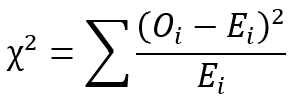

The degrees of freedom were calculated using the formula:


The significance level was set at α = .05. The null hypothesis (H₀) assumed that no statistically significant differences existed between the distributions of professional literacy levels in the experimental and control groups. The alternative hypothesis (H₁) assumed that statistically significant differences existed between the groups following the intervention.
Two statistical hypotheses were formulated, assuming the lowest level of statistical significance (α = 0.05).
H0: The dynamics of the levels of formation of professional literacy of students through the integration of digital technologies in higher education institutions in the experimental groups are not more significant than in the control groups.
H1: The dynamics of the levels of formation of professional literacy of students through the integration of digital technologies in higher education institutions in the experimental groups are more significant than in the control groups.

Let us move on to the analysis of the experimental results.
At the formative stage of the study, we offered EG students a developed system and pedagogical conditions to develop students' professional literacy through the integration of digital technologies into higher education institutions. The CG studied according to the standard education system.
The results obtained are presented in the following tables.
Table 4.
Dynamics of the levels of formation of students' professional literacy through the integration of digital technologies into higher education institutions according to the motivational criterion (formative stage)

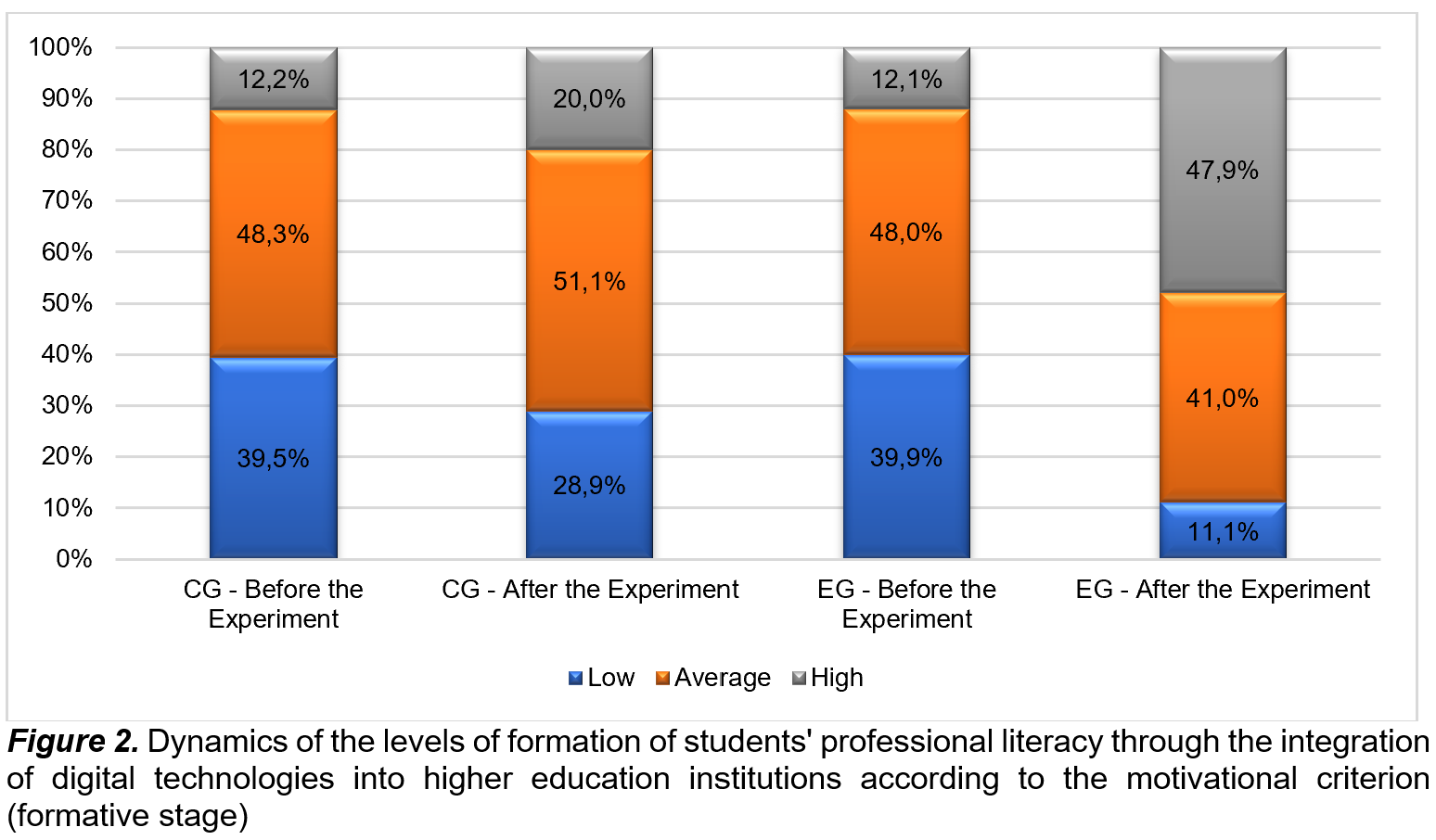
Analysis of the dynamics of students' professional literacy formation levels through the integration of digital technologies, using a motivational criterion, showed positive changes in the experimental group compared to the control group.
Next, we studied the characteristics of indicators of the formation of students' professional literacy through the integration of digital technologies, using the content-information criterion.
The results obtained are shown in Table 5.
Table 5.
Dynamics of the levels of formation of students' professional literacy through the integration of digital technologies in higher education institutions according to the content-information criterion (formative stage)

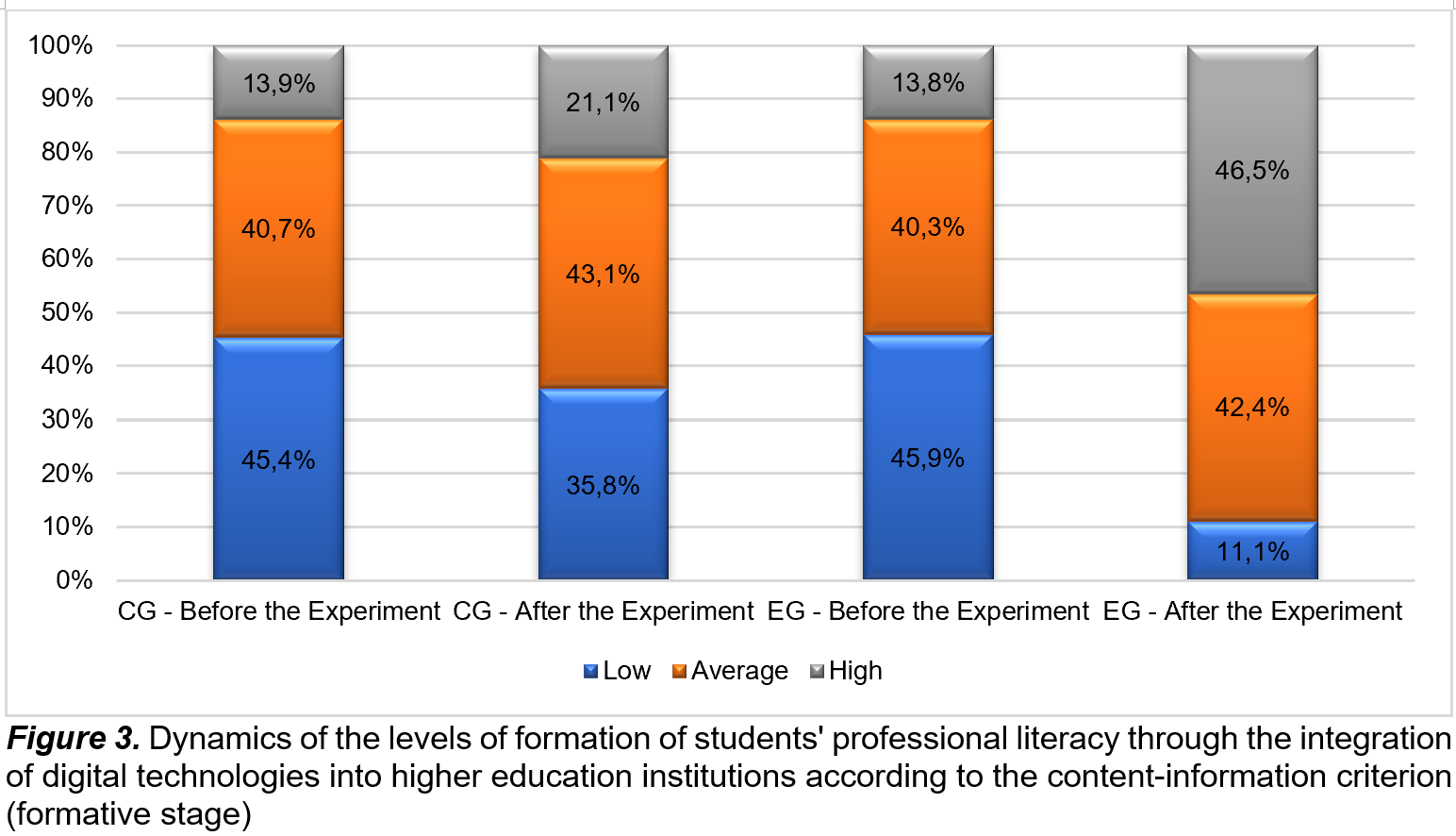
Analysis of the dynamics of students' professional literacy formation levels through the integration of digital technologies into higher education institutions, according to the content-information criterion, showed noticeable positive changes compared to the control group, specifically in the experimental group.
The study's results evidence the effectiveness of the pedagogical conditions and the system.
The next stage of our study was to determine the features of the formation of students' professional literacy through the integration of digital technologies into higher education institutions according to the activity criterion.
Table 6.
Dynamics of the levels of formation of students' professional literacy through the integration of digital technologies into higher education institutions according to the activity criterion (formative stage)

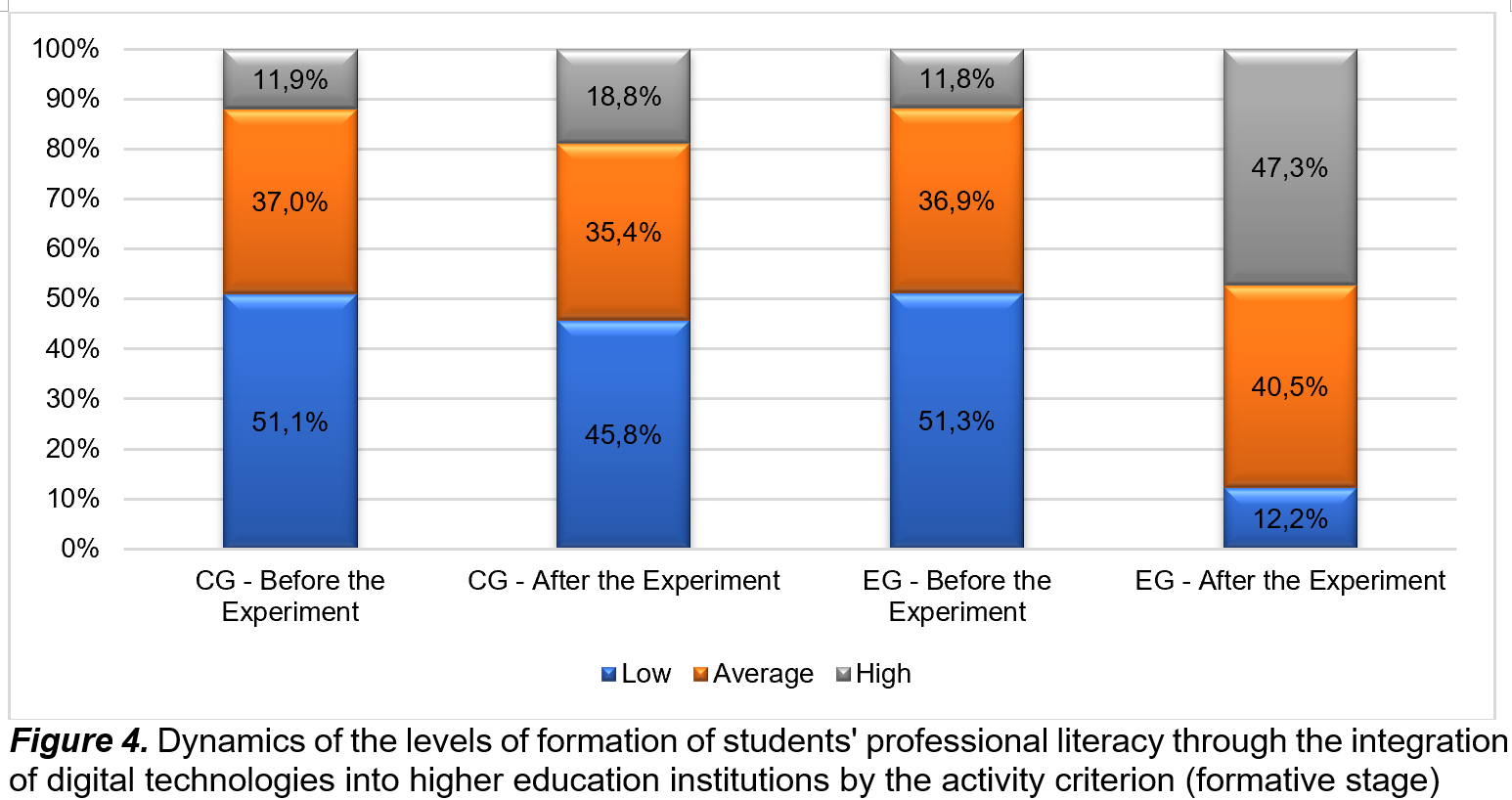
To evaluate the effectiveness of the intervention, Pearson’s χ² test was applied to compare the distributions of professional literacy levels between the experimental and control groups after the formative stage.
For the motivational criterion, statistically significant differences were identified between the groups, χ²(2) = 39.05, p < .001, Cramer's V = 0.32, indicating a moderate effect size.
For the content-information criterion, the analysis also revealed statistically significant differences, χ²(2) = 42.83, p < .001, Cramer's V = 0.34, demonstrating a moderate effect of the intervention.
The largest differences were observed for the activity criterion, where Pearson’s test showed χ²(2) = 61.07, p < .001, Cramer's V = 0.40, indicating a moderate-to-large effect size.
Overall, the findings demonstrate that students in the experimental group achieved significantly higher levels of professional literacy than students in the control group across all assessed criteria. The obtained effect sizes confirm that the integration of digital technologies had not only statistical significance but also practical educational value.
Table 7.
The distributions of professional literacy levels between the experimental and control groups after the formative stage.

The statistical findings presented in Table 7 provide empirical confirmation of the effectiveness of the intervention. While descriptive percentages indicate substantial improvements in the experimental group, the chi-square analysis demonstrates that these differences are unlikely to have occurred by chance. The moderate effect sizes obtained for the motivational (V = 0.32) and content-information (V = 0.34) criteria, together with the moderate-to-large effect size for the activity criterion (V = 0.40), suggest that the intervention had not only statistical significance but also meaningful practical value for the development of students’ professional literacy.
The obtained χ² values exceeded the critical value for df = 2 (χ²crit = 5.99, α = .05), indicating statistically significant differences between the experimental and control groups for all assessed criteria. Since all p-values were below .001, the null hypothesis was rejected and the alternative hypothesis was accepted.
The findings of this study demonstrate that the integration of digital technologies into the educational process contributes significantly to the development of professional literacy among higher education students. Statistically significant differences between the experimental and control groups across all assessed criteria confirm the effectiveness of the proposed pedagogical conditions and digital learning environment.
The obtained results are consistent with previous studies highlighting the positive influence of digital technologies on students’ professional development. In particular, the findings support the conclusions of Yoshida et al. (2022), who reported that blended and technology-enhanced learning environments promote cognitive development, self-regulation, and professional skill acquisition. Similarly, the present results align with the conclusions of Sancho-Cantus et al. (2023), who demonstrated that digitally supported learning activities facilitate the development of adaptability, problem-solving abilities, and professional competencies required in contemporary educational and professional contexts.
The substantial improvements observed in the experimental group also support the arguments of Chaka (2023) and Prasetya et al. (2025), who emphasized that artificial intelligence, virtual environments, and digital educational ecosystems create opportunities for personalized learning and enhanced professional preparation. The increase in high-level indicators across motivational, content-information, and activity criteria suggests that digital technologies influence not only students’ knowledge acquisition but also their engagement, self-directed learning, and practical application of professional skills.
At the same time, the present findings extend existing research by examining professional literacy as a multidimensional construct integrating motivational, cognitive, informational, and practical dimensions. While many previous studies have focused primarily on digital competence or AI literacy, the current study demonstrates that digital technologies may contribute to broader educational outcomes when implemented within a structured pedagogical framework. Therefore, the findings partially address the research gap identified in the literature regarding the integrated development of professional literacy in digitally enriched educational environments.
Several factors may explain the positive outcomes observed in the experimental group. First, the combination of digital platforms, virtual laboratories, AI-based tools, and interactive technologies provided students with greater opportunities for active learning and practical engagement. Second, personalized learning trajectories and continuous access to educational resources may have enhanced students’ motivation and autonomy. Third, the integration of collaborative and project-based activities likely contributed to the development of higher-order thinking skills and professional problem-solving abilities.
However, alternative explanations should also be considered. Improvements may have been partially influenced by increased student motivation associated with participation in an innovative educational intervention (Hawthorne effect) or by differences in instructor engagement during the implementation process. Furthermore, because the study employed a quasi-experimental design without random assignment, causal interpretations should be made cautiously.
Conclusions
The study investigated the effectiveness of integrating digital technologies into the development of professional literacy among higher education students and experimentally verified the pedagogical conditions supporting this process. Professional literacy was conceptualized as a multidimensional construct comprising motivational, content-information, and activity components.
The findings demonstrated that the implementation of digital platforms, artificial intelligence tools, virtual laboratories, VR/AR technologies, and interactive learning environments contributed to statistically significant improvements in students’ professional literacy. Following the intervention, the proportion of students with a high level of professional literacy in the experimental group increased from 12.1% to 47.9% according to the motivational criterion, from 13.8% to 46.5% according to the content-information criterion, and from 11.8% to 47.3% according to the activity criterion. Pearson’s chi-square analysis confirmed significant differences between the experimental and control groups for all assessed criteria: motivational criterion, χ²(2) = 39.05, p < .001, Cramer's V = 0.32; content-information criterion, χ²(2) = 42.83, p < .001, Cramer's V = 0.34; activity criterion, χ²(2) = 61.07, p < .001, Cramer's V = 0.40. These results indicate moderate to moderate-to-large practical effects of the intervention.
The theoretical contribution of the study lies in expanding the understanding of professional literacy as an integrated construct that combines motivational, cognitive, informational, and practical dimensions within digitally enriched educational environments. The study also contributes to the growing body of research examining the pedagogical potential of digital technologies beyond the development of digital competence alone.
The practical significance of the findings is associated with the development of pedagogical conditions that can be implemented in higher education institutions to support students’ professional preparation. The proposed approach may be used to enhance educational programmes through the integration of artificial intelligence, virtual laboratories, digital learning platforms, and personalized learning trajectories.
Several limitations should be acknowledged. The study employed a quasi-experimental design without random assignment, which limits causal interpretation of the findings. The sample was restricted to students from a limited number of higher education institutions, potentially affecting the generalizability of the results. In addition, the absence of longitudinal follow-up measurements does not allow conclusions regarding the long-term sustainability of the observed effects.
Future research should investigate the long-term impact of digital technology integration on professional literacy development, compare the effectiveness of specific categories of digital tools, and examine the applicability of the proposed pedagogical framework across different academic disciplines, educational systems, and cultural contexts.
Bibliographic references
Araújo, A. A., Kalinowski, M., & Baldassarre, M. T. (2025). Embracing experiential learning: Hackathons as an educational strategy for shaping soft skills in software engineering. In 2025 IEEE/ACM 37th International Conference on Software Engineering Education and Training (CSEE&T) (pp. 319–324). IEEE. https://doi.org/10.1109/CSEET66350.2025.00040
Basilotta-Gómez-Pablos, V., Matarranz, M., Casado-Aranda, L.-A., & Otto, A. (2022). Teachers’ digital competencies in higher education: A systematic literature review. International Journal of Educational Technology in Higher Education, 19, 1–16. https://doi.org/10.1186/s41239-021-00312-8
Bhuiyan, B. A., Molla, M. S., & Alam, M. (2021). Managing innovation in technical education: Revisiting the developmental strategies of Politeknik Brunei. Annals of Contemporary Developments in Management & HR, 3(4), 44–57. https://doi.org/10.48550/arXiv.2111.02850
Burneo-Arteaga, P., Lira, Y., Murzi, H., Balula, A., & Costa, A. (2025). Capability-based training framework for generative AI in higher education. Frontiers in Education, 10, 1594199. https://doi.org/10.3389/feduc.2025.1594199
Chaka, C. (2023). Fourth industrial revolution – A review of applications, prospects, and challenges for artificial intelligence, robotics and blockchain in higher education. Research and Practice in Technology Enhanced Learning, 18, 2. https://doi.org/10.58459/rptel.2023.18002
Dringó-Horváth, I., Rajki, Z., & T. Nagy, J. (2025). University teachers’ digital competence and AI literacy: Moderating role of gender, age, experience, and discipline. Education Sciences, 15(7), 868. https://doi.org/10.3390/educsci15070868
Gudonienė, D., Stanevičienė, E., Huet, I., Dickel, J., Dieng, D., Degroote, J., Rocio, V., Butkienė, R., & Casanova, D. (2025). Hybrid teaching and learning in higher education: A systematic literature review. Sustainability, 17(2), 756. https://doi.org/10.3390/su17020756
Hizam, S. M., Akter, H., Sentosa, I., & Ahmed, W. (2023). Digital competency of educators in the virtual learning environment: A structural equation modeling analysis. IOP Conference Series: Earth and Environmental Science, 704(1), 012023. https://doi.org/10.1088/1755-1315/704/1/012023
Knysh, I., Drobin, A., Filimonova, T., Koycheva, T., Kushnir, A., & Kuchai, O. (2024). The use of information technologies in the educational space of Ukraine (on the example of STEAM technologies). Revista Conrado, 20(100), 437–448. https://conrado.ucf.edu.cu/index.php/conrado/article/view/3979
Liu, X., & Zhong, B. (2025). Integrating generative artificial intelligence into student learning: A systematic review from a TPACK perspective. Educational Research Review, 49, 100741. https://doi.org/10.1016/j.edurev.2025.100741
Mejías-Acosta, A., D’Armas Regnault, M., Vargas-Cano, E., Cárdenas-Cobo, J., & Vidal-Silva, C. (2024). Assessment of digital competencies in higher education students: Development and validation of a measurement scale. Frontiers in Education, 9, 1497376. https://doi.org/10.3389/feduc.2024.1497376
Moundy, K., Chafiq, N., & Talbi, M. (2025). Hybrid skills: Analysis of digital soft skills development in students during digital literacy learning through a digital textbook and flipped classroom. Journal of Educators Online, 22(1). https://doi.org/10.9743/JEO.2025.22.1.13
Prasetya, F., Fortuna, A., Samala, A. D., Latifa, D. K., Andriani, W., Gusti, U. A., Raihan, M., Criollo-C, S., Kaya, D., & Cabanillas García, J. L. (2025). Harnessing artificial intelligence to revolutionize vocational education: Emerging trends, challenges, and contributions to SDGs 2030. Social Sciences & Humanities Open, 11, 101401. https://doi.org/10.1016/j.ssaho.2025.101401
Sancho-Cantus, D., Cubero-Plazas, L., Botella Navas, M., Castellano-Rioja, E., & Cañabate Ros, M. (2023). Importance of soft skills in health sciences students and their repercussion after the COVID-19 epidemic: A scoping review. International Journal of Environmental Research and Public Health, 20(6), 4901. https://doi.org/10.3390/ijerph20064901
Saúde, S., Barros, J., & Almeida, I. (2024). Impacts of generative artificial intelligence in higher education: Research trends and students’ perceptions. Social Sciences, 13(8), 410. https://doi.org/10.3390/socsci13080410
Tan, Q. (2025). Reimagining teacher development in the era of generative AI: A scoping review. Teaching and Teacher Education, 168, 105236. https://doi.org/10.1016/j.tate.2025.105236
Yoshida, Y., Uno, T., Tanaka, H., Hakosaki, I., Shigeta, K., & Yano, R. (2022). Cognitive changes with psychomotor skill acquisition through blended learning among nursing students: A qualitative study. Nurse Education in Practice, 65, 103486. https://doi.org/10.1016/j.nepr.2022.103486
Yulin, N., & Danso, S. D. (2025). Assessing pedagogical readiness for digital innovation: A mixed-methods study. arXiv. https://doi.org/10.48550/arXiv.2502.15781

Este artículo no presenta ningún conflicto de intereses. Este artículo está bajo la licencia Creative Commons Atribución 4.0 Internacional (CC BY 4.0). Se permite la reproducción, distribución y comunicación pública de la obra, así como la creación de obras derivadas, siempre que se cite la fuente original.