
Original Article
Eduweb, 2026, abril-junio, v.20, n.2. ISSN: 1856-7576
Doi: https://doi.org/10.46502/issn.1856-7576/2026.20.02.17
AI-based adaptive systems and personalized learning: The moderating role of Artificial Intelligence on university student engagement
Tetiana Mazurok
Professor, Head of the Deparnment of Applied Mathematics and Informatics, The Educational and Scientific Inststute of Natural and Mathematical Sciences, Informatics and Management
South Ukrainian National Pedagogical University named after K.D. Ushynsky,
Odesa, Ukraine.
https://orcid.org/0000-0002-7829-4446
Roman Gakh
Associate professor, Department of Physical Rehabilitation and Sports, West Ukrainian National University, Ternopil, Ukraine.
https://orcid.org/0000-0002-3937-2210
Kateryna Oleksandrenko
Professor, Head of Department of Foreign Languages, Khmelnytskyi National University, Khmelnytskyi, Ukraine.
https://orcid.org/0000-0001-9735-3715
Tetiana Nikolaieva
Associate Professor, Department of Information Activity and Public Relations , Kyiv National University of Culture and Arts, Kyiv, Ukraine.
https://orcid.org/0000-0002-4642-1578
Anzhelika Solodka
Professor, Department of Translation, Admiral Makarov National University of Shipbuilding, Mykolaiv, Ukraine.
https://orcid.org/0000-0003-1703-7996
Cómo citar:
Mazurok, T., Gakh, R., Oleksandrenko, K., Nikolaieva, T., & Solodka, A. (2026). AI-based adaptive systems and personalized learning: The moderating role of Artificial Intelligence on university student engagement. Revista Eduweb, 20(2), 288-307. https://doi.org/10.46502/issn.1856-7576/2026.20.02.17
Recibido: 01/05/26 Aceptado: 30/06/26
Resumen
El estudio tuvo como objetivo determinar el impacto de los sistemas de aprendizaje personalizado adaptativo basados en tecnologías de IA en los indicadores de interacción del alumnado con el entorno educativo digital. El estudio se llevó a cabo mediante un enfoque cuantitativo con la participación de 198 estudiantes de instituciones de educación superior. La recopilación de datos se realizó mediante un cuestionario estructurado. Para el análisis se utilizaron estadísticas descriptivas, análisis de correlación y regresión, así como análisis de varianza unidireccional. Los resultados indicaron que el nivel general de interacción del alumnado fue superior a la media (M = 3,87, DE = 0,64). Se encontró que la personalización (β = 0,42, p < 0,001) y la funcionalidad de la IA (β = 0,36, p < 0,001) fueron predictores significativos de la interacción. Además, se halló un efecto de interacción significativo (β = 0,21, p < 0,01). Los resultados del análisis de varianza (ANOVA) indicaron diferencias entre los grupos con distintos niveles de uso de IA (F = 24,67, p < 0,001). Por lo tanto, la novedad del estudio radicó en identificar el papel moderador de la IA en la mejora del efecto del aprendizaje personalizado.
Palabras clave: aprendizaje personalizado, entorno de aprendizaje digital, interacción del estudiante, inteligencia artificial, sistemas de aprendizaje adaptativo.
Abstract
The study aimed to determine the impact of adaptive personalized learning systems based on AI technologies on the indicators of student interaction with the digital educational environment. The study was implemented on the basis of a quantitative approach with the participation of 198 students of higher education institutions. Data collection was carried out using a structured questionnaire. Descriptive statistics, correlation and regression analysis, as well as one-way analysis of variance, were used for analysis. The results indicated that the overall level of student interaction was above average (M = 3.87, SD = 0.64). It was found that personalization (β = 0.42, p < 0.001) and AI functionality (β = 0.36, p < 0.001) became significant predictors of interaction. In addition, a significant interaction effect was found (β = 0.21, p < 0.01), which indicated an increase in the impact of personalization under conditions of high levels of AI integration. The results of ANOVA indicated the presence of differences between groups with different levels of AI use (F = 24.67, p < 0.001). Therefore, the novelty of the study was to identify the moderating role of AI in enhancing the effect of personalized learning.
Keywords: personalized learning, digital learning environment, student interaction, artificial intelligence, adaptive learning systems.
Introduction
The active development of artificial intelligence technologies has changed the modern system of higher education, however, and in the direction of the transition from standardized learning to personalized models. Accordingly, given the active digitalization of education, adaptive learning systems that are able to analyze the individual characteristics of students, their learning behavior, and performance have become particularly relevant. Personalized learning, supported by AI algorithms, is interpreted in the scientific literature as one of the important tools for improving the quality of education, creating an individualized learning experience, and increasing student engagement in the learning process (Chacón-Rivadeneira, et al., 2024). However, despite the significant number of studies devoted to the use of AI in education, scientists have pointed to a number of contradictions and limitations. In particular, some scientists have recognized the effectiveness of adaptive platforms in improving academic performance and developing students' cognitive skills (Fernández Miranda et al., 2024). However, the issue of student engagement in AI-based environments remains insufficiently researched, especially in the relationship between content personalization. At the same time, many current studies focus on the technical characteristics of adaptive systems or are even limited to the analysis of performance without taking into account the mechanisms of student engagement (Eltharif & Abdalla, 2025).
Thus, the existing research gap is determined by the lack of empirical studies that would integrate the analysis of adaptive personalization algorithms with the measurement of levels of behavioral engagement of students in real educational settings. In addition, it has not been sufficiently studied how different components of adaptive systems, for example, dynamic content, individualized feedback, algorithmic prediction of success, can affect different aspects of engagement.
Therefore, the purpose of the study is to determine the effectiveness of adaptive personalized learning systems based on artificial intelligence technologies in increasing the level of student engagement and the intensity of their interaction with the digital educational environment.
To achieve this goal, the following research questions were formulated:
RQ1. What is the impact of the use of AI-oriented adaptive systems on student engagement indicators in the digital educational environment?
RQ2. How do the functional components of adaptive systems (personalized content, automated feedback, recommendation algorithms) affect the intensity of students' educational interaction with the platform?
RQ3. Is there a relationship between the level of personalization of the learning environment and indicators of digital learning activity?
RQ4. Does the level of AI tool integration into the educational process affect students' effectiveness in interacting with the educational platform?
Therefore, the scientific novelty of the study will lie in the combination of the adaptive learning approach with a multidimensional model of student engagement, which will allow us to indicate the effectiveness of AI technologies and determine the main mechanisms of their impact on the educational experience of students.
The rest of this article is structured as follows. The following section provides a review of the relevant literature on AI in education, adaptive learning systems, and student engagement in digital learning environments. The methodology section describes the study design, participants, instruments, data collection procedures, and statistical methods used in the study. The results section presents empirical evidence on the impact of AI-based adaptive learning systems on student engagement and engagement with digital learning environments. The discussion section interprets the results. The conclusions summarize the findings and outline directions for future research.
Theoretical Framework or Literature Review
Digital Transformation and AI in Higher Education
The digital development of higher education is one of the leading directions in the development of educational systems. In particular, modern scientists have indicated that integrating digital technologies and artificial intelligence (AI) can affect changes in the logic of organizing the educational process. The authors emphasized that the introduction of AI technologies makes it possible to move from standardized models to adaptive and personalized educational environments (Bond et al., 2025; Benavides et al., 2020; Argüelles-Cruz et al., 2021). In this space, digital transformation is defined as an important technological update and systemic change in the educational ecosystem.
The authors indicated that the introduction of digital technologies in higher education is accompanied by a number of challenges and opportunities. In particular, studies have indicated that educational institutions face problems of infrastructure, digital inequality, teacher training and integration of innovative technologies into the educational process (Abdelkader et al., 2025; Acevedo & Soto-Bubert, 2021). At the same time, the digital change has opened up various opportunities for the modernization of education. The authors prove that the use of AI for automation, personalization allows to significantly optimize educational processes.
Global studies indicate that the implementation of AI in higher education is at the stage of active formation. At the same time, the authors have proven that its effectiveness depends on the level of technological readiness of institutions and digital competencies of teachers (Barrera & Azeez, 2024; Aguilar-Cruz & Salas-Pilco, 2025). The authors also drew attention to the importance of professional development of teachers and ethical aspects of the use of AI. In particular, the topic of digital competencies of all participants in the educational process is very popular in modern literatura (Marcus-Quinn, 2025; Martín Párraga et al., 2022). The authors emphasized the importance of developing these skills for future generations of teachers (Masoumi & Noroozi, 2023).
Opportunities for personalized learning, adaptive systems and educational analytics
The scientific literature has identified personalized learning as an important tool for the digital transformation of education. Researchers have indicated that AI makes it possible to form various adaptive learning models based on the use of algorithms that analyze student behavioral data and form individualized educational trajectories (Cantú-Ortiz et al., 2020).
In particular, the authors also determined that adaptive systems can:
automatically change the complexity of educational content. This leads to the provision of personalized recommendations. The authors also indicate in their works that these technologies allow generating individualized feedback and predicting learning outcomes.
At the same time, most studies focus on the conceptual description of such systems or their individual functional characteristics. Accordingly, this has limited the understanding of their real impact on the interaction of students with the digital learning environment.
A separate area of the research is related to the use of learning analytics for the analysis of educational processes. The authors recognized that learning data analytics makes it possible to assess student behavior in the digital environment (Avila et al., 2022; McDonald et al., 2025).
Studies have also indicated that the capabilities of learning analytics can be used to support feedback and decision-making in the educational process. At the same time, in most works, these indicators are defined as separate performance metrics, without integration into a model that would consider the level of personalization of the learning environment (Kong et al., 2024).
In general, the authors indicated that AI systems can increase the effectiveness of educational programs, but their implementation requires a systemic approach (Hernández-Leal et al., 2021; Ibáñez Apolo et al., 2026).
At the same time, the literature review indicated that most studies focus on individual aspects of AI application, in particular teacher training or digital competencies. However, as can be seen from the review, the issue of student interaction with adaptive systems remains insufficiently researched.
The analysis of the above studies allows us to identify several key limitations. First, a significant part of the works described digital transformation and AI at the conceptual level, without sufficient empirical confirmation of their impact on user behavior. Second, research on adaptive systems often focuses on individual components and does not take into account their interaction. Third, learning analytics indicators are used fragmentarily and are not integrated into holistic analytical models.
Thus, the existing research gap consisted in the lack of an approach that would combine: the level of personalization of adaptive AI systems; their functional components; indicators of student interaction with the digital environment.
Theoretical Framework
The theoretical framework of this study is determined by the integration of approaches to digital transformation of education, adaptive learning and learning analytics. All these aspects together have formed an important analytical basis for studying the impact of artificial intelligence on the interaction of students with the digital learning environment.
Within the concept of digital transformation of higher education, researchers have determined that the effectiveness of educational systems is predicted by the level of integration of digital technologies and their ability to optimize learning processes (Benavides et al., 2020; Argüelles-Cruz et al., 2021). In this space, artificial intelligence plays the role of a technological driver that ensures the automation and personalization of learning.
The second theoretical component is the adaptive learning approach, according to which the educational environment should dynamically change according to the behavioral characteristics of the user (Cantú-Ortiz et al., 2020).
The third component is the learning analytics approach, which made it possible to operationalize user interaction through measurable indicators. Within this approach, the effectiveness of a digital learning environment is determined through user activity indicators: frequency of interaction, time in the system, and task completion (Avila et al., 2022; Pichkur et al., 2023).
Based on the integration of these approaches, the study formed a model that includes three main constructs:
Within the theoretical model, it is assumed that:
Thus, the model was causal in nature and made it possible to test the impact of adaptive AI solutions on the behavioral parameters of the use of educational platforms.
The proposed theoretical framework provided an analytical basis for further research and determined the logic of the selection of variables.
Methodology
Research design
The study used a quantitative design aimed at determining the impact of adaptive personalized learning systems based on artificial intelligence technologies.
The study was a cross-sectional empirical analysis. This type made it possible to determine the relationships between the level of personalization of the system, its functional characteristics and indicators of digital learning activity of students.
Methodologically, the study is based on the assumption that:
The parameters of the adaptive system (personalization and AI functionality) are independent variables;
Indicators of user interaction (frequency of use, activity, task performance) are dependent variables.
Data collection was implemented on the basis of a structured toolkit that combined self-assessment of the use of the digital platform and indicators of interaction with the educational environment. The obtained data were processed using statistical analysis methods.
Participants
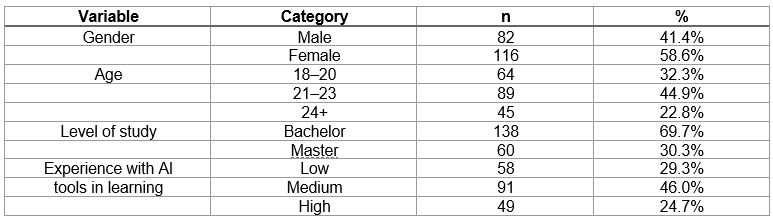
The study involved 198 students from higher education institutions who used digital educational platforms with elements of adaptive learning and artificial intelligence during the 2024-2025 academic year. The sample was formed on the basis of purposive sampling and using elements of the available sample.
The inclusion criteria for the sample included:
experience in using digital educational platforms;
regular interaction with online courses or educational systems;
use of tools that contained elements of adaptive learning or AI
The exclusion criteria were:
no experience with digital educational platforms;
occasional or irregular use of educational systems;
incomplete completion of the questionnaire.
The sample included students of different levels of training (bachelor's and master's). This made it possible to ensure data variability.
In order to understand whether the sample was sufficient, the classical approaches to determining the sample size for multivariate statistical analysis were used. In particular, according to the rule proposed by Green (1991), the minimum sample size for multiple regression is determined by the formula: N ≥ 50 + 8m, where m is the number of independent variables.
In this study, the model included 2 main independent variables (the level of personalization and the functional characteristics of the AI system). Accordingly, the minimum required sample size was at the level of N ≥ 66. Thus, the actual sample size (n = 198) exceeded the minimum required level. This ensured sufficient statistical power of the analysis (see Table 1).
Table 1.
Demographic characteristics of participants (n = 198)
Procedure and instruments
The study was conducted during the 2024–2025 academic year and was aimed at determining the effectiveness of the model of using adaptive personalized learning systems based on artificial intelligence technologies in a real educational environment.
As part of the study, an AI-oriented adaptive learning model was implemented, which involved the integration of digital tools into the students' learning process. This model included the following key components:
the use of recommendation systems to individualize educational content;
the use of automated feedback tools;
adaptation of educational tasks according to the level of student training;
the use of digital platforms that recorded user interaction indicators (See Figure 1).
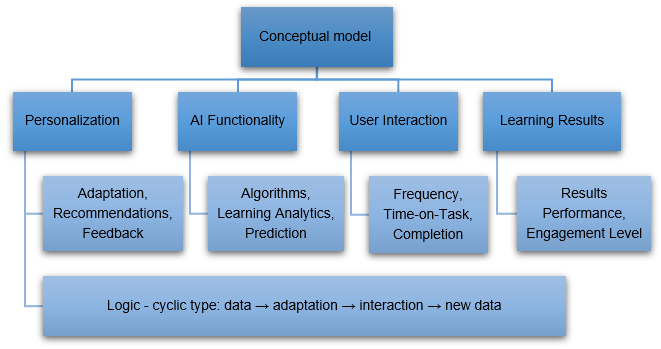
Figure 1. Conceptual model of AI-based adaptive learning system.
Within the framework of the study, various digital tools with elements of artificial intelligence were used in the educational process, ensuring the implementation of adaptive personalized learning.
In particular, the following were used: generative language models, which were used to explain educational material, generate answers, and support the educational process (ChatGPT; ClaudeAI, NotebookLm); automated feedback tools, which provided recommendations for improving task performance;
recommendation systems, which offered educational materials according to the level of students' training;
platforms with learning analytics elements, which made it possible to track user interaction indicators (frequency of login, time in the system, task completion).
In addition, digital educational environments integrated with adaptive functions were used, which ensured:
individualization of educational content;
automatic assessment;
collection and analysis of data on students' educational activity.
The research procedure included the following stages:
Development and implementation of an adaptive learning model based on the use of AI tools in the educational process;
Integration of digital tools into the courses that students took during the academic year;
Systematic use of the adaptive environment by students, which allowed accumulating data on their interaction with the platform;
Collection of empirical data at the end of the implementation period using online tools.
The main environment for implementing the educational process was a digital learning management platform (LMS), which was integrated with artificial intelligence and learning analytics tools. The study used a single digital infrastructure available to all participants, which ensured unified learning conditions.
Artificial intelligence tools were integrated into training courses as auxiliary and adaptive components. In particular:
All study participants had access to the same set of tools, however, the level of their actual use was different, which made it possible to classify students by the level of AI integration.
The study was conducted in accordance with the ethical principles of educational research and the provisions of the Declaration of Helsinki. Participation in the study was voluntary, and all participants were informed about the purpose of the study, the data collection procedures, and their right to withdraw from the study at any stage without any consequences. Informed consent was obtained from all participants before data collection. Confidentiality and anonymity of respondents were ensured throughout the study, and all data collected were processed solely in aggregate form for research purposes. No personal information was collected or disclosed.
Data processing and validation
Thus, the study made it possible to determine the effectiveness of the proposed model not in the real educational process.
A questionnaire was used to collect empirical data, which was formed1 according to the theoretical model of the study.
The questionnaire consisted of three main blocks:
Personalization of the learning environment (Personalization Level)
It was assessed through indicators of content adaptation, relevance of recommendations and quality of automated feedback.
Example statement:
“The learning platform offered materials that correspond to my level of training.”
AI functionalities
Included an assessment of the effectiveness of algorithms, the use of analytics
Example statement:
“The system provided useful recommendations to improve my learning.”
User interaction
It was assessed based on the intensity of platform use, task completion and activity in the learning environment.
Example statement:
“I regularly use the digital platform to complete learning tasks.”
All statements were assessed on a five-point scale
(1 – completely disagree, 5 – completely agree).
To verify the reliability of the instrument, an analysis of the internal consistency of the scales was conducted using the Cronbach's coefficient.
The results of the analysis indicated a high level of reliability of the measurements:
for the personalization of the learning environment scale — α = 0.88;
for the AI functionality scale — α = 0.91;
for the user interaction scale — α = 0.86.
The overall reliability coefficient of the instrument was α = 0.89.
Data analysis
Data analysis was implemented based on the use of quantitative statistical methods with further interpretation of the results obtained in the context of the functioning of adaptive AI systems.
First, a descriptive analysis was conducted, which made it possible to determine the general characteristics of the sample and the distribution of the values of the studied variables. Later, a correlation analysis was conducted to identify the relationships between the level of personalization, AI functionalities and user interaction indicators. This made it possible to determine the relationship between the technological characteristics of the system and the behavioral indicators of students.
At the next stage, a multiple regression analysis was conducted. This analysis was aimed at determining the relative contribution of independent variables to explaining the variability of the dependent variable. This made it possible to establish the main components of the adaptive system that had the greatest impact on the interaction of students with the digital environment.
In addition to statistical analysis, the results were interpreted taking into account the logic of the functioning of adaptive systems.
The statistical significance of the results was determined at the p < 0.05 level.
Results and Discussion
Impact of AI-Based Adaptive Learning Systems on Student Interaction (RQ1)
At the first stage of the analysis, a descriptive and inferential analysis of the main study variables was conducted. This analysis consisted of determining the central tendencies, variability of indicators and assessing the shape of the data distribution.
The analysis of central tendencies showed that all the studied variables have values above the average, in particular: the level of personalization (M = 3.91, SD = 0.59), AI functionality (M = 4.02, SD = 0.57) and user interaction (M = 3.87, SD = 0.64). At the same time,
the variability indicators fluctuated within 0.57–0.64. this determined the relative homogeneity of the respondents' answers, which indicates the stability of the data obtained.
The analysis of the distribution of variables indicated that the values of asymmetry (skewness varies from -0.45 to -0.38) are slightly negative. At the same time, the kurtosis indicators (kurtosis within 0.19–0.25) are close to zero. This indicator indicates the absence of significant deviations from the normal distribution.

To determine the impact of AI-Based Adaptive Learning Systems, an analysis of the overall level of student interaction with the digital learning environment in the context of the use of adaptive AI systems was conducted.
The results of descriptive statistics indicated that the overall level of student interaction with the platform was above average (M = 3.87, SD = 0.64). This indicator determined the active use of the digital learning environment in the context of the implementation of adaptive technologies.
In particular, the indicator of the frequency of platform use was M = 3.95 (SD = 0.71); completion of educational tasks - M = 3.82 (SD = 0.68); overall activity in the environment - M = 3.84 (SD = 0.66) (see Figure 2).

To test the impact of adaptive systems on the level of interaction, a correlation analysis was conducted between the integral indicator of the use of AI systems and the level of student interaction.
The results indicated a significant positive relationship between the use of adaptive AI systems and student engagement (r = 0.62, p < 0.01), indicating a medium-strong level of correlation.
In addition, the results of the regression analysis confirmed that the use of adaptive systems became a significant predictor of student engagement (β = 0.58, p < 0.001).
Influence of Adaptive System Components on Interaction (RQ2 and RQ3)
The study also determined the influence of individual components of the adaptive system — personalization of the learning environment and AI functionalities — on the indicators of student interaction with the digital learning environment.
The results of descriptive statistics indicated that both components received relatively high scores among respondents: the level of personalization (M = 3.91, SD = 0.59) and AI functionalities (M = 4.02, SD = 0.57). Correlation analysis indicated the presence of positive relationships between the variables under study.
In particular, personalization of the learning environment had a strong relationship with user interaction (r = 0.65, p < 0.01) (see Table 3).
Table 3.
Correlation matrix between personalization, AI functionality, and user interaction

To determine the relative contribution of each of the components, a multiple regression analysis was conducted. The results indicated that both variables are statistically significant predictors of student interaction.
Personalization of the learning environment had a significantly greater impact (β = 0.42, p < 0.001) compared to AI functionality (β = 0.36, p < 0.001). The model explained 41% of the variation in interaction scores (R² = 0.41). This indicator indicated a high level of explanatory power. To determine the most effective component, an analysis of the relative effectiveness of the main components of the adaptive AI system in explaining the variability of student interaction indicators was carried out. In particular, personalization of the learning environment had the highest level of influence (β = 0.42, p < 0.001; B = 0.48). This means that content adaptation, individualized recommendations had a significant impact on the frequency of platform use, task completion, and overall level of activity.
t the same time, AI functionalities also had a statistically significant impact (β = 0.36, p < 0.001; B = 0.39), but their contribution is somewhat lower compared to personalization.
Multicollinearity analysis showed that the VIF value for both variables did not exceed 2 (VIF = 1.34), which indicates the absence of a multicollinearity problem and indicated the correctness of the constructed model. Overall, the model had a high level of explanatory power (R² = 0.41), which means that 41% of the variation in user interaction is explained by the variables included in the model. This indicates the significance of the studied components in the structure of the adaptive learning environment (see Table 4).

Effect of AI Tool Integration Level on User Interaction (RQ4)
To determine the impact of the level of integration of AI tools on the effectiveness of students' interaction with the digital learning platform, a comparative analysis was conducted between user groups with different levels of AI use.
Participants were classified into three groups according to the intensity of use of AI tools: low, medium and high levels of integration. The results of descriptive statistics indicated a clear positive dynamics of interaction indicators depending on the level of AI integration (see Figure 2).
In particular, the average interaction value was
for the group with a low level of integration — M = 3.45 (SD = 0.72);
for a medium level — M = 3.88 (SD = 0.61);
for a high level — M = 4.21 (SD = 0.55).
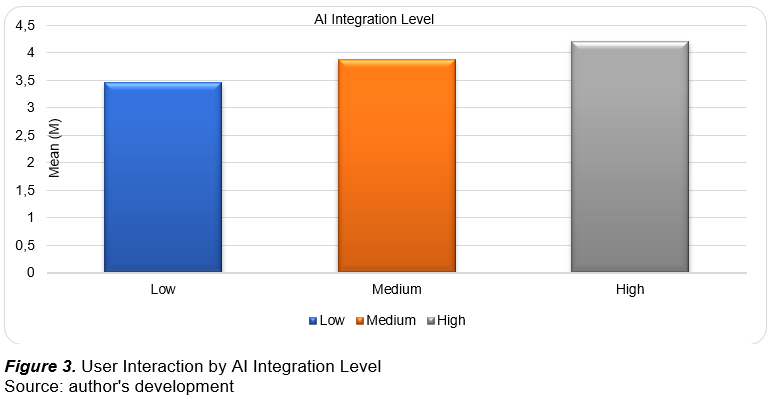
As shown in Figure 3, with an increase in the level of AI integration, a consistent increase in student interaction indicators is noticeable. This indicated the presence of a clear trend dependence.
A one-way analysis of variance (ANOVA) was used to test the significance of the differences. The results showed a statistically significant effect of the level of AI integration on student interaction
(F = 24.67, p < 0.001) (see Table 5).
Table 5.
ANOVA results for AI integration level

Besides, further post hoc analysis (Tukey HSD) indicated that:
Students with a high level of integration had higher interaction scores compared to the other groups (p < 0.01);
The difference between the medium and low levels is also statistically significant (p < 0.05).
It is important to note that the decrease in standard deviation in the high level of integration group (SD = 0.55) indicated a more stable and homogeneous user behavior. This may indicate an effective adaptation of the system to the needs of students.
To determine the interaction between the level of personalization of the learning environment and the level of AI integration in explaining the indicators of student interaction with the digital platform.
To test the moderation effect, a regression model was built with the inclusion of an interaction term. The independent variables (personalization level and AI integration level) were pre-centered (mean-centering) to reduce multicollinearity and correctly interpret the interaction coefficients. The following were added to the model:
The analysis was performed within the framework of multiple regression according to the moderation analysis approach (see Table 6).
Table 6.
Moderation analysis: interaction effect of personalization and AI integration on user interaction

For this purpose, an interaction model was formed, which included the main effects (personalization, AI integration) and the interaction background (Personalization × AI Integration). The modeling results (see Figure 4) indicated the presence of a significant interaction effect (β = 0.21, p < 0.01). This determined the moderating role of the level of AI integration.
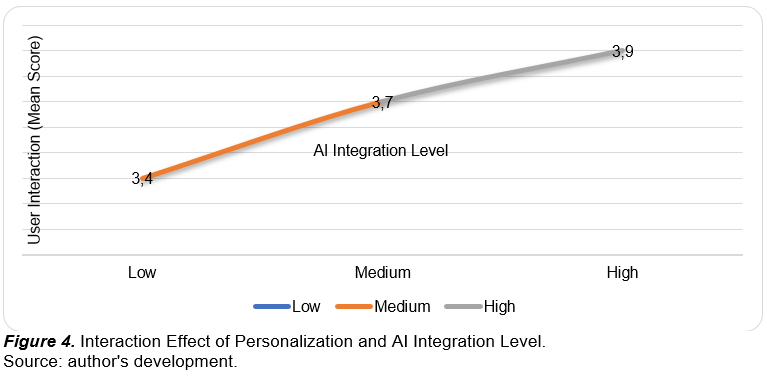
As shown in Figure 4, the slope of the regression lines differs depending on the level of AI integration. Accordingly, in the group with a low level of integration, this relationship was significantly weaker. Therefore, the level of AI integration acted as a moderator in the relationship between learning personalization and student interaction.
Therefore, the impact of personalization of the learning environment on student interaction is not constant but varies depending on the level of AI integration in the learning process. At a low level of AI integration, the personalization effect is moderate and limited to basic content adaptation. At the same time, at a high level of AI integration, this effect is significantly enhanced (Barreda Medina, 2025). This indicated a synergistic interaction between the technological and pedagogical components of the system.
The results of the study indicated that the active use of adaptive personalized learning systems based on artificial intelligence technologies had an impact on the indicators of student interaction with the digital educational environment. It was found that the overall level of student interaction was above average. This indicated the effectiveness of the implementation of AI-oriented educational solutions.
These results were consistent with the conclusions of Mualla & Mualla (2024) and Pino Tarragó et al. (2025), who indicated that the digital transformation in higher education has created unique and even new opportunities for improving the efficiency of learning, especially in developing countries. In this sense, the use of AI has acted as the main tool for optimizing educational processes (Pozzo et al., 2024).
The results of correlation and regression analysis also indicated that both personalization and AI functionality have become significant predictors of student interaction. However, it was also found that personalization had a stronger impact. This situation testified to the important role of adaptation of educational content in shaping user activity (Salas-Pilco & Yang, 2022; Serna Gómez et al., 2021; West et al., 2016). This was consistent with the views of other scholars who indicated that the effectiveness of educational innovations depended on the level of adaptability of educational practices.
At the same time, the results of this study expanded existing ideas, as they indicated that the functional capabilities of AI in themselves are not sufficient to ensure a high level of interaction. This confirmed the conclusions of the authors, who indicated that technological accessibility did not guarantee high-quality educational results without proper pedagogical integration (Wong et al., 2019; Yerbabuena Torres et al., 2024).
A particularly important result was the identification of the interaction effect between personalization and the level of AI integration. The data obtained indicated that the impact of personalization was enhanced under conditions of a high level of AI integration. This fact indicated the presence of a synergistic effect. This allowed us to describe AI as a powerful tool that changed the very logic of the educational process.
This result had important theoretical significance, as it clarified the meaning of using AI in education: not as a separate technological element, but as a multiplier of the effectiveness of personalization. A similar approach is partially reflected in the works of Rodríguez-Hernández et al. (2021) and Valdés et al. (2021), in which AI is identified as a significant tool for predicting learning activities. However, this study shows its role in enhancing behavioral indicators of interaction.
In addition, the results of the analysis indicated that users with a high level of interaction had higher rates of both personalization and use of AI functions. This indicates that the effectiveness of a digital learning environment depends on the integrated use of various technological components (Vázquez-Villegas, 2025).
From a practical point of view, the results of the study are important for developers of educational platforms and higher education institutions. They indicate the need to move from the simple implementation of AI to the formation of adaptive systems that combine personalization, analytics and intelligent learning support tools. This is consistent with the conclusions of the authors, who identified the need to integrate AI into curricula to develop modern competencies.
Thus, the results of the study indicated that the effectiveness of digital learning is determined by the level of their integration into the learning process. The identified interaction effect between personalization and AI has opened new prospects for further research in the field of adaptive learning and educational technologies.
However, the study has a number of limitations. In particular, the study had a cross-sectional design, which limited the possibility of establishing causal relationships between variables. Although the identified statistical relationships indicated a significant impact of adaptive AI systems on student interaction, further studies using longitudinal or experimental designs could provide a better understanding of the dynamics of these processes.
In addition, the use of self-assessment tools may be associated with the risk of subjectivity of responses and social desirability effects. In addition, the study did not take into account individual characteristics of students (e.g., level of digital competence or motivation), which may act as additional factors.
However, despite these limitations, the results have important practical implications for the development of digital learning environments and the implementation of AI in higher education.
In particular, the study results indicated that personalization of educational content has become a particularly important factor in increasing student interaction. Thus, in the future, developers of educational platforms should pay special attention to creating adaptive mechanisms that would take into account the individual characteristics of participants.
In addition, it was found that the effectiveness of personalization depends on the level of AI integration. This determined the need for systematic implementation of technologies. Educational institutions should focus on creating integrated systems that combine:
generative AI tools,
recommendation systems,
automated feedback,
educational data analytics.
Conclusions
The study established the impact of adaptive personalized learning systems based on AI technologies on students' interaction with the digital educational environment. It was indicated that the integration of AI into the educational process made it possible to increase student activity, the frequency of use of digital platforms, and the effectiveness of completing educational tasks.
It was established that the personalization of the educational environment and the functionality of AI became significant factors that influenced user interaction. At the same time, personalization had a more pronounced effect. This determined the important role of adapting educational content in shaping student engagement.
A particularly important result is the identification of the interaction effect between the level of personalization and the level of AI integration. The study showed that the impact of personalization increased under conditions of a high level of AI integration.
In addition, it was found that an increase in the level of AI integration is associated with an increase in student interaction indicators. Therefore, the effectiveness of digital learning was determined by the level of its integration into a single adaptive system.
The scientific novelty of the study lies in the identification of the moderating effect of AI in the structure of personalized learning, which allows us to consider artificial intelligence as a factor that enhanced the effectiveness of its main components.
The practical significance of the study lies in the possibility of using the obtained results to develop adaptive educational platforms, modernize curricula, and implement innovative approaches to organizing a digital learning environment.
Bibliographic references
Abdelkader, K., Aki, R., Algabo, M., & Elsherif, N. (2025). Digital Transformation in Higher Education: Challenges and Opportunities in Libyan Higher Institutions. Sharwes Scientific Journal, 6(1), 164–170. https://doi.org/10.26629/ssj.2025.09
Acevedo, R., & Soto-Bubert, A. (2021). Challenges facing higher education institutions in Chile in training learners in entrepreneurship and the future of work. Chile a Case Study. International Journal of Higher Education Mana gement, 08(01). https://doi.org/10.24052/ijhem/v08n01/art-1
Aguilar-Cruz, P. J., & Salas-Pilco, S. Z. (2025). Teachers’ perceptions of artificial intelligence in Colombia: AI technological access, AI teacher professional development and AI ethical awareness. Technology, Pedagogy and Education, 34(2), 219–238. https://doi.org/10.1080/1475939x.2025.2451865
Argüelles-Cruz, A.-J., García-Peñalvo, F.-J., & Ramírez-Montoya, M.-S. (2021). Education in Latin America: Toward the Digital Transformation in Universities. In Radical Solutions for Digital Transformation in Latin American Universities (pp. 93–108). Springer Singapore. https://doi.org/10.1007/978-981-16-3941-8_6
Avila, A.-G. N., Silva Feraud, I. F., Solano-Quinde, L. D., Zuniga-Prieto, M., Echeverria, V., & De Laet, T. (2022). Learning Analytics to Support the Provision of Feedback in Higher Education: a Systematic Literature Review. In 2022 XVII Latin American Conference on Learning Technologies (LACLO). IEEE. https://doi.org/10.1109/laclo56648.2022.10013324
Barrera, A. G., & Azeez, G. K. (2024). Artificial Intelligence in Higher Education: Lessons from Chile and Mexico. International Higher Education. https://doi.org/10.6017/895b9e0d.36d8e241
Barreda Medina, R. F. (2025). Education 4.0 in Latin America: Comparative Analysis of the Use of Artificial Intelligence in Innovative Teaching Practices. Journal of Information Systems Engineering and Management, 10(36s), 1041–1049. https://doi.org/10.52783/jisem.v10i36s.6635
Benavides, L., Tamayo Arias, J., Arango Serna, M., Branch Bedoya, J., & Burgos, D. (2020). Digital Transformation in Higher Education Institutions: A Systematic Literature Review. Sensors, 20(11), 3291. https://doi.org/10.3390/s20113291
Bond, M., Oxley, E., & Lymperis, L. (2025). AI applications in initial teacher education: a systematic mapping review. In Handbook of Artificial Intelligence in Higher Education (pp. 550–575). Edward Elgar Publishing. https://doi.org/10.4337/9781035338764.00046
Cantú-Ortiz, F. J., Galeano Sánchez, N., Garrido, L., Terashima-Marin, H., & Brena, R. F. (2020). An artificial intelligence educational strategy for the digital transformation. International Journal on Interactive Design and Manufacturing (IJIDeM), 14(4), 1195–1209. https://doi.org/10.1007/s12008-020-00702-8
Chacón-Rivadeneira, K., Morales-Maure, L., García-Marimón, O., Sáez-Delgado, F., González, J. G., & Ponce, B. A. (2024). Artificial Intelligence Adoption in Latin American Mathematics Education: Challenges and Opportunities. Journal of Posthumanism, 4(3). https://doi.org/10.63332/joph.v4i3.3195
Eltharif, A. A. M., & Abdalla, R. A. S. (2025). A Conceptual Framework for Identifying Risks of AI Integration in Higher Education. International Journal of Computer Applications, 187(18), 39–50. https://doi.org/10.5120/ijca2025925258
Fernández Miranda, M., Román Acosta, D., Jurado Rosas, A. A., Limón Domínguez, D., & Torres Fernandez, C. (2024). Artificial Intelligence in Latin American Universities: Emerging Challenges. Computación y Sistemas, 28(2). https://doi.org/10.13053/cys-28-2-4822
Franqueira, A. d. S., Anderson Amaro, Vale, K. V. S., Dias, L. S., & Pedra, R. R. (2024). Challenges and Opportunities in Integrating Artificial Intelligence in Distance Education. RCMOS - Revista Científica Multidisciplinar O Saber, 1(1). https://doi.org/10.51473/rcmos.v1i1.2024.480
Godinez-Flores, G. C., González-Peralta, M. F., & Olivares-Escorza, M. (2025). Towards an Educational Transformation Based on Digital Humanities. In Latin American Perspectives on Innovation in Higher Education (pp. 173–184). Springer Nature Switzerland. https://doi.org/10.1007/978-3-031-96751-1_14
Guerrero-Quiñonez, A. J., Bedoya-Flores, M. C., Mosquera-Quiñonez, E. F., Mesías-Simisterra, Á. E., & Bautista-Sánchez, J. V. (2023). Artificial Intelligence and its scope in Latin American higher education. Ibero-American Journal of Education & Society Research, 3(1), 264–271. https://doi.org/10.56183/iberoeds.v3i1.627
Green, S. B. (1991). How Many Subjects Does It Take To Do A Regression Analysis. Multivariate Behavioral Research, 26(3), 499–510. https://doi.org/10.1207/s15327906mbr2603_7
Hernández-Leal, E., Duque-Méndez, N. D., & Cechinel, C. (2021). Unveiling educational patterns at a regional level in Colombia: data from elementary and public high school institutions. Heliyon, e08017. https://doi.org/10.1016/j.heliyon.2021.e08017
Ibáñez Apolo, M. F., Parrales Rodríguez, V. D. R., Paida Torres, M. E., Tamayo Chóez, F. R., & León Escobar, D. D. R. (2026). The impact of artificial intelligence on personalized education: Opportunities and challenges in Latin America. Emergentes, 6(1), 328–346. https://doi.org/10.60112/erc.v6.i1.675
Kong, S.-C., Korte, S.-M., Burton, S., Keskitalo, P., Turunen, T., Smith, D., Wang, L., Lee, J. C.-K., & Beaton, M. C. (2024). Artificial Intelligence (AI) literacy – an argument for AI literacy in education. Innovations in Education and Teaching International, 62(2), 477-483. https://doi.org/10.1080/14703297.2024.2332744
Marcus-Quinn, A. (2025). Teachers’ professional digital competence: exploring issues of social justice and fairness. In Reimagining Teacher Digital Competence (pp. 60–76). Edward Elgar Publishing. https://doi.org/10.4337/9781035337514.00011
Martín Párraga, L., Llorente Cejudo, C., & Barroso Osuna, J. (2022). Validation of the DigCompEdu Check-in questionnaire through structural equations: A study at a university in Peru. Education Sciences, 12(8), 574. https://doi.org/10.3390/educsci12080574
Masoumi, D., & Noroozi, O. (2023). Developing early career teachers’ professional digital competence: a systematic literature review. European Journal of Teacher Education, 48(3), 644–666. https://doi.org/10.1080/02619768.2023.2229006
McDonald, N., Johri, A., Ali, A., & Collier, A. H. (2025). Generative artificial intelligence in higher education: Evidence from an analysis of institutional policies and guidelines. Computers in Human Behavior: Artificial Humans, 3, 100121. https://doi.org/10.1016/j.chbah.2025.100121
Mualla, W., & Mualla, K. J. (2024). Digital Transformation in Higher Education: Challenges and Opportunities for Developing Countries. In Higher Education in the Arab World (pp. 211–231). Springer Nature Switzerland. https://doi.org/10.1007/978-3-031-70779-7_9
Pichkur, M. O., Poluden, L. I., Demchenko, I. I., & Sotska, H. I. (2023). Digital footprints monitoring of higher art education applicants training. Information Technologies and Learning Tools, 94(2), 128–149. https://doi.org/10.33407/itlt.v94i2.5205
Pino Tarragó, J. C., Domínguez Gálvez, D. L., Regalado Jalca, J. J., & Villavicencio Cedeño, E. G. (2025). Artificial intelligence and soft skills in civil engineering education: A Latin American curriculum gap with global implications. Research in Globalization, 11, 100307. https://doi.org/10.1016/j.resglo.2025.100307
Pozzo, D. N., Gonzalez Beleño, C. A., Correa, K. R., Donado, M. G., Gomez Pedroza, F. J., & Moncada Diaz, J. E. (2024). Managers’ attitudes and behavioral intentions towards using artificial intelligence for organizational decision-making: A study with Colombian SMEs. Procedia Computer Science, 238, 956–961. https://doi.org/10.1016/j.procs.2024.06.119
Rodríguez-Hernández, C. F., Musso, M., Kyndt, E., & Cascallar, E. (2021). Artificial neural networks in academic performance prediction: Systematic implementation and predictor evaluation. Computers and Education: Artificial Intelligence, 2, 100018. https://doi.org/10.1016/j.caeai.2021.100018
Rodríguez-Abitia, G., Martínez-Pérez, S., Ramirez-Montoya, M. S., & Lopez-Caudana, E. (2020). Digital Gap in Universities and Challenges for Quality Education: A Diagnostic Study in Mexico and Spain. Sustainability, 12(21), 9069. https://doi.org/10.3390/su12219069
Salas-Pilco, S. Z., & Yang, Y. (2022). Artificial intelligence applications in Latin American higher education: a systematic review. International Journal of Educational Technology in Higher Education, 19(1). https://doi.org/10.1186/s41239-022-00326-w
Serna Gómez, J. H., Díaz-Piraquive, F. N., Muriel-Perea, Y. d. J., & Díaz Peláez, A. (2021). Advances, Opportunities, and Challenges in the Digital Transformation of HEIs in Latin America. In Radical Solutions for Digital Transformation in Latin American Universities (pp. 55–75). Springer Singapore. https://doi.org/10.1007/978-981-16-3941-8_4
Valdés, K. N., y Alpera, S. Q., & Cerdá Suárez, L. M. (2021). An Institutional Perspective for Evaluating Digital Transformation in Higher Education: Insights from the Chilean Case. Sustainability, 13(17), 9850. https://doi.org/10.3390/su13179850
Vázquez-Villegas, P. (2025). New Pedagogical Elements from and for the Digital Humanities. In Latin American Perspectives on Innovation in Higher Education (pp. 145–156). Springer Nature Switzerland. https://doi.org/10.1007/978-3-031-96751-1_12
West, D., Huijser, H., Heath, D., Lizzio, A., Toohey, D., Miles, C., Searle, B., & Bronnimann, J. (2016). Higher Education Teachers’ Experiences with Learning Analytics in Relation to Student Retention. Australasian Journal of Educational Technology, 32(5), 48-60. https://doi.org/10.14742/ajet.3435
Wong, J., Baars, M., de Koning, B. B., van der Zee, T., Davis, D., Khalil, M., Houben, G.-J., & Paas, F. (2019). Educational Theories and Learning Analytics: From Data to Knowledge. In Utilizing Learning Analytics to Support Study Success (pp. 3–25). Springer International Publishing. https://doi.org/10.1007/978-3-319-64792-0_1
Yerbabuena Torres, C. F., Villagomez Cabezas, A. V., Yerbabuena Torres, A. R., & Mendoza Torres, N. A. (2024). Artificial Intelligence Tools Applied to Education: A Systematic Literature Review. International Journal of Interactive Mobile Technologies (iJIM), 18(24), 155–174. https://doi.org/10.3991/ijim.v18i24.50055