
Original Article
Eduweb, 2026, abril-junio, v.20, n.2. ISSN: 1856-7576
Doi: https://doi.org/10.46502/issn.1856-7576/2026.20.02.12
Enhancing criminal law, procedure, and forensics education through ICT and the integration of ECHR practice
Dmytro Baranenko
Doctor of Legal Sciences, Professor, Head of the Department of Theory and History of State and Law of Admiral Makarov National University of Shipbuilding, Mykolaiv, Ukraine.
https://orcid.org/0000-0002-9626-9607
Zoriana Dilna
PhD in Law, Associate Professor, Associate Professor of the Department of Criminal Law Disciplines, Institute of Law and Security, Odesa State University of Internal Affairs, Ukraine.
https://orcid.org/0000-0002-6066-1279
Ruslan Komisarchuk
Ph.D., in Law, Associate Professor, Associate Professor of the Department of Criminal Law Disciplines of the Odessa State University of Internal Affairs, Departments of Criminal Law Disciplines of the Institute of Law and Security of the Odessa State University of Internal Affairs, Odesa, Ukraine.
https://orcid.org/0000-0002-2082-1207
Anastasiia Khylchenko
Ph.D., in Law, Associate Professor of the Department of Criminal Law
Associate Professor, National University "Odesa Law Academy", Odes, Ukraine.
https://orcid.org/0000-0002-2997-3354
Veronika Ivanova
PhD., Associate Professor of the Department of Criminal Law Associate Professor, National University "Odesa Law Academy", Odes, Ukraine.
https://orcid.org/0000-0002-1641-246X
Cómo citar:
Baranenko, D., Dilna, Z., Komisarchuk, R., Khylchenko, A., & Ivanova, V. (2026). Enhancing criminal law, procedure, and forensics education through ICT and the integration of ECHR practice. Revista Eduweb, 20(2), 189-207. https://doi.org/10.46502/issn.1856-7576/2026.20.02.12
Recibido: 26/01/26 Aceptado: 30/04/26
Resumen
El rápido desarrollo de las tecnologías de la información y la comunicación (TIC) ofrece oportunidades para la enseñanza innovadora y el aprendizaje interactivo en la formación jurídica, especialmente en derecho penal, procedimiento penal y criminología. Este estudio tiene como objetivo fundamentar los principios teóricos y prácticos para mejorar el proceso educativo mediante la integración de las TIC y la jurisprudencia del Tribunal Europeo de Derechos Humanos (TEDH), a la vez que ofrece recomendaciones para optimizar la formación de futuros profesionales del derecho. El estudio emplea un enfoque conceptual y normativo, que combina el análisis jurídico doctrinal y comparativo, el análisis de políticas y la modelización conceptual, utilizando fuentes secundarias para desarrollar un marco que integre las herramientas de las TIC con los estándares del Tribunal Europeo de Derechos Humanos en la formación jurídica. El estudio identifica los métodos más eficaces para analizar los precedentes del TEDH dentro del proceso educativo y subraya el papel del aprendizaje interactivo en el desarrollo de competencias profesionales. Se abordan los riesgos asociados a la implementación de las TIC, incluidas las limitaciones técnicas y los retos pedagógicos, junto con estrategias para su mitigación. Los resultados demuestran que la combinación de las TIC con las normas jurídicas internacionales mejora la modernización de la formación jurídica y la calidad de la formación especializada, así como su eficacia general.
Palabras clave: TIC, currículo, educación, proceso penal, derecho procesal penal, investigación previa al juicio.
Abstract
The rapid development of information and communication technologies (ICT) provides opportunities for innovative teaching and interactive learning in legal education, particularly in criminal law, criminal procedure, and criminology. This study aims to substantiate the theoretical and practical principles of enhancing the educational process by integrating ICT and the practice of the European Court of Human Rights (ECHR), while offering recommendations to improve the training of future legal professionals. The study employs a conceptual and normative approach, combining doctrinal and comparative legal analysis, policy analysis, and conceptual modeling, using secondary sources to develop a framework integrating ICT tools with European Court of Human Rights standards in legal education. The study identifies the most effective methods for analyzing ECHR precedents within the educational process and emphasizes the role of interactive learning in developing professional competencies. Risks associated with ICT implementation, including technical limitations and pedagogical challenges, are addressed alongside strategies for their mitigation. The results demonstrate that combining ICT with international legal standards enhances the modernization of legal education and improves the quality of specialist training, overall effectiveness.
Keywords: ICT, curriculum, education, criminal proceedings, criminal procedural law, pre-trial investigation.
Introduction
Digitalization of the educational space and the reform of legal training are key directions in the modernization of higher education. In the context of Ukraine’s integration into the European Union, particular importance is attached to aligning educational programs with international human rights standards developed in the practice of the European Court of Human Rights. Such an orientation contributes to the harmonization of the national legal system with the European legal framework and promotes the development of professional competencies that enable future legal specialists to apply the principles of the rule of law in practical activities. At the same time, the development of innovative teaching methodologies based on information and communication technologies (ICT) is considered an important tool for improving the quality of competence-based legal education. Digital learning platforms, virtual simulations, and collaborative problem-solving tools expand the possibilities of traditional teaching methods and create conditions for interactive learning, teamwork, and the independent construction of knowledge by students.
Despite the growing body of academic literature devoted to the digitalization of legal education, extended reality technologies, open-source intelligence tools, and the application of ECHR standards in criminal justice, these issues are often examined separately. Existing research predominantly focuses either on technological innovations in education or on the doctrinal analysis of human rights jurisprudence, without offering an integrated conceptual model that systematically connects ICT-based educational tools with the normative requirements arising from the practice of the European Court of Human Rights. As a result, a theoretical gap persists in the field of Education and Technology regarding the absence of a coherent framework that aligns digital legal education with international human rights standards in criminal law and forensic training. This study seeks to address this gap by proposing a structured conceptual model that integrates technological, pedagogical, and normative dimensions in the modernization of legal education.
The research objectives include:
To analyze the current state of the use of information and communication technologies in teaching criminal law, criminal procedure, and forensics in higher legal education institutions, with particular attention to electronic learning platforms, virtual trial simulations, and digital forensic laboratories as tools for competence-based legal training.
To examine the role of the case law of the European Court of Human Rights in shaping human rights-oriented standards in criminal justice and to determine methodological approaches for incorporating ECHR jurisprudence into legal education.
To develop and substantiate a conceptual framework for integrating ICT-based educational tools with ECHR standards in the teaching of criminal law disciplines, aimed at strengthening the professional competencies of future legal practitioners.
In accordance with the stated objectives, the study addresses the following research questions:
Despite the growing body of research on ICT in legal and forensic education, a significant gap persists due to the lack of a holistic and integrated framework that combines technological tools, pedagogical approaches, and the normative standards of the European Court of Human Rights (ECHR). Existing studies tend to examine digital technologies—such as artificial intelligence (AI), virtual reality (VR), and open-source intelligence (OSINT) — In isolation, without systematically linking them to competency-based and evidence-based legal training or embedding them within ECHR jurisprudence.
At the same time, although ECHR case law is well developed in doctrinal scholarship, its practical integration into technology-enhanced learning environments and simulation-based legal education remains insufficiently explored. Furthermore, limited attention has been given to preparing future legal professionals to critically evaluate digital evidence and algorithmic outputs in accordance with fair trial guarantees. Similarly, ethical concerns—such as bias and data reliability—are often overlooked in the design of educational frameworks.
Consequently, there is a clear need for an interdisciplinary conceptual model that integrates ICT, pedagogical strategies, and human rights standards to foster the development of legally competent, digitally literate, and normatively grounded professionals.
Contribution:
This research makes a significant contribution by formalizing a comprehensive conceptual framework that integrates information and communication technologies with the pedagogical principles of competency-based learning and the human rights standards derived from the European Court of Human Rights. Unlike previous studies, which treat technological innovations in legal education, forensic training, or ECHR jurisprudence in isolation, this study unifies these dimensions into a single model that guides curriculum design, methodological development, and the systematic formation of professional competencies in criminal law and forensic sciences.
Conceptual Framework and Literature Review
The purpose of this research is to develop a conceptual framework for integrating information and communication technologies into the teaching of criminal law, criminal procedure, and forensics in higher legal education, based on the standards developed in the practice of the European Court of Human Rights. The study aims to substantiate the pedagogical and normative foundations of such integration and to identify methodological approaches that enhance the development of professional competencies of future legal practitioners.
The object of the research is the educational process in higher legal educational institutions and the improvement of the qualifications of lawyers in the field of criminal law, procedure and forensics. The subject of the research is the methods, means and technologies of using ICT in teaching criminal law disciplines, as well as mechanisms for integrating the practice of the ECHR into curricula and practical training of future lawyers.
The article uses scientific terminology in the following context.
Information and communication technologies (ICT) are a set of technical and software tools that provide processing, storage and transmission of information for educational or professional purposes (Selwyn, 2007; Jeffery et al., 2021).
The case law of the European Court of Human Rights is a collection of decisions, precedents, and interpretations of the Convention for the Protection of Human Rights, which define standards for respect for human rights and fair trial in criminal proceedings (McBride, 2021).
Open-Source Intelligence (OSINT) is a method of collecting and analyzing information from open sources, which is used in criminal investigations and legal practice (Torbas, 2024; Matvienko & Tsyvin, 2024). Virtual learning environments are interactive educational platforms that use augmented and virtual reality to create realistic learning scenarios in forensics and legal disciplines (Pringle et al., 2022; Mayne & Green, 2020).
Methodological recommendations are a system of guidelines and practical advice for teachers on the organization of the educational process, the use of ICT, and the integration of international legal standards (Baadzhi, 2023; Yu, 2023).
An important area of modern research is the introduction of information and communication technologies in the training of specialists in criminal law, process and forensics. The experience of foreign scientists indicates the high effectiveness of the use of digital environments, interactive platforms and immersive technologies in legal and forensic education. Thus, Pringle et al. (2022) analyze the possibilities of using virtual reality technologies and elements of educational games in teaching forensic sciences. The authors prove that virtual laboratories and simulations create a safe and at the same time realistic environment for students to practice practical skills, in particular regarding the inspection of the scene, collection and analysis of evidence. The results of the study demonstrate that VR environments contribute to the formation of critical thinking, increase motivation and ensure deeper assimilation of the material and are important for forensic education, as they allow for the creation of learning models that are as close as possible to practice, which meets modern challenges in the field of criminal justice and requires taking into account the standards of the European Court of Human Rights.
In turn, Jeffery et al. (2021) consider the prospects for using interactive educational platforms, in particular the Thinglink platform, which provide openness, flexibility and multi-level interactivity. The study shows that such digital tools allow for the implementation of the concept of blended and online learning, combining theoretical knowledge with practical activities. An important aspect is the creation of conditions for experimental learning, which is based on the active interaction of students with educational content, including the modeling of complex objects and situations. In our opinion, in the context of training lawyers and investigators, such an approach can be used to organize virtual court sessions, simulators of investigative actions or simulation cases that reflect the practice of the ECHR. This creates conditions for a deeper understanding of the role of international human rights standards in criminal proceedings and the formation of the necessary professional competencies.
At the same time, Selwyn (2007) offers a critical view of the use of computer technologies in higher education. The author notes that although ICTs open up new opportunities for learning, their effectiveness depends on proper pedagogical integration, methodological support and consideration of social aspects. Among the risks are superficial assimilation of material, excessive dependence of students on technological means and inequality of access to resources. This approach is extremely important in the field of legal education, as it shows that the introduction of technologies in itself does not guarantee an improvement in the quality of education. A systematic combination of ICTs with traditional educational methods is necessary, which will ensure a balance between the development of practical skills and the formation of critical and analytical thinking.
Mayne & Green (2020) in their article analyze the possibilities of using virtual reality technologies (hereinafter referred to as VR) for the teaching and learning of forensics, in particular in the field of crime scene investigation. The authors emphasize that VR allows students to practice crime scene inspection skills in conditions that are as close to real-life as possible, but without the need to create physical laboratories or forensic testing grounds. The main conclusions of the study are that VR contributes to the development of spatial thinking, the formation of a systematic approach to evidence analysis, and increases the level of student involvement in the learning process.
Further, Nilendu (2024) considers the problem of implementing evidence-based education in the training of specialists in the field of forensic science. The author emphasizes that the educational process should be based on scientifically proven methods that ensure the effectiveness of training, and not on the formal assimilation of theoretical material. An important aspect is the orientation to the practical needs of criminal justice and the use of modern pedagogical tools, including digital technologies. In the study, the author concludes that it is a systematic approach to the educational process, built on the principles of evidence, that allows preparing specialists who are able to think critically and make informed decisions in complex situations of the criminal process. The significance of this work for the topic under study is that it substantiates the need to combine ICT with modern educational approaches that guarantee not only technical innovation, but also methodological reliability, which is critically important for the integration of ECHR standards into training.
At the same time, Custers & Stevens (2024) focus on the issue of using digital data as evidence in criminal proceedings. In their monograph, they analyze the features of the use of electronic evidence in criminal courts, including issues of its authenticity, admissibility and interpretation. The authors emphasize that digital evidence is becoming increasingly important in criminal proceedings, but its assessment requires both special technical knowledge and compliance with legal standards, in particular those arising from the practice of the ECHR. The main conclusion is that effective work with digital evidence requires a combination of technical literacy and legal awareness. The significance of this study for improving education in the field of criminal law and forensics is that it demonstrates the need to train lawyers to work with the latest types of evidence, which becomes possible thanks to the use of ICT in the educational process and at the same time contributes to the formation of skills in the application of international standards of admissibility of evidence.
The relevance of integrating modern information and communication technologies into the field of legal education is confirmed by a number of recent studies by Ukrainian scholars. Thus, Matvienko & Tsyvin (2024) in their article consider OSINT technologies. The authors justify the pedagogical goal-setting in teaching OSINT, emphasizing that the ability to work with open sources of information forms analytical, critical thinking and data verification skills in students. The conclusions of the article indicate that the inclusion of OSINT in the educational process not only improves the quality of training of future specialists in the information sphere, but can also be integrated into the training of lawyers and criminologists, since the methods of collecting, analyzing and systematizing data from open sources are directly related to the criminal process and forensic practice. In the context of the research topic, this work demonstrates the importance of forming in students the competencies of working with information arrays, which allows effectively combining educational ICT with practical tasks of criminal law and taking into account the standards of evidence developed by the ECHR.
Torbas's (2024) monograph “OSINT in the Investigation of Criminal Offenses” focuses on the practical aspect of using open sources of information in criminal investigations. The author systematizes OSINT methods, tools, and algorithms, demonstrating their importance in collecting evidentiary information and verifying data in criminal proceedings. The book pays special attention to the issues of admissibility of evidence obtained using OSINT, which is directly related to the practice of the ECHR in the field of observing the right to a fair trial and the right to privacy. The conclusions of the work indicate that the use of OSINT in forensics contributes to the expansion of the tools of investigators and lawyers, but requires a clear legal and ethical framework. For the topic under study, this work is extremely significant, since it not only illustrates the practical potential of ICT in the field of criminal proceedings, but also emphasizes the need to form competencies in students that meet both technical and international legal requirements.
Moreover, Baadzhi (2023) in his article analyzes the latest tools of legal education in the context of the development of artificial intelligence. The author emphasizes that modern legal training should take into account not only traditional teaching methods, but also the possibilities of using AI technologies that provide personalization of the educational process, automation of analytical tasks and creation of adaptive learning platforms. The main conclusions of the study are that artificial intelligence can serve as a powerful means of increasing the efficiency of training, in particular in the field of criminal law and process, where rapid processing of large volumes of information and the formation of legal analytics skills are required. In the context of the research topic, this article is of great importance, as it justifies the need to combine ICT with innovative technologies based on AI, which creates the prerequisites for the formation of students' skills in working with digital evidence and their assessment taking into account international standards, including the practice of the ECHR.
Yu (2023) in his article analyzes the reform of higher legal education in China in the context of the spread of AI, using the example of the application of technologies represented by ChatGPT. The author emphasizes the dual nature of AI in law: on the one hand, AI opens up opportunities for improving educational processes, developing legal analytics tools, modeling legal processes, and creating interactive learning environments; on the other hand, it has certain limitations related to the lack of full reliability of results, ethical and legal challenges, and the risk of distorting legal conclusions. In the conclusions, the author emphasizes that AI should be used as an auxiliary tool, not as a replacement for professional legal thinking. The significance of this work for the topic under study is that it proves: the introduction of intelligent technologies into the legal training system contributes to the development of critical thinking, but requires combination with international standards, including the practice of the ECHR, to ensure legal correctness and protection of fundamental human rights.
McBride's works (2009, 2021) provide a thorough analysis of the decisions of the ECHR in the field of criminal proceedings. The author systematizes the main areas of influence of the Court's practice on the procedure of pre-trial investigation, trial and application of procedural guarantees, in particular the rights to liberty, protection from torture, the right to defense and a fair trial. The author reveals the doctrines used by the ECHR in the formation of approaches to law enforcement, including the principle of a "living instrument", the doctrine of proportionality, the autonomy of the concepts of the Convention. The work demonstrates that the precedents of the ECHR have become the basis for rethinking many national procedural institutions. In the context of education, this work is extremely valuable: it can serve as a basic resource for teaching disciplines that combine criminal procedure with international human rights standards. The use of digital tools for studying such materials (electronic databases, interactive simulations of trials) allows the learning process to be closer to real legal practice).
Moreover, Donnelly (2012) proposes an innovative approach to understanding forensic science through a human rights lens. The author emphasizes that the use of forensic methods should always be within the limits set by international standards, with respect for the right to privacy, the presumption of innocence, and the right to defense. The study emphasizes that the incorrect application of scientific methods in the criminal process can lead to human rights violations.
Vuille et al. (2017) examine the use of scientific evidence in the context of fair trial guarantees. The authors examine how the quality, reliability and admissibility of forensic evidence are consistent with the standards of Article 6 of the Convention. They highlight the risks associated with misinterpretation or overreliance on scientific methods and outline the criteria by which such evidence should be assessed by the court. This article demonstrates that future lawyers should learn not only to analyze the results of expert opinions, but also to critically evaluate them in the light of European standards.
Dryshliuk et al. (2025) show that integrating ECHR case law is essential for developing professional legal awareness, judicial culture, and human rights-oriented competencies. Further, the article of Lundy & Martínez Sainz (2018) emphasizes that effective human rights education requires integrating legal knowledge and real-world application of rights violations, not just abstract teaching. Lorente et al. (2020) - this paper highlights how ICT became essential to ensure continuity, accessibility, and inclusiveness of education during crises. Strongly supports your argument about distance learning, inclusiveness, and digital transformation (COVID-19 context). Moreover, Muntjewerff (2009) situates ICT within broader European higher education reforms and emphasizes its role in transforming teaching methods and learning environments. The study Nilupu-Moreno et al. (2024) (with a Latin American authorship base) confirms that the integration of legaltech and ICT “has immense potential to revolutionize legal education” and better prepare students for a digital legal profession. Finally, Salazar Chica & Palencia Salas (2025) demonstrate a growing body of research on ICT integration in education, especially in Latin America, emphasizing the importance of teacher competencies and digital transformation. This study directly supports your regulatory dimension (ECHR/case law integration) and pedagogical focus on critical thinking and applied analysis.
The discussion on the modernization of legal education is impossible without taking into account the global trend towards the decolonization of knowledge, which is of particular importance for the fields of criminal law, process and forensic science. The article by Chaussée et al. (2022) explores ways to rethink forensic science curricula in light of decolonization practices. The authors emphasize that modern forensic courses rely on Eurocentric models of knowledge, ignoring the cultural, legal and social contexts of other regions. They propose the integration of more inclusive approaches into the educational process that take into account different epistemologies and the experiences of local communities. The conclusions of the article are that the decolonization of forensic education not only contributes to greater justice and cultural sensitivity, but also improves the quality of training of specialists who will work in a globalized legal space. In the context of improving education in the field of criminal law and process, this work is of particular importance, as it provides grounds to reconsider the methods of teaching criminology through the prism of ECHR standards, where universal human rights play a key role. The use of ICT allows adapting such approaches in teaching through the creation of intercultural educational platforms, interactive courses and virtual simulations, where students have the opportunity to familiarize themselves with different approaches to evidence and law enforcement.
Finally, de Sousa Santos (2021) work reveals a broader theoretical and methodological context in which decolonization processes should be considered. The author introduces the concept of “deep cognitive justice”, which involves recognizing the equality of different systems of knowledge, moving away from the monopoly of Western science, and integrating alternative ways of thinking into the educational process. The essence of the work is to prove that a true university education should reflect the diversity of global epistemologies and not just reproduce dominant European or American models. In general, both works demonstrate that the decolonization of knowledge is not only an ethical or cultural challenge, but also a key factor in improving the quality of legal education. Chaussée et al. (2022) concretize this approach using the example of criminology, showing the need to take into account different cultural contexts in the construction of curricula, while de Sousa Santos (2021) lays down the fundamental methodological principles of cognitive justice. Combined with the use of ICT and the integration of ECHR practice, these works contribute to the formation of an innovative model of legal education capable of providing not only technical and legal competence, but also critical, intercultural and human rights thinking of future professionals.
Based on the analysis of existing scholarly approaches, this study proposes a conceptual framework for modern legal education that integrates information and communication technologies with the normative standards developed in the practice of the European Court of Human Rights. The framework is structured around four interrelated components.
The first component is the technological dimension, which includes digital learning platforms, extended reality technologies (XR), open-source intelligence tools, and artificial intelligence applications used for simulation, data analysis, and interactive learning. These technologies serve as instruments for creating practice-oriented and accessible educational environments.
The second component is the pedagogical dimension, grounded in competency-based and evidence-based education. This dimension focuses on the development of analytical thinking, practical skills, and the ability to work with complex factual and legal material through simulations, case-based learning, and problem-oriented tasks.
The third component is the normative dimension, which encompasses the jurisprudence of the European Court of Human Rights, international human rights standards, and principles of fair trial, admissibility of evidence, and procedural guarantees. This dimension ensures that technological innovation in education remains aligned with the rule of law and human rights obligations.
The fourth component is the outcome dimension, represented by the professional competencies of future lawyers, including digital literacy, procedural reasoning, ethical awareness, and the capacity to apply international human rights standards in criminal proceedings.
The interaction of these components forms an integrated model of legal education in which technological tools are not used in isolation but are normatively guided by ECHR standards and pedagogically structured to enhance professional legal training. This framework constitutes the original conceptual contribution of the study and provides a basis for further empirical validation and curriculum development.
Methodology
This study is conceptual and normative in nature and does not involve the collection of primary empirical data. The methodology is based on qualitative doctrinal legal analysis, comparative legal analysis, policy analysis, and conceptual modeling. Secondary sources, including empirical findings from prior educational and legal studies, were selected based on their relevance to digital legal education, the integration of ECHR jurisprudence, and the use of innovative teaching technologies. Peer-reviewed journals, official legal texts, and authoritative reports were prioritized to ensure the reliability and applicability of the evidence.
The policy analysis method was applied to systematize the regulatory and legal framework governing the integration of international standards into higher legal education. Primary sources included the Convention for the Protection of Human Rights and Fundamental Freedoms, the Law of Ukraine “On International Treaties” and the Law of Ukraine “On the Execution of Decisions and Application of the Practice of the European Court of Human Rights” This analysis demonstrated how ECHR standards create a normative foundation for incorporating human rights principles into educational programs, forming the theoretical and legal basis for the proposed framework.
The comparative legal method enabled the identification and evaluation of best practices in digital and interactive legal education across national and international contexts. Selected studies on AI, extended reality technologies, virtual simulations, and online learning platforms were compared to determine which approaches most effectively develop analytical and procedural competencies in criminal law and forensics. This comparative logic guided the adaptation of international experiences to the Ukrainian higher education context.
The formal-legal method provided a systematic analysis of methodological sources and scientific publications, substantiating the inclusion of ICT tools, OSINT technologies, and forensic modeling techniques in the proposed educational model in compliance with ECHR standards.
Finally, the systemic method integrated all components of the study, linking digital technologies, international human rights standards, and pedagogical objectives. This approach ensured that the conceptual framework reflects a cohesive, practice-oriented, and competency-based model of modern legal education, capable of preparing specialists for effective participation in criminal justice while applying international standards in practice.
Conceptual Analysis and Discussion
For analytical clarity, this section distinguishes between the synthesis of existing scholarly and policy approaches and the author’s own conceptual and normative analysis based on the proposed framework.
Synthesis of Existing Approaches to ICT and ECHR Integration in Legal Education
Over the past decade, the educational process in higher education has undergone significant changes, largely due to the integration of interactive learning environments and digital technologies. Moving away from traditional lectures and laboratory workshops brings numerous benefits to both teachers and students. The COVID-19 pandemic and full-scale invasion have forced higher education institutions to transform the learning process, while simultaneously demonstrating both the advantages and limitations of using online and virtual educational tools. In particular today in Ukraine, distance and blended learning platforms are actively used: moodle, Google Classroom, OpenEdX, Zoom, Meet.
The European Union has developed a Digital Education Action Plan for 2021-2027, which aims to promote high-quality and inclusive digital learning. The plan includes strategies for adapting national education systems to the digital age, in particular through the integration of digital tools, technologies and content to support learning, teaching and assessment and also emphasizes the importance of developing digital skills in students and supports teachers in implementing innovative teaching methods. In particular, the plan envisages the creation of a European digital education platform, the development of a European digital education content framework and the provision of recommendations on the ethical use of artificial intelligence in education (European Education Area, 2025).
The integration of the case law of the European Court of Human Rights into the curricula is an important aspect of modern legal education. First, the decisions of the ECHR establish international human rights standards that are binding on States Parties to the Convention for the Protection of Human Rights and Fundamental Freedoms of 4 November 1950 (Council of Europe, 1950). Ukraine, as a State Party to the Convention, is obliged to take into account the case law of the ECHR in accordance with the Law of Ukraine “On the Execution of Judgments and Application of the Case Law of the European Court of Human Rights” (Law 3477-IV, 2006), which means that national courts and law enforcement agencies must take into account the findings and decisions of the ECHR when conducting criminal proceedings, which makes knowledge of the case law of the Court critically important for the training of future professionals. Additionally, it is worth considering the provisions of the Law of Ukraine “On International Treaties of Ukraine” (Law 1906-IV, 2004), which determines the procedure for applying international treaties, which include the Convention and the practice of the ECHR, which emphasizes the legitimacy and relevance of using the Court’s decisions in the training of future lawyers. Secondly, the integration of ECHR decisions contributes to the development of critical thinking and skills in analyzing legal situations, taking into account the legality of international norms, which is especially relevant in the field of criminal law and criminology, where compliance with human rights and the principles of fair trial are key. Thus, to increase the effectiveness of education in the field of criminal law and criminology, it is necessary to combine traditional teaching methods with digital technologies and the integration of ECHR practice. This provides more interactive, practically oriented and inclusive training that meets the requirements of modern society and guarantees the training of specialists capable of applying international human rights standards in the national context.
Digital technologies, including virtual and augmented reality (VR/AR/XR) and educational electronic games, are becoming an important tool in the training of forensic science and criminal justice professionals. They allow for the simulation of crime scenes, the practice of evidence collection and processing techniques, and the development of independent learning and critical thinking skills. The use of such environments also increases the inclusiveness of the educational process, ensuring access to education for students with physical, mental, or family limitations at a time convenient for them.
The following table demonstrates examples of XR technologies and their application in the training of forensic scientists and specialists in related disciplines, highlighting the essence of each technology and ways to integrate it into the educational process.
Table 1.
Examples of the use of augmented reality technologies in teaching criminal law, process and forensics
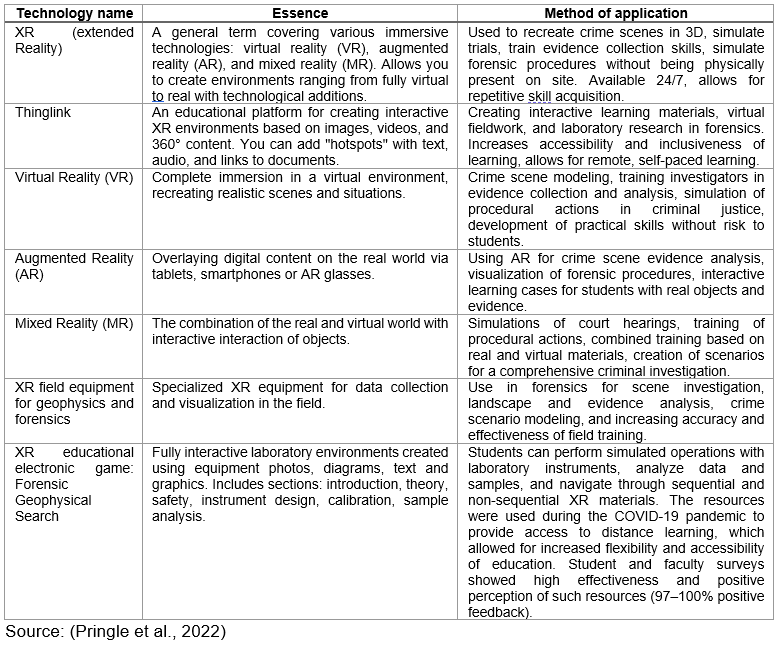
The table demonstrates the pedagogical potential of XR technologies in forensic and legal education, illustrating how immersive and interactive tools can support practical, competency-based learning. In the proposed conceptual model, these technologies are integrated as core components of a digitally mediated educational environment that aligns with European Court of Human Rights standards. For example, VR and AR simulations of crime scenes and procedural actions allow students to practice evidence collection, procedural decision-making, and case analysis in conditions that replicate real-world complexity while minimizing risk. Platforms such as Thinglink and XR educational games provide interactive, self-paced learning environments that reinforce analytical skills, critical thinking, and the ability to apply legal norms in practical scenarios.
By systematically embedding XR technologies within the framework alongside electronic case banks of ECHR decisions, OSINT exercises, and virtual laboratories, the model ensures that students not only acquire theoretical knowledge but also develop the procedural and analytical competencies required in modern criminal justice practice. This integration facilitates continuous, flexible, and inclusive learning while fostering professional skills in legal analysis, investigative reasoning, and the application of international human rights standards. Thus, XR technologies are not standalone tools but functional elements of a structured, competency-oriented educational system that operationalizes the proposed conceptual model.
Augmented reality (XR) environments demonstrate significant potential for effective learning and teaching in forensic science, serving as a useful complement to traditional lectures, practical classes, and field methods. They are particularly valuable due to the possibility of 24/7 continuous access, asynchronous use, and multiple revisions to reinforce knowledge. Students can experiment with different approaches without having to spend time in physical fieldwork or laboratory classes, which are often dependent on weather conditions, equipment availability, or the quality of the course.
However, creating XR learning environments is a labor-intensive process. In particular, the development of educational electronic games requires a high level of programming, thoughtful user experience design, scientific support, and significant time for product development, evaluation, and improvement. For students with limited access to the Internet, low levels of digital literacy, certain physical or mental limitations, or those who are less actively engaged with online learning, such environments can pose serious challenges that should be considered when using them in formal assessment of knowledge.
In developing countries, the system of training personnel in the field of criminal law, process and forensics faces a number of objective difficulties: limited financial resources, outdated material and technical base and the lack of unified training programs. At the same time, the demand for qualified specialists in this field is universal, and overcoming these barriers is critically important for the effective functioning of the justice system (Nilendu, 2024). One of the promising areas for improving the quality of training of lawyers and forensic scientists is the implementation of a system of evidence-based education, which involves the integration of modern scientific research, technological innovations and the practice of the European Court of Human Rights into training programs. In this learning model, students master not only traditional methods of evidence analysis and procedural tools, but also acquire skills in applying the latest information and communication technologies, digital forensics, and international standards for the protection of human rights, which allows future specialists to combine theoretical knowledge with practice, based on current legal and scientific approaches.
Author’s Conceptual Analysis of ICT-Based Criminal Law Education
For example, in a situation of investigation of intentional murder, a graduate trained according to the principles of evidence-based education will be able not only to apply classical forensic methods, but also to use modern digital technologies for collecting and analyzing evidence, as well as to take into account the practice of the ECHR on the admissibility of evidence and compliance with procedural guarantees, which ensures more informed decision-making and improves the quality of the trial. The introduction of evidence-based educational strategies in combination with ICT will contribute to the development of critical thinking, analytical skills and the ability to interdisciplinary problem solving. At the same time, the integration of ECHR practice ensures the unification of training with international standards, which allows students to develop the competencies necessary for working in a globalized legal environment.
Therefore, the implementation of an evidence-based education model in the field of criminal law, process and forensics using ICT and integrating the practice of the ECHR has the potential to significantly improve the quality of training of future specialists. Such an approach will contribute to the combination of classical scientific and legal principles with modern technological solutions and international standards for the protection of human rights, ensuring the effectiveness and fairness of criminal justice in a global dimension.
In addition, OSINT technologies are becoming increasingly important, providing access to open sources of information and its analytical processing. The use of OSINT in the training of lawyers and criminologists allows students to develop practical skills in collecting, verifying and interpreting data from open sources, which is extremely important in criminal investigations and litigation. In the educational context, OSINT technologies act not only as a tool for digital forensics, but also as a methodology for developing critical thinking and the ability to work with large amounts of information. The study by Matvienko & Tsyvin (2024) emphasizes that the integration of OSINT into educational programs creates interdisciplinary opportunities, allowing for the combination of legal, information and technological competencies. OSINT is of particular importance in the field of criminal proceedings, as its use can help not only in collecting evidence, but also in ensuring the ECHR standards on access to justice and fair trial. For example, open source data can confirm or refute the claims of the parties, help the lawyer in protecting the rights of the client, or ensure the transparency of procedural actions. In a practical sense, as Torbas (2024) notes, OSINT opens up wide opportunities for the investigation of criminal offenses, in particular cybercrime, fraud or crimes against the person. The ability of students to apply such tools in simulated learning environments allows them to combine theory with practice.
From the perspective of the development of legal education, the implementation of OSINT contributes to innovation and compliance with modern challenges of the digital age. As Baadzhi (2023) rightly notes, the latest tools, in particular artificial intelligence and OSINT, are becoming integral elements of the training of lawyers of the future, as they allow the formation of skills in data analysis, evidence and information security.
Thus, the integration of OSINT into curricula in criminal law, process, and forensics, combined with ICT and the practice of the ECHR, contributes to the formation of highly qualified specialists capable of operating effectively in the conditions of a modern information society and ensuring the implementation of the principles of fair trial.
Normative Implications for Legal Education and Professional Training
In this context, it is also important to integrate practical guarantees of the right to a defence, such as guaranteed access to a lawyer from the moment of detention, a standard set out in the FRA 2019 report, as well as in the Handbook on European Law on Access to Justice (FRA, 2019). These documents highlight the importance of the practical implementation of the right to a defence in criminal proceedings, which meets the standards of the ECHR, and which should be integrated into curricula. Therefore, the integration of evidence-based education together with ICT and the practice of the ECHR is the foundation for the formation of modern, effective, innovative and human rights-oriented legal education, capable of preparing specialists for the challenges of international criminal justice.
The approach that promotes the integration of information and communication technologies into the process of studying the case law of the European Court of Human Rights opens up new opportunities for the formation of high-quality legal education and allows combining traditional teaching methods with innovative digital tools, ensuring accessibility, interactivity, and practical orientation of the educational process.
At this stage, promising areas include: the creation of electronic case banks of ECHR decisions with scientific and practical comments, which will contribute to the development of analytical skills of students and practitioners, allowing them to combine the analysis of decisions with their critical reflection; the use of interactive maps and visualizations, for example, a "map" of human rights violations in cases against individual states, which makes it possible to trace the dynamics and geography of systemic problems in the field of human rights; online modeling of processes with reference to ECHR precedents, which simulates judicial debates, procedural actions and legal analysis, ensuring the formation of practical skills in the application of international standards in the national context.
At the same time, despite significant potential, the implementation of ICT and the practice of the ECHR in the legal education system is accompanied by a number of challenges. Among them: insufficient funding for educational and scientific projects aimed at the digitalization of legal education; technical barriers associated with the lack of proper infrastructure, software or stable access to electronic resources; lack of training of teachers, which limits the possibilities of effective use of digital technologies in the educational process.
Moreover, the development of this direction opens up new prospects: the formation and development of legal clinics in an online format, which will allow students to provide legal assistance remotely, while simultaneously increasing their own professional competence; cooperation with international institutions and educational platforms, which ensures the exchange of best practices and increases academic mobility; expanding access to open data, including databases of decisions of the ECHR and other international bodies, which creates a more transparent and inclusive environment for legal education.
Thus, despite the existing difficulties, the integration of ICT and ECHR practice into legal education is a promising direction that can qualitatively change the training of lawyers, making it more modern, adaptive, and focused on international human rights standards.
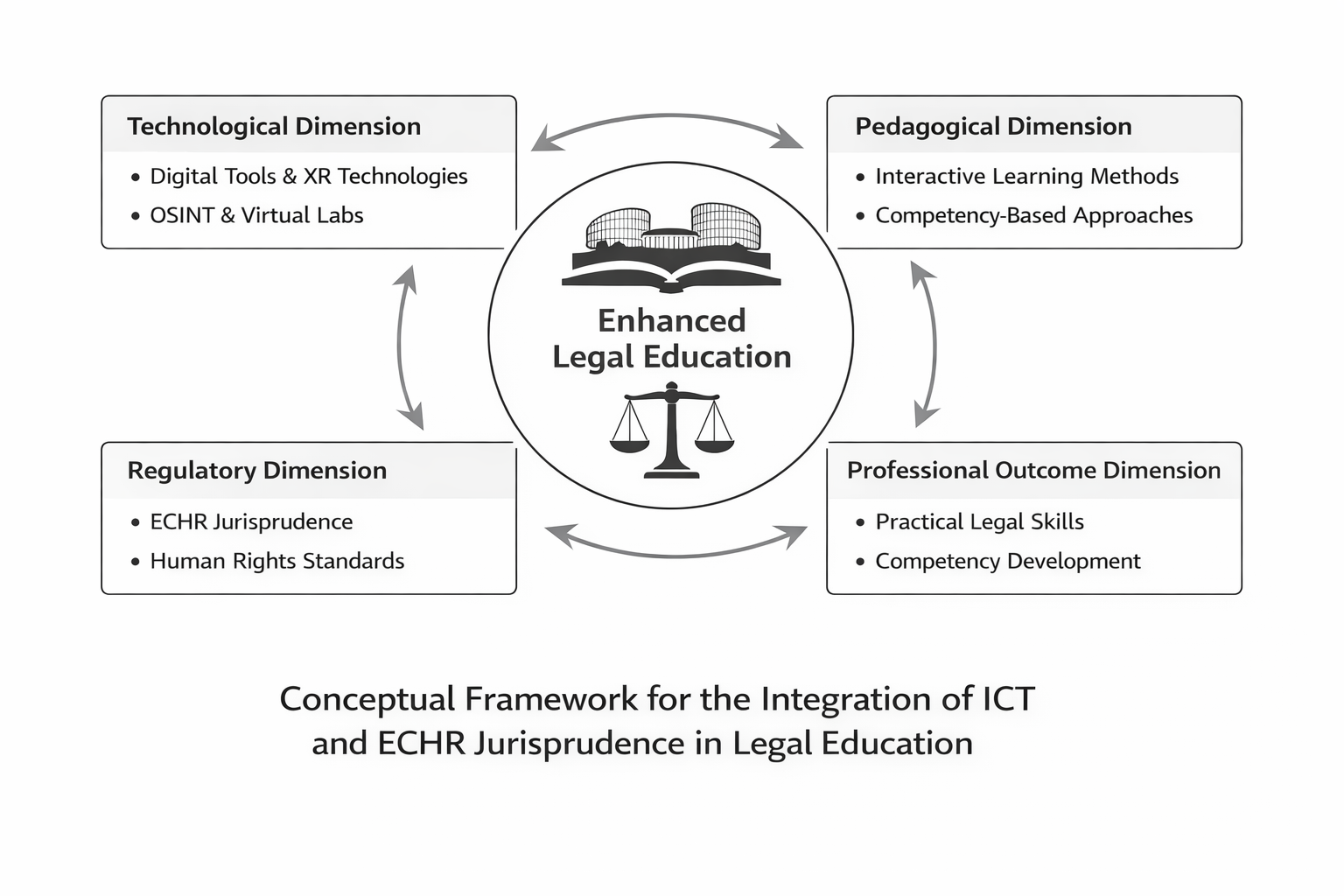
Figure 1. Conceptual Framework for the Integration of ICT and ECHR Jurisprudence in Legal Education.
The conceptual framework for integrating ICT and the jurisprudence of the European Court of Human Rights (ECHR) into legal education (Figure 1) is structured around four interrelated dimensions—technological, pedagogical, regulatory, and professional outcomes—which together form a coherent, system-oriented model of enhanced legal education. The technological dimension encompasses digital platforms (e.g., Moodle, OpenEdX, Zoom) and advanced tools such as XR environments, virtual laboratories, and OSINT technologies that enable simulation-based and data-driven learning. These tools support the pedagogical dimension, which is based on interactive, competency-oriented approaches, including case-based learning, simulations, and the integration of ECHR jurisprudence to develop critical thinking and analytical skills. As demonstrated in the text, the shift toward blended and distance learning—accelerated by the COVID-19 pandemic and wartime conditions in Ukraine—highlights both the necessity and effectiveness of such digitally mediated educational models.
The regulatory dimension ensures that the content and structure of legal education are aligned with international human rights standards, particularly the Convention for the Protection of Human Rights and Fundamental Freedoms and the case law of the ECHR. National legal frameworks, including the Laws of Ukraine on the execution of ECHR judgments and on international treaties, further reinforce the obligation to integrate these standards into legal training. This normative layer interacts dynamically with technological and pedagogical components, for example through the use of XR simulations of crime scenes or procedural actions that incorporate ECHR principles of fair trial and admissibility of evidence. At the same time, the framework acknowledges existing challenges, such as limited funding, technical barriers, and insufficient digital competencies among educators, which may affect the implementation of ICT-based approaches.
The professional outcomes dimension reflects the ultimate objective of the model—the formation of highly qualified legal professionals capable of applying both technological tools and international human rights standards in practice. Through the integration of ICT, ECHR case law, and evidence-based education, students develop practical skills in evidence analysis, procedural decision-making, and legal reasoning in complex, digitally mediated environments. As illustrated in the text, tools such as OSINT and XR not only enhance accessibility and inclusiveness but also create opportunities for interdisciplinary and practice-oriented learning. Thus, the framework conceptualizes legal education as a dynamic and adaptive system in which technological innovation, pedagogical transformation, and normative alignment jointly contribute to the development of professional competencies required in modern criminal justice systems.
Conclusions
Analysis of the current state of teaching criminal law, process and forensics in Ukrainian universities indicates the presence of a number of systemic problems associated with the dominance of theoretically oriented courses and an insufficient level of practice-oriented training. The use of innovative educational technologies, in particular electronic platforms, virtual simulations of court proceedings and digital forensic laboratories, is currently fragmentary and not always methodologically justified. Among the main obstacles, the obsolescence of educational and methodological materials, the lack of unified digital solutions for teaching special disciplines, as well as insufficient training of teachers to work with the latest information technologies should be highlighted. Although universities are actively implementing interactive educational environments based on the Moodle, Prometheus or OpenEdX platforms, the systematic development of specialized courses using digital forensic laboratories, as well as the improvement of the digital competence of scientific and pedagogical workers is not observed.
The practical integration of ECHR decisions into training allows students to practice specific skills in case law analysis. For example, the creation of electronic case banks with comments makes it possible to simulate various scenarios: for example, assessing the lawfulness of detention under the European Convention on Human Rights or considering cases on the rights of defense in criminal proceedings. The use of interactive maps of human rights violations allows for the visualization of geographical and typological patterns of violations in national systems, and online simulation of trials allows students to practice procedural decisions in a safe environment. In addition, digital forensic laboratories and XR technologies (augmented reality) allow for the reproduction of crime scenes and laboratory processes. For example, the Thinglink platform is used to simulate the operation of a polarizing microscope, an XRF spectrometer, an ion chromatography system, and a laser particle size analyzer. Each XR tool includes a theoretical block, safety instructions, a sample calibration and analysis module, as well as interactive “hot spots” with additional data and images. Students can analyze real datasets, practicing evidence collection and processing techniques without leaving the classroom or their own home, which is especially relevant for students with disabilities or during pandemic restrictions. An important tool in modern legal education is OSINT technologies, which are used both in student training and in the practical activities of investigators. The use of open sources of information allows you to simulate crime investigations, collect data for forensic analysis, and practice practical skills in working with information resources. For example, students can analyze digital traces in social networks or open databases, integrating the information obtained into virtual forensic cases. Thus, the combination of interactive digital platforms, XR technologies, case banks of ECHR decisions, and OSINT allows you to create a modern educational environment that combines theory and practice. This contributes to the formation of students' professional competencies, the development of critical thinking and skills in analyzing real-world situations, while increasing the inclusiveness of learning and providing access to modern methods of criminal science even in conditions of limited resources.
The use of electronic resources, such as databases of ECHR decisions (for example, HUDOC) and legal search engines (Google Scholar, the website of the Verkhovna Rada of Ukraine, etc.), is a key tool for the formation of modern professional competencies in law students. These resources provide access to a large amount of relevant legal information and practice of the ECHR, which allows students to work on real cases, analyze court decisions and compare them with national legislation. At the same time, the created and translated electronic case banks of ECHR decisions with comments and interactive diagrams allow students not only to familiarize themselves with theoretical provisions, but also to practice legal analysis algorithms. The integration of ICT into curricula will ensure the creation of a comprehensive educational environment that combines distance platforms (Moodle, OpenEdX), virtual laboratories (XR-simulations of forensic processes) and electronic cases of ECHR decisions. Such synergy allows students to form both theoretical knowledge and practical skills that meet the modern requirements of professional activity.
This study has demonstrated that the modernization of legal education in the fields of criminal law, criminal procedure, and forensic sciences requires not only the introduction of digital technologies, but also their systematic alignment with international human rights standards developed in the practice of the European Court of Human Rights. The proposed conceptual framework integrates technological, pedagogical, normative, and outcome-oriented components and offers a structured approach to ICT-based legal education grounded in the principles of the rule of law and fair trial.
The main contribution of this research lies in the formalization of a comprehensive conceptual model that unifies dispersed strands of literature on educational technologies, criminal justice training, and ECHR jurisprudence. By articulating the interaction between ICT tools, competency-based pedagogy, and human rights norms, the study advances the theoretical foundations of technology-mediated legal education and provides guidance for curriculum design and methodological development.
At the same time, the study has certain limitations. It is based on doctrinal and conceptual analysis and does not include empirical testing of the proposed framework in specific educational settings. In addition, the normative focus on ECHR standards reflects the European legal context and may require adaptation when applied to other regional human rights systems.
Future research should focus on the empirical validation of the proposed framework through pilot educational programs, comparative studies across jurisdictions, and assessment of learning outcomes associated with ICT-based legal training. Further investigation into the ethical and regulatory implications of artificial intelligence and digital evidence in legal education also represents a promising direction for interdisciplinary research.
Bibliographic references
Baadzhi, N. P. (2023). The latest tools of legal education in the age of artificial intelligence. Legal Scientific Electronic Journal, (12), 233–239. Retrieved from http://lsej.org.ua/12_2023/57.pdf
Council of Europe. (1950, November 4). Convention for the Protection of Human Rights and Fundamental Freedoms of November 4, 1950. European Convention on Human Rights (E.T.S. No. 5; 213 U.N.T.S. 221). Retrieved from https://www.echr.coe.int/european-convention-on-human-rights
Chaussée, A. S., Winter, J., & Ayres, P. (2022). Approaches to decolonising forensic curricula. Science & Justice, 62(6), 795–804. https://doi.org/10.1016/j.scijus.2022.06.003
Custers, B., & Stevens, L. (2024). Data as Evidence in Criminal Courts. Cambridge University Press. Retrieved from https://doi.org/10.1017/9781009431453.014
de Sousa Santos, B. (2021). Decolonising the University: The Challenge of Deep Cognitive Justice. Cambridge: Cambridge Scholars.
Donnelly, S. (2012). Forensic Science in a Human Rights Framework. Australian Journal of Forensic Sciences, 44(1), 93–103. https://doi.org/10.1080/00450618.2011.610822
Dryshliuk, V., Chanysheva, A., Borychenko, K., Kravchenko, S., & Hotsuliak, Y. (2025). Application of the practice of the ECHR in legal education: impact on the formation of judicial culture and the protection of human rights. Revista Eduweb, 19(2), 107-121. https://doi.org/10.46502/issn.1856-7576/2025.19.02.8
European Education Area. (2025). Digital Education Action Plan: Policy background. https://education.ec.europa.eu/focus-topics/digital-education/plan
FRA. (2019). Rights in practice: access to a lawyer and procedural rights in criminal and European arrest warrant proceedings. Retrieved from https://acortar.link/dIqP2A
Jeffery, A. J., Rogers, S. L., & Jeffery, K. L. A., & Hobson, L. (2021). A flexible, open, and interactive digital platform to support online and blended experiential learning environments: Thinglink and thin sections. Geosci. Commun, 4, 95–110. https://doi.org/10.5194/gc-4-95-2021
Lorente, L. M. L., Arrabal, A. A., & Pulido-Montes, C. (2020). The Right to Education and ICT during COVID-19: An International Perspective. Sustainability, 12(21), 9091. https://doi.org/10.3390/su12219091
Lundy, L., & Martínez Sainz, G. (2018). The Role of Law and Legal Knowledge for a Transformative Human Rights Education: Addressing Violations of Children’s Rights in Formal Education. Human Rights Education Review, 1(2), 04–24. https://doi.org/10.7577/hrer.2560
Matvienko, O., & Tsyvin, M. (2024). “OSINT technologies” as an educational component of the specialty “Information, library and archival studies”: pedagogical goal-setting. Ukrainian Journal of Library and Information Sciences, (13), 145–156. https://doi.org/10.31866/2616-7654.13.2024.307136
Mayne, R., & Green, H. (2020). Virtual reality for teaching and learning in crime scene investigation. Science & Justice, 60(5), 466–472. https://doi.org/10.1016/j.scijus.2020.07.006
McBride, J. (2009). Human rights and criminal procedure. Case law of the European Court of Human Rights. Council of Europe. Retrieved from https://www.echr.coe.int/documents/d/echr/pub_coe_criminal_procedure_2009_eng
McBride, J. (2021). The doctrines and methodology of interpretation of the European Convention of Human Rights by the European Court of human rights. Council of Europe Publishing. Retrieved from https://rm.coe.int/echr-eng-the-doctrines-and-methodology-of-interpretation-of-the-europe/1680a20aee
Muntjewerff, A. J. (2009). ICT in Legal Education. German Law Journal, 10(6–7), 669–716. https://doi.org/10.1017/S2071832200001292
Nilendu, D. (2024). Enhancing forensic education: exploring the importance and implementation of evidence-based education system. Egyptian Journal of Forensic Sciences, 14. https://doi.org/10.1186/s41935-023-00375-w
Nilupu-Moreno, K., Riega-Virú, Y., Puga-Ayala, E. M., & Salas-Riega, J. L. (2024). Legaltech in legal education: A systematic review of the training of technological competencies. IEEE. DOI: https://doi.org/10.1109/ICALTER65499.2024.10819225
Law of Ukraine No. 1906-IV. On International Treaties of Ukraine. (2004, June 29). Retrieved from https://zakon.rada.gov.ua/laws/show/1906-15
Law of Ukraine No. 3477-IV. On the Execution of Decisions and Application of the Practice of the European Court of Human Rights. (2006, February 23). Retrieved from https://zakon.rada.gov.ua/laws/show/3477-15/ed20121202
Pringle, J., Stimpson, I., Jeffery, A., Wisniewski, K., Grossey, T., Hobson, L., Heaton, V., Zholobenko, V., & Rogers, S. (2022). Extended reality (XR) virtual practical and educational eGaming to provide effective immersive environments for learning and teaching in forensic science. Science & Justice, 62(6), 696–707. https://doi.org/10.1016/j.scijus.2022.04.004
Selwyn, N. (2007). The use of computer technology in university teaching and learning: a critical perspective. Journal of Computer Assisted Learning, 23(2), 83–94. https://doi.org/10.1111/j.1365-2729.2006.00204.x
Salazar Chica, M. A., & Palencia Salas, V. (2025). Teacher training in ICT and learning technologies: A bibliometric analysis. Contemporary Readings in Law and Social Justice, 17(1), 571–583. https://doi.org/10.52783/crlsj.542
Torbas, O. O. (2024). OSINT in the investigation of criminal offenses. Odesa, Ukraine: Jurydika. https://doi.org/10.32837/11300.27740
Vuille, J., Lupària, L., & Taroni, F. (2017). Scientific evidence and the right to a fair trial under Article 6 ECHR. Law, Probability & Risk, 16(1), 55–68. https://doi.org/10.1093/lpr/mgx001
Yu, Y. (2023). Discussion on the Reform of Higher Legal Education in China Based on the Application and Limitation of Artificial Intelligence in Law Represented by ChatGPT. Journal of Education, Humanities and Social Sciences, 14, 220–228. https://doi.org/10.54097/ehss.v14i.8840

Este artículo no presenta ningún conflicto de intereses. Este artículo está bajo la licencia Creative Commons Atribución 4.0 Internacional (CC BY 4.0). Se permite la reproducción, distribución y comunicación pública de la obra, así como la creación de obras derivadas, siempre que se cite la fuente original.