
Original Article
Eduweb, 2026, abril-junio, v.20, n.2. ISSN: 1856-7576
Doi: https://doi.org/10.46502/issn.1856-7576/2026.20.02.9
Edutainment as a tool for developing professional competence in higher education students
Pavlo Smoliak
PhD, Senior Lecturer at the Pedagogy Department, National University of Life and Environmental Sciences of Ukraine, Ukraine.
https://orcid.org/0000-0003-0016-5561
Kseniia Korotkevych
PhD, Lecturer at the Department of Choreographic Art, Deputy Dean for Educational Work with Students at the Faculty of Arts named after Anatoly Avdiivskyi, Dragomanov Ukrainian State University, Ukraine.
https://orcid.org/0000-0003-1999-4618
korotkevich139513951395@gmail.com
Vasyl Tiahur
Candidate Pedagogical Sciences, Associate Professor, Associate Professor at the Department of Pedagogy, Psychology, Primary, Pre-School Education and Management of Educational Institutions, Ferenc Rakoczi II Transcarpathian Hungarian University, Ukraine.
https://orcid.org/0000-0002-4811-4643
Iryna Mozul
Candidate of Pedagogical Sciences, Associate Professor, Associate Professor of Theory and Methods of Primary Education Department, Educational and Scientific Institute of Pedagogy and Psychology, Oleksandr Dovzhenko Hlukhiv National Pedagogical University, Ukraine.
https://orcid.org/0000-0002-8331-9011
Hanna Dutka
Doctor of Pedagogical Sciences, Professor, Professor of the Department of Primary and Preschool Education, Ivan Franko National University of Lviv, Ukraine.
https://orcid.org/0000-0002-6504-1554
Cómo citar:
Smoliak, P., Korotkevych, K., Tiahur, V., Mozul, I., & Dutka, H. (2026). Edutainment as a tool for developing professional competence in higher education students. Revista Eduweb, 20(2), 137-156. https://doi.org/10.46502/issn.1856-7576/2026.20.02.9
Recibido: 05/04/26 Aceptado: 26/05/26
Resumen
El estudio examina el edutainment como un enfoque pedagógico innovador para el desarrollo de la competencia profesional en estudiantes de educación superior. La investigación tiene como objetivo fundamentar y verificar experimentalmente la efectividad de las condiciones pedagógicas y el apoyo metodológico basados en los principios del edutainment. Se implementó un diseño cuasiexperimental con 120 estudiantes de pregrado en especialidades pedagógicas, divididos en un grupo de control (n = 59) y un grupo experimental (n = 61). El grupo experimental estuvo expuesto a un modelo de instrucción basado en edutainment que integraba tecnologías digitales, gamificación, tareas interactivas y herramientas multimedia, mientras que el grupo de control siguió métodos de enseñanza tradicionales. La competencia profesional se evaluó utilizando criterios cognitivos, heurísticos y creativos en tres niveles (alto, medio, bajo). Los datos cuantitativos se analizaron mediante estadística descriptiva y la prueba de chi-cuadrado de Pearson. Los resultados demostraron una mejora sustancial en el grupo experimental, donde la proporción de estudiantes con un alto nivel de competencia alcanzó el 57,6%, en comparación con el 11,5% en el grupo de control. Los resultados de la prueba chi-cuadrado (χ² = 8,93, p < 0,05) confirmaron diferencias estadísticamente significativas entre los grupos, lo que indica la efectividad de la metodología propuesta. En general, el estudio confirma que el edutainment es una herramienta pedagógica eficaz para mejorar la competencia profesional en la educación superior, con un impacto positivo tanto en el desarrollo cognitivo como socioprofesional de los futuros especialistas.
Palabras clave: competencia profesional, entretenimiento educativo, estudiantes, tecnologías digitales, sistema de principios y requisitos metodológicos.
Abstract
The study examines edutainment as an innovative pedagogical approach for developing professional competence in higher education students. The research aims to substantiate and experimentally verify the effectiveness of pedagogical conditions and methodological support based on edutainment principles. A quasi-experimental design was implemented involving 120 undergraduate students in pedagogical specialties, divided into control (n = 59) and experimental (n = 61) groups. The experimental group was exposed to an edutainment-based instructional model integrating digital technologies, gamification, interactive tasks, and multimedia tools, while the control group followed traditional teaching methods. Professional competence was assessed using cognitive, heuristic, and creative criteria at three levels (high, average, low). Quantitative data were analyzed using descriptive statistics and the Pearson chi-square test. The results demonstrated a substantial improvement in the experimental group, where the proportion of students with a high level of competence reached 57.6%, compared to 11.5% in the control group. The chi-square test results (χ² = 8.93, p < 0.05) confirmed statistically significant differences between groups, indicating the effectiveness of the proposed methodology. Overall, the study confirms that edutainment is an effective pedagogical tool for improving professional competence in higher education, with a positive impact on both cognitive and socio-professional development of future specialists.
Keywords: professional competence, edutainment, students, digital technologies, system of principles and methodological requirements.
Introduction
The transformation of higher education in the context of digitalization and societal change has significantly redefined the requirements for teacher training. Modern educators are expected not only to possess strong subject knowledge but also to demonstrate high levels of professional competence, including creativity, adaptability, digital literacy, and the ability to engage students effectively. In this regard, the integration of innovative pedagogical approaches into teacher education has become a critical priority. One such approach is edutainment, which combines educational content with elements of entertainment to enhance student engagement and learning outcomes (González-Fernández et al., 2024).
Despite the growing interest in edutainment across various educational levels, its application in the professional training of future teachers remains insufficiently explored. Existing studies primarily focus on general pedagogical contexts, motivation, or school-level education, whereas the specific impact of edutainment on the development of professional competence among higher education students – particularly in pedagogical specialties – has not been comprehensively investigated. Moreover, there is a lack of empirically validated models that integrate edutainment with structured pedagogical conditions and digital learning environments in teacher education (Flores & Calero, 2019).
At the same time, the increasing digitalization of education and the shift toward student-centered learning paradigms require the development of new instructional strategies that can effectively combine cognitive, emotional, and practical components of learning. Edutainment has the potential to address these challenges by fostering active participation, enhancing motivation, and supporting the development of higher-order thinking skills. However, the conditions under which this approach becomes pedagogically effective in higher education remain unclear and require systematic investigation.
Therefore, the relevance of this study stems from the need to address the identified scientific gap and develop effective pedagogical conditions for the development of professional competence in future teachers based on edutainment.
The study aims to substantiate and experimentally verify the effectiveness of an edutainment-based methodology for developing professional competence in students of pedagogical specialties.
Literature Review
The concept of edutainment, understood as the integration of educational content with entertainment elements, has gained increasing attention in contemporary pedagogical research. While early studies primarily focused on school education, recent research has expanded its application to higher education, where student engagement, motivation, and competency-based learning are critical challenges. In university contexts, edutainment is not merely a supplementary tool but a pedagogical strategy that supports student-centered learning and competence development.
Scholars emphasize that edutainment enhances learning effectiveness by combining cognitive and affective dimensions of the educational process. For example, edutainment-based instructional design integrates multimedia, storytelling, and interactive elements that contribute to deeper understanding and long-term knowledge retention. Empirical evidence from higher education demonstrates that such approaches significantly improve both motivation and academic performance (Ewelt-Knauer et al., 2025). These findings highlight the relevance of edutainment for modern university teaching, particularly in disciplines that require the integration of theoretical knowledge with practical application.
At the same time, edutainment aligns with constructivist learning theory, which emphasizes active knowledge construction through experience and interaction. From this perspective, students are not passive recipients of information but active participants in the learning process. The use of simulations, gamified tasks, and scenario-based learning environments enables learners to engage with content more deeply and develop higher-order thinking skills (Stapa & Ibaharim, 2020). Such approaches are particularly valuable in teacher education, where future professionals must develop not only knowledge but also pedagogical, communicative, and reflective competencies.
However, despite the growing body of research, the application of edutainment in higher education remains fragmented. Many studies focus on isolated tools (e.g., games, videos, or multimedia platforms) rather than comprehensive pedagogical models. Moreover, there is a lack of research that systematically connects edutainment with the formation of professional competence in students of pedagogical specialties. This indicates the need for integrated methodological approaches that combine digital technologies, pedagogical conditions, and competency-based frameworks.
Professional competence in higher education is increasingly understood as a multidimensional construct that includes cognitive, practical, social, and personal components. In this context, edutainment has been identified as a promising tool for supporting competence development through active and experiential learning.
Research indicates that edutainment contributes to the development of higher-order thinking skills, including critical thinking, creativity, and problem-solving. For instance, the use of interactive digital games and gamified tasks has been shown to stimulate analytical and creative thinking processes, particularly in language and communication-based disciplines (Stapa & Ibaharim, 2020). Similarly, approaches that combine games, mind-mapping, and social media tools enhance not only knowledge acquisition but also collaborative and communicative competencies (Alhajaji et al., 2020).
Another important aspect is the role of edutainment in bridging the gap between theoretical knowledge and practical application. Scenario-based learning and simulations allow students to engage in quasi-professional activities, thereby developing skills that are directly transferable to real-world contexts. This is particularly relevant in teacher education, where professional competence requires the ability to design, implement, and evaluate educational processes.
Despite these advantages, some researchers caution against the uncritical use of edutainment. The effectiveness of this approach depends on its pedagogical design and alignment with learning objectives. Without a clear methodological framework, edutainment may lead to superficial engagement rather than deep learning. Additionally, empirical studies reveal variability in outcomes depending on contextual factors, such as discipline, instructional design, and learner characteristics (Dubois et al., 2025).
Thus, while edutainment demonstrates significant potential for competence development, its effectiveness in higher education requires further empirical validation and methodological refinement.
Psychological Impact of Edutainment and Game-Based Learning on Young Adults
The psychological impact of edutainment and game-based learning is a key factor in explaining its effectiveness in higher education. Young adults, as learners, are characterized by a high level of cognitive development, autonomy, and a need for meaningful and engaging learning experiences. These characteristics influence how they respond to interactive and game-based educational environments.
From a motivational perspective, edutainment enhances both intrinsic and extrinsic motivation. Game elements such as rewards, challenges, and feedback mechanisms create a sense of achievement and engagement, which encourages sustained participation in learning activities (Febriyani et al., 2020). In higher education, where student motivation is often a critical issue, such mechanisms can significantly improve learning outcomes (Ewelt-Knauer et al., 2025).
Cognitively, edutainment supports deeper information processing by engaging multiple sensory channels. Multimedia and interactive content facilitate better understanding and retention of knowledge, while problem-based and scenario-driven tasks promote critical thinking and decision-making skills (Stapa & Ibaharim, 2020). These cognitive benefits are essential for the development of professional competence, particularly in fields that require analytical and reflective thinking.
Emotionally, edutainment contributes to reducing anxiety and creating a positive learning environment. The use of humor, storytelling, and immersive experiences helps to lower psychological barriers and encourages students to experiment and take risks in learning (Wanabuliandari & Ardianti, 2023). This is especially important in teacher education, where confidence and emotional resilience are key professional attributes.
From a social perspective, edutainment fosters collaboration and communication. Many game-based learning activities involve teamwork, discussion, and role-playing, which enhance interpersonal skills and prepare students for professional interaction (Corral-Joniaux & Moya-Joniaux, 2021). These social competencies are integral to professional competence, particularly in pedagogical contexts.
However, the psychological effects of edutainment are not universally positive. Some studies indicate that excessive reliance on entertainment elements may reduce academic rigor or lead to superficial assimilation of knowledge if the educational process does not have a clear pedagogical structure (Dubois et al., 2025). Furthermore, individual differences among students – such as prior experience, motivation, and learning styles – may influence the effectiveness of edutainment.
Overall, the psychological dimension of edutainment highlights its potential to enhance motivation, engagement, and learning effectiveness among young adults, while also emphasizing the need for balanced and pedagogically grounded implementation.
Despite the growing interest in edutainment, the literature reveals several important gaps: there is a lack of comprehensive studies that examine edutainment as an integrated pedagogical system rather than a set of isolated tools; insufficient attention has been paid to its role in the formation of professional competence in students of pedagogical specialties; the interaction between psychological factors, digital technologies, and pedagogical conditions in edutainment-based learning environments remains underexplored.
Therefore, further research is needed to develop and empirically validate methodological approaches that integrate edutainment into higher education, particularly in the context of teacher training.
Methodology
Research Design
The study was conducted in three consecutive stages: diagnostic (ascertaining), formative, and control. At the diagnostic stage, the initial level of students’ professional competence was assessed. During the formative stage, the experimental group participated in an instructional intervention based on edutainment principles, while the control group studied through traditional methods. At the control stage, post-intervention measurements were conducted to determine changes in competence levels and compare outcomes between groups.
Participants
A total of 120 undergraduate students enrolled in pedagogical specialties participated in the study. Participants were divided into:
The sample was selected using purposive sampling from the general student population of higher education institutions offering teacher-training programs.
Instruments
Data collection was based on validated pedagogical diagnostic tools, including:
Criteria and Indicators
Professional competence was operationalized through three interrelated criteria:
Each criterion was measured at three levels:
Intervention Procedure
The experimental group received instruction using an edutainment methodology, integrating educational content with engaging, interactive learning elements. The intervention included:
The intervention was implemented over an academic cycle within regular coursework.
Intervention Procedure (Revised and Expanded)
The instructional intervention based on edutainment principles was implemented during one academic semester (16 weeks) within the framework of regular coursework for students of pedagogical specialties. The total duration of the intervention comprised 64 academic hours, including both in-class and independent learning activities.
The intervention was structured into 32 sessions, each lasting 2 academic hours (90 minutes), conducted twice per week. In addition, students completed approximately 32 hours of guided independent work, involving digital tasks, project development, and reflective activities.
The structure of the intervention was organized into three consecutive phases:
This phase aimed to familiarize students with the principles of edutainment and digital learning tools. Activities included: introductory lectures with multimedia elements; guided discussions on edutainment concepts; initial gamified tasks and interactive exercises; training in the use of digital platforms and tools.
Formative Phase (Weeks 5–12; 16 sessions, 32 hours).
This phase represented the core of the intervention and focused on the systematic development of professional competence. It included: scenario-based learning and simulations; role-playing activities reflecting real pedagogical situations; collaborative group projects using edutainment strategies; integration of gamification elements (points, badges, leaderboards); use of multimedia content (videos, animations, interactive presentations); application of cloud-based tools and online platforms.
This phase aimed to reinforce learning outcomes and assess competence development. Activities included: presentation of student projects; reflective discussions and peer evaluation; final diagnostic tasks and testing; self-assessment using structured questionnaires.
Each session followed a standardized structure:
The independent work component (32 hours) included: completion of gamified digital assignments; development of mini-projects using edutainment tools; participation in online discussions and forums; maintenance of reflective journals or digital portfolios.
Such structuring ensured the gradual development of cognitive, heuristic, and creative components of professional competence while maintaining a balance between educational content and entertainment elements.
Data Analysis
Quantitative data were processed using descriptive and inferential statistics. Frequency distributions, percentages, and comparative analyses were calculated for pre-test and post-test results. To determine the statistical significance of differences between the control and experimental groups, the Pearson chi-square test (χ²) was applied.
The obtained empirical value (χ² = 8.93) exceeded the critical value (χ²crit = 5.99, df = 2, p < 0.05), confirming statistically significant differences in favor of the experimental group.
Validity and Reliability
To ensure methodological rigor:
Ethical Considerations
Participation was voluntary. Students were informed about the purpose of the study, anonymity was guaranteed, and all collected data were used exclusively for scientific purposes in compliance with academic ethics standards.
Results and Discussion
Characteristics of the concept of "edutainment", the presence of which determines the specificity of the edutainment technology.
One promising area for developing professional competence among students in pedagogical specialties is edutainment. Let's briefly review the concept's characteristics in scientific sources. The concept of "edutainment" is understood as a form of educational process in which educational material is presented through game-based techniques and information services. In higher education, game elements using edutainment are only one of the tools built into other activities to support an effective educational process. The term "edutainment" is broader than just a game, since the game is only one element of this technology, which serves to transfer knowledge to students in exciting ways.
Let us outline the features, the presence of which determines the specificity of edutainment technology:
Today, edutainment is essential at all levels of education, particularly in higher education, where it is essential for developing the professional competence of future specialists.
We consider edutainment an innovative communication technology developed from pedagogical technology, which presents educational content in an entertaining form to attract the audience’s attention and facilitate memorizing and assimilating the material.
The development of subconscious learning mechanisms is one of the mechanisms by which edutainment influences. When applying such innovative technology, the teacher uses a teaching style when presenting the material, which, in the educational process, creates a new didactic integrity: it provides an opportunity to free oneself from adhering to such strict didactic requirements as control, consistency, scientificity of teaching, etc. (Peña-Lapeira & Vargas-Puentes, 2019). Effective and unique educational potential arises under such conditions, and students can realize their individual capabilities and personal learning pace. As a result, the educational environment is not formally perceived. Any content that spreads edutainment to a wide audience serves an educational purpose, satisfying students' thirst for knowledge, expanding individuals' horizons, addressing each person's social issues, and reinforcing the need for self-development and self-improvement. The above-described methodology is possible when media education is used as one of the means of achieving positive results and achieving certain intentions in implementing the media educational policy of higher education. Therefore, media education can serve as both a practical and a theoretical basis for the popularization and implementation of edutainment (Figueredo & Cuba, 2023).
Edutainment should be used moderately in classroom work with students, as it is an auxiliary technology that cannot serve as an alternative to academic education in a higher education institution. It should be noted that edutainment, due to its multi-channel action and diversity, can be used to activate verbal-logical and visual-figurative thinking (Pearl & Lesser, 2021).
Diagnostics of the formation of professional competence based on edutainment in students of pedagogical specialties.
To conduct the study, we identified the criteria, indicators, and levels of formation of professional competence in students of pedagogical specialties, based on edutainment, as determined by the structure and essence of the professional competence of the future specialist in the pedagogical direction. These proposed components correspond to the status of the methodological identity of professional training.
We have defined the criteria for the formation of professional competence in students of pedagogical specialties based on edutainment: cognitive, heuristic, and creative criteria, and outlined their indicators.
The cognitive criterion represents a system of theoretical and professional knowledge, as well as techniques, methods, and technologies for their application, based on edutainment. It requires a thorough mastery of knowledge and methodology for mastering professional disciplines of pedagogical training of future specialists of pedagogical specialties, the use of digital, innovative resources, and the ability of students of pedagogical specialties in the field of game technologies to independently search for work to form professional competence of students of pedagogical specialties.
The cognitive criterion includes the following indicators: knowledge of professional competence and edutainment; the degree of awareness among future specialists of pedagogical specialties in professional disciplines.
The heuristic criterion reflects the ability of a future specialist to demonstrate communicative skills and the best personal qualities in organizing edutainment-based gaming activities for students of pedagogical specialties, and the ability of each participant in the educational process to pay attention while mastering gaming skills. The development of reflective and communicative thinking is particularly important when considering the psychological characteristics of students of pedagogical specialties and the potential for forming professional competence through edutainment.
The following indicators heuristic outline the following criterion: the degree of mastery by students of pedagogical specialties of effective communication means based on edutainment; the formation of communicative and gaming abilities in students of pedagogical specialties in the process of professional activity; the desire for a heuristic search for the formation and development of professional competence based on edutainment.
The creative criterion assumes that a future specialist in pedagogical specialties can apply organizational skills and acquired professional competencies during professional training, thereby contributing to the effective development of creativity, emotional sensitivity, fantasy, and imagination when using digital programs and gaming technologies. The creative criterion certifies the development of professional competence among students of pedagogical specialties, leading to positive results through edutainment.
The following indicators outline the creative criterion: the ability of a future specialist to apply acquired professional competencies in practical work based on edutainment; the degree of development of organizational skills during educational activity.
The proposed criteria and indicators enabled us to diagnose the levels of professional competence development among students in pedagogical specialties through edutainment. The state of formation of each isolated component of students' professional competence in pedagogical specialties, based on edutainment, should be determined according to the criteria outlined below at three levels: high, average, and low.
The main structural criteria, indicators, and levels of formation of professional competence based on edutainment that we have characterized and defined make it possible to conduct an experimental study among students of pedagogical specialties on the implementation of the developed pedagogical conditions and to prove their effectiveness.
120 students of pedagogical specialties were involved in the experimental research program to improve the quality of the educational process and the coherence of the formation of professional competence through edutainment.
To identify the state of formation of the outlined competence, an ascertaining stage of the experiment was conducted, which took place without violating the logic of the educational process and the course in natural conditions.
During further study at the formative stage, the experimental group implemented the developed author's pedagogical conditions for the formation of professional competence based on edutainment among students of pedagogical specialties. The educational process in the control group took place traditionally.
The ascertaining stage of the experiment.
Based on the established criteria, indicators, and levels of competence formation, an experiment was conducted from 2023 to 2025 and included the following stages: ascertaining, formative, and control.
The purpose of the ascertaining stage of the experiment was to diagnose the state of formation and determine the level of formation of professional competence among students of pedagogical specialties.
The structural main criteria (cognitive, heuristic, creative), indicators, and levels of formation of professional competence based on edutainment that we have characterized and defined make it possible to analyze the components.
The primary task of the ascertaining experiment was to analyze the levels of formation of professional competence through edutainment, using testing and survey methods.
To assess the state of formation of the motivational component of the outlined criteria for competence formation, based on the above-described indicators and taking into account the principles of edutainment, testing of respondents was conducted.
A high level of motivation to develop professional competence through edutainment was reported by 8.9% of respondents.
An average level of motivation to develop professional competence through edutainment was reported by 25.6% of respondents.
A low level of motivation to develop professional competence through edutainment was reported by 65.5% of respondents.
To investigate the levels of formation of the outlined competence in relation to the cognitive component was the second task of the ascertaining experiment using the methods of analysis, synthesis, and testing. The content of professional training for future specialists in the higher education process, based on edutainment, and the state of its methodological support were analyzed.
A high level of cognitive activity based on edutainment was reported by 7.8% of respondents.
An average level of cognitive activity based on edutainment was reported by 48.1% of respondents.
A low level of motivation to develop professional competence through edutainment was reported by 44.1% of respondents.
The next task of the ascertaining experiment study using the testing method was to assess the weighted average score for the formation of the creative component of professional competence based on edutainment according to the outlined criteria as follows:
A high level was presented by 12.1% of respondents.
An average level was presented by 41.0% of respondents.
A low level was presented by 46.9% of respondents.
Table 1.
State of formation of professional competence among students of pedagogical specialties based on edutainment (statistical cross-section)


Thus, according to Table 1, the percentage of professional competence formation in students of pedagogical specialties at the beginning of the formative stage of the experiment is mainly at low and average levels, which makes it possible to develop methodological support for the formation of the outlined competence based on edutainment and to develop and implement pedagogical conditions. The ascertaining stage of the study showed the need to determine and implement pedagogical conditions, namely:
Experimental work on the formation of professional competence in students of pedagogical specialties based on edutainment.
Verification of the effectiveness of the author's experimental methodology was the task of the formative stage of the experiment, which aimed to develop students' professional competence in pedagogical specialties through edutainment.
A total of 120 respondents were involved in the formative stage of the experiment: 59 students of pedagogical specialties constituted the control group, and 61 students of pedagogical specialties constituted the experimental group. Applicants of the "bachelor" educational level were involved in the experiment.
At the formative stage of the experimental study, edutainment technology was introduced in EG, which helped students at higher education institutions focus during long-term lectures and practical classes and strengthened their motivation. Edutaining, as well as the integration of entertainment elements in the educational process, which can include the implementation of practical tasks in the materials of practical classes and lectures, enriched the educational process by considering examples from life, which is a way of interaction between the teacher and students.
The edutainment technology that was implemented in the EG included the following techniques:
In the EG, among the numerous advantages of edutainment technology, we have noted the following advantages for the formation of professional competence in students of pedagogical specialties in classes at a higher education institution:
The development of professional competence through edutainment among students in pedagogical specialties at EG was implemented using digital technologies. It involved developing a substantiated scientific approach to structuring learning and content. The priority task in this context is to identify a system of principles and methodological requirements that formed the basis of this process.
Among them, we highlight the following most effective ones:
The principle of social responsibility encompasses important aspects of digital learning, emphasizing responsibility and interaction between participants in the educational process and society. The content of this principle includes: taking into account values and ethical norms when using and developing digital platforms and educational materials; ensuring equal access to digital resources for all participants in the educational process; protecting students' personal information; and avoiding discrimination among students in pedagogical specialties. The importance of engaging with society underscores the principle of social responsibility and the need to fulfill commitments to the world in digital learning, particularly by creating platforms and digital educational tools that promote diversity and social inclusion, while taking into account social, cultural, and economic contexts.
The principle of systematicity involves developing all components of professional competence in students of pedagogical specialties and creating an integrated system of influence on the formation of a personality in higher education based on edutainment. Taking into account the peculiarities of the digitalization of the educational process, the principle of systematicity involves the use of interdisciplinary tasks and projects, active interaction between various elements of the educational process, manifested through the use of digital complex platforms that ensure adaptation and interaction to the individual needs of the student, the transfer of information, the integration of various resources and means for the most effective educational process for students of pedagogical specialties.
The principle of professional orientation contributes to the formation of specific knowledge and skills necessary for successful professional activity, is designed to ensure the formation of professional competence, and to ensure interaction, based on the use of edutainment, between the educational process of students of pedagogical specialties and the needs of the modern labor market. The implementation of this principle involves the use of digital technologies based on edutainment for training, which realistically reflect the modern realities of a certain selected field (interactive tools: the use of simulations, virtual reality, etc.), the use of cases and practical tasks that recreate real situations from professional life, so that students of pedagogical specialties can apply theoretical knowledge in practice, gain practical experience and cooperate with the educational industry for professional development and creating opportunities for internships.
The principle of integrativity during the formation of professional competence in the conditions of digitalization of training based on edutainment determines the creation of a single and holistic system in students of pedagogical specialties that combines various aspects in the educational process (practical and theoretical training, educational components) and ensures their interaction based on edutainment for the effective formation of professional competence. Digital technologies for students in pedagogical specialties enable the development of a system for building professional competence that combines virtual simulations, interactive tasks, educational materials, and assessment tools. Students of pedagogical specialties in such a system receive a comprehensive experience, not just isolated fragments of information, an experience that, drawing on edutainment, takes into account various aspects of professional competence.
The principle of interactivity aims to create an effective educational environment and to foster an active role for students in pedagogical specialties in learning based on edutainment. This involves implementing group projects, engaging students from pedagogical specialties in discussions, and using game elements to stimulate activity (e.g., ratings, badges, competitions, etc., based on edutainment). This approach stimulates creative problem-solving and critical thinking among students in pedagogical specialties. This principle aims to create an interactive and dynamic environment where students in pedagogical specialties not only receive information but also develop their skills and competencies, actively engaging with information through edutainment.
The principle of individualization of learning provides students in pedagogical specialties with personalized, unique conditions based on edutainment, ensuring optimal development of their educational potential. Among the promising ways to implement the principle of individualization of learning, we highlight: the use of digital tools to create adaptive platforms that can adapt tasks and content in accordance with the individual needs of students of pedagogical specialties and the level of education of each individual; the introduction of digital systems for assessment that take into account the achievements of each student of pedagogical specialties, their individual progress; the creation of interactive digital resources that allow students of pedagogical specialties to study professional material in the form of games, perform tasks based on edutainment, adapted to learning styles and their needs; using digital platforms to provide consultations on course selection and individual advice on the formation of professional competence in students of pedagogical specialties, their career development and other aspects of learning. This principle in the digital educational space aims to create effective, optimal conditions for the educational development of each student in pedagogical specialties, taking into account their learning style, unique needs, and individual progress.
The principle of reflection involves systematic, active self-assessment by students in pedagogical specialties in the context of the digitalization of education and analysis of the educational process based on edutainment, which helps them become aware of their academic and personal development. This can be implemented through the use of electronic portfolios by students of pedagogical specialties to reflect impressions of learning and to collect student work, achievements, etc., ultimately forming professional competence and a personal “digital trace” of a student of pedagogical specialties, based on edutainment. The use of tests, questionnaires, and automated assessment tools enables students in pedagogical specialties to assess their skills, knowledge, and educational progress systematically. Students in pedagogical specialties should participate in forums and online discussions, where they can discuss their educational achievements through edutainment, interact with teachers and colleagues, and express their opinions. The principle of reflection contributes to self-awareness of one's own activities and self-education, creating an opportunity to develop the ability to evaluate and analyze actions independently and to improve the educational process to form professional competence in students of pedagogical specialties through edutainment.
At the formative stage of the research, under these circumstances, the pedagogical conditions proposed by us were implemented in the experimental group.
During the formative stage of the experiment, principles were proposed to verify its effectiveness and constitute the theoretical basis for the experimental study of the formation of professional competence through edutainment.
The purpose of the formative stage of the experiment is to verify pedagogical conditions in the educational process and to test the author's methodology for developing the outlined competence using edutainment game technologies.
During the formative experiment, the EG respondents mastered specially developed edutainment gaming technologies and methodological tools, which contributed to the development of students' digital literacy skills and stimulated their creative activity. In digital scribing, systematic discussions took place on the use of gaming technologies, cloud technologies, scribe presentations, PowerPoint, and online services.
Results of the experimental study.
Our study involved experimental testing of the effectiveness of the proposed methodology and pedagogical conditions for the formation of professional competence based on edutainment among students in pedagogical specialties.
A sample was taken from the general population of respondents: 59 students of pedagogical specialties constituted the control group, and 61 students of pedagogical specialties constituted the experimental group.
A final cross-section was conducted to determine the final level of formation of professional competence based on edutainment among students of pedagogical specialties and to identify the dynamics of changes in levels.
The final cross-section was conducted using the same criteria as the ascertaining cross-section to identify the dynamics of the problem's development and to compare the study's results across all identified components. Thus, after completion and before the start of the experiment's formative stage, the results of the diagnostic cross-sections were compared, enabling analysis of the dynamics of changes in formation levels.
We compared in detail the results of the control and experimental groups (in which the latest methodology was introduced). The results of the final cross-section of competence formation levels for the outlined competence, based on edutainment, among students of pedagogical specialties in the experimental and control groups, are presented in the tables.
Table 2.
Summary results of the final cut-off of the levels of formation of professional competence components based on edutainment among students in the control and experimental groups

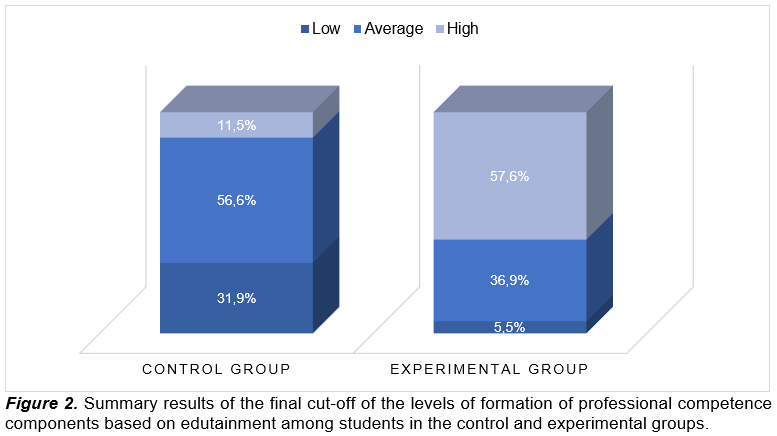
The summarized results of the final cut of the levels of component formation according to all criteria, and the comparative analysis of the participants in the experimental and control groups, indicate significantly lower results for the control group and significantly higher results for the experimental group of students of pedagogical specialties.
Given the specific characteristics of the questionnaires administered to students for statistical data verification, we chose the χ² test to analyze the results.
The obtained summarized results of the final cut of the levels of formation of professional competence in students of pedagogical specialties in the experimental and control groups based on edutainment were calculated by the formula:
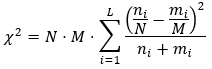

In the course of the calculations (using a critical value for L-1=2), the result 8.93 ≥ 5.99 confirms the effectiveness of the proposed methodology for developing professional competence in students in pedagogical specialties based on edutainment.
Thus, the effectiveness of the pedagogical conditions developed and implemented in the EG, as well as the methodological support for developing professional competence in students of pedagogical specialties through edutainment, was experimentally verified. The effectiveness of the pedagogical conditions developed and implemented in the EG, as well as the methodological support developed, was confirmed. Verification of the experimental results using statistical methods (χ² criterion) confirms the feasibility and effectiveness of the pedagogical conditions developed and implemented in the EG, as well as the methodological support based on edutainment.
The results of the present study demonstrate a substantial increase in the level of professional competence among students in the experimental group, where the proportion of students with a high level reached 57.6%, compared to 11.5% in the control group. These findings confirm the effectiveness of edutainment-based pedagogical conditions and are consistent with a growing body of research emphasizing the positive impact of interactive and game-based learning approaches in higher education.
In particular, the obtained results align with the findings of Ewelt-Knauer et al. (2025), who reported that the integration of edutainment-based instructional videos significantly enhances both student motivation and academic performance. The improvement observed in our study can be explained by similar mechanisms, including increased engagement, emotional involvement, and the use of multimedia learning environments. These factors contribute to deeper cognitive processing and more effective knowledge acquisition.
The results are also consistent with earlier studies demonstrating that edutainment increases student motivation and engagement. For example, experimental research in higher education contexts has shown that students exposed to edutainment strategies demonstrate significantly higher levels of motivation and participation compared to those taught using traditional methods. This supports the conclusion that the motivational component plays a key role in the formation of professional competence.
At the same time, our findings correspond with broader research on gamification and interactive learning, which indicates that increased motivation and reduced cognitive load lead to higher levels of engagement and improved learning outcomes. The structured use of edutainment elements in our intervention – such as simulations, role-playing, and gamified tasks – likely contributed to these effects by creating a more dynamic and learner-centered educational environment.
However, the results of this study should also be interpreted in light of research that reports mixed or context-dependent effects of edutainment and related approaches. Some studies indicate that while motivation and engagement consistently improve, the impact on long-term academic performance may vary and is not always statistically significant. This suggests that the effectiveness of edutainment depends on the quality of instructional design, alignment with learning objectives, and the integration of cognitive and pedagogical components.
In comparison with studies that report limited effects of immersive or game-based technologies on academic achievement, the stronger results obtained in this research may be explained by the comprehensive approach that combines edutainment with clearly defined pedagogical conditions, assessment criteria, and systematic organization of the educational process. Unlike approaches that rely solely on technological tools, the present study emphasizes the importance of methodological support and structured implementation.
Overall, the findings confirm and extend existing research by demonstrating that edutainment can serve not only as a motivational tool but also as an effective means of developing professional competence in higher education students. At the same time, the comparison with previous studies highlights the necessity of pedagogically grounded and systematically designed interventions to achieve sustainable educational outcomes.
Conclusions
The present study substantiates and experimentally verifies the effectiveness of edutainment as an innovative pedagogical approach for the development of professional competence in higher education students. The results confirm that the integration of edutainment-based pedagogical conditions, supported by digital technologies and interactive methodologies, leads to statistically significant improvements in students’ competence levels. In particular, the proportion of students demonstrating a high level of professional competence in the experimental group increased substantially compared to the control group (57.6% vs. 11.5%), which confirms the effectiveness of the proposed model.
The scientific contribution of the study lies in the development and validation of an integrated pedagogical framework that combines cognitive, heuristic, and creative components of professional competence with structured edutainment-based instructional design. Unlike fragmented approaches reported in previous studies, the proposed model ensures a systematic alignment between pedagogical conditions, digital tools, and competence-oriented outcomes.
At the same time, the findings should be interpreted with several limitations in mind. First, the study was conducted within a single academic context and involved a relatively limited sample of students in pedagogical specialties. Second, the duration of the intervention (one academic semester) does not allow for the assessment of the long-term sustainability of the acquired competencies. Third, potential variability related to individual learner characteristics and disciplinary differences was not fully explored.
In this regard, future research should focus on longitudinal designs to measure long-term retention and transfer of professional skills developed through edutainment. In particular, the following research directions are promising: conducting longitudinal studies (6–12 months or more) to assess the stability of the formed competencies; using repeated measurements (follow-up assessment) after the completion of the educational intervention; analyzing the transfer of skills into real professional activity (transfer of learning); using mixed methods to combine quantitative results with qualitative analysis of students' experiences; studying the influence of individual factors (motivation, learning style, digital competence) on the long-term retention of results; comparing the effectiveness of edutainment in different fields of training.
Thus, further research should be aimed not only at confirming the effectiveness of edutainment in the short term but also at identifying mechanisms for ensuring the sustainable and long-term development of professional competence, which is critically important for modern higher education.
Bibliographic references
Alhajaji, B. H., Algmadi, J. S., & Metwally, A. A. (2020). Exploring the success of GMT technique: Games, mind-mapping, and Twitter hashtags in teaching vocabulary in EFL higher education environment. International Journal of Higher Education, 9(3), 290–299. https://doi.org/10.5430/ijhe.v9n3p290
Corral-Joniaux, J. A., & Moya-Joniaux, C. A. (2021). Caracterización de las competencias profesionales que poseen los estudiantes de Licenciatura en Educación para la innovación y desarrollo de procesos educativos. Luz, 20(4), 108–120. https://luz.uho.edu.cu/index.php/luz/article/view/1140
Dubois, E., Farolfi, S., Hafkamp-Ibanez, L., & Roussel, S. (2025). Environmental edutainment games and pro-environmental behavior of primary school students: Evidence from a field experiment. Journal of Behavioral and Experimental Economics, 119, 102474. https://doi.org/10.1016/j.socec.2025.102474
Ewelt-Knauer, C., Herrmann, F., Mai, S. P. N., Pleger, A., & Schuetz, H. (2025). Keeping the balance: The impact of an instructional edutainment-based video series on students’ motivation and performance. Accounting Education, 1–37. https://doi.org/10.1080/09639284.2025.2482690
Febriyani, S., Suwono, H., & Ibrohim. (2020). Guided inquiry model combined with edutainment to increase junior high school students’ science learning interest. AIP Conference Proceedings, 2215(1), 030029. https://doi.org/10.1063/5.0003784
Figueredo, C. A., & Cuba, O. M. (2023). Procedimiento para la formación de competencias profesionales en los estudiantes de profesor de la Educación Técnica y Profesional de la rama Informática. Luz, 22(4), 49–63. https://luz.uho.edu.cu/index.php/luz/article/view/1343
Flores, M. I. N., & Calero, L. V. (2019). Evaluation of transversal professional competences and educational innovation. Revista Conrado, 15(67), 234–240. https://revista.conrado.ucf.edu.cu/index.php/conrado/article/view/1062
Ge, C., Wang, F. J., & Gao, Z. (2023). Research design based on children’s participative edutainment products. In M. Kurosu & A. Hashizume (Eds.), Human-computer interaction. HCII 2023 (Lecture Notes in Computer Science, Vol. 14012). Springer. https://doi.org/10.1007/978-3-031-35599-8_5
González-Fernández, R., Ruiz-Cabezas, A., Medina Domínguez, M. C., Subía-Álava, A. B., & Delgado Salazar, J. L. (2024). Teachers’ teaching and professional competences assessment. Evaluation and Program Planning, 103, 102396. https://doi.org/10.1016/j.evalprogplan.2023.102396
Knysh, I., Chovriy, S., Vaculenko, S., Koycheva, T., Lytvynov, A., & Kuchai, O. (2026). Artificial Intelligence: a tool for quality training of future specialists in socio-economic specialties. Revista Conrado, 22(108), e4682. https://conrado.ucf.edu.cu/index.php/conrado/article/view/4682
Pearl, D. K., & Lesser, L. M. (2021). Statistical edutainment that lines up and fits. Teaching Statistics, 43, 45–51. https://doi.org/10.1111/test.12241
Peña-Lapeira, C. J., & Vargas-Puentes, L. (2019). Evaluation of university professional practice as part of the process of business strengthening and student competences. In K. S. Soliman (Ed.), Vision 2025: Education excellence and management of innovations through sustainable economic competitive advantage (pp. 10677–10687). International Business Information Management Association (IBIMA). https://acortar.link/1pB9ve
Stapa, S. H., & Ibaharim, N. I. (2020). The use of edutainment in promoting higher order thinking skills in ESL writing among Malaysian university students. Arab World English Journal, (Special Issue 6), 49–66. https://doi.org/10.24093/awej/call6.4
Wanabuliandari, S., & Ardianti, S. D. (2023). Effectiveness of edutainment module based on local excellence of Pantai Utara Indonesia reviewed from students’ concept understanding. Pegem Journal of Education and Instruction, 13(3), 41–46. https://doi.org/10.47750/pegegog.13.03.05

Este artículo no presenta ningún conflicto de intereses. Este artículo está bajo la licencia Creative Commons Atribución 4.0 Internacional (CC BY 4.0). Se permite la reproducción, distribución y comunicación pública de la obra, así como la creación de obras derivadas, siempre que se cite la fuente original.