
Original Article
Eduweb, 2026, abril-junio, v.20, n.2. ISSN: 1856-7576
Doi: https://doi.org/10.46502/issn.1856-7576/2026.20.02.7
Blended learning and professional competence in higher education
Tetiana Hrebenyk
Candidate of Pedagogical Sciences, Associate Professor, Head of College,
Sumy State University, Ukraine.
https://orcid.org/0000-0002-1780-4393
Oksana Shkvyr
Doctor of Pedagogical Sciences, Professor, Professor of the Department of Pedagogics and Social Work, Khmelnytskyi Humanitarian-Pedagogical Academy, Ukraine.
https://orcid.org/0000-0003-0683-6557
Yuliia Kulimova
PhD in Pedagogical Sciences, Associate Professor of the Department of Primary Education, Poltava V.G. Korolenko National Pedagogical University, Ukraine.
https://orcid.org/0000-0002-1091-6878
Svitlana Vyhovska
Candidate of Pedagogical Sciences, Associate Professor of the Department of Pedagogy, National University of Life and Environmental Sciences of Ukraine, Ukraine.
https://orcid.org/0000-0002-8270-7207
Zoia Turianytsia
Candidate of Pedagogical Sciences (PhD in Pedagogy), Senior Lecturer at the Department of Vocational Education and Agricultural Production Technology, Oleksandr Dovzhenko Hlukhiv National Pedagogical University, Ukraine.
https://orcid.org/0000-0003-4526-757X
Cómo citar:
Hrebenyk, T., Shkvyr, O., Kulimova, Y., Vyhovska, S., & Turianytsia, Z. (2026). Blended learning and professional competence in higher education. Revista Eduweb, 20(2), 104-118. https://doi.org/10.46502/issn.1856-7576/2026.20.02.7
Recibido: 26/01/26 Aceptado: 16/04/26
Resumen
El estudio investiga la efectividad del aprendizaje semipresencial en la formación profesional de futuros docentes en instituciones de educación superior. El objetivo es verificar empíricamente el impacto de un entorno educativo integrado basado en el aprendizaje semipresencial en la formación de competencias profesionales. Se empleó un diseño de investigación de métodos mixtos, que combinó análisis teórico, recopilación de datos empíricos y validación estadística. La competencia profesional se evaluó según criterios motivacionales, de contenido y de actividad, con niveles clasificados como alto, medio y bajo. Tras la implementación del entorno educativo integrado basado en el aprendizaje semipresencial, se observaron mejoras sustanciales en el grupo experimental. En la etapa formativa, la proporción de estudiantes con un alto nivel de competencia aumentó al 49,9 % en el grupo experimental en comparación con el 19,8 % en el grupo de control, mientras que el nivel bajo disminuyó al 11,3 % en el grupo experimental frente al 23,6 % en el grupo de control. El nivel medio en el grupo experimental disminuyó al 38,8 %, lo que indica un cambio hacia niveles de competencia más altos. Los hallazgos demuestran que la implementación de un entorno educativo integrado basado en el aprendizaje semipresencial mejora significativamente la competencia profesional de los futuros docentes. El estudio aporta evidencia empírica que respalda la integración de formatos de aprendizaje digitales y tradicionales como medio para mejorar la calidad de la educación superior.
Palabras clave: aprendizaje semipresencial, formación profesional, futuros educadores, entorno educativo de la educación superior, tecnologías de aprendizaje móvil.
Abstract
The study investigates the effectiveness of blended learning in the professional training of future educators within higher education institutions. The aim is to empirically verify the impact of an integrated educational environment based on blended learning on the formation of professional competencies. A mixed-methods research design was employed, combining theoretical analysis, empirical data collection, and statistical validation. Professional competence was assessed across motivational, content, and activity criteria, with levels classified as high, average, and low. Following the implementation of the blended learning-based integrated educational environment, substantial improvements were observed in the experimental group. At the formative stage, the proportion of students with a high level of competence increased to 49.9% in EG compared to 19.8% in CG, while the low level decreased to 11.3% in EG versus 23.6% in CG. The average level in EG decreased to 38.8%, indicating a shift toward higher competence levels. The findings demonstrate that the implementation of a blended learning-based integrated educational environment significantly enhances the professional competence of future educators. The study provides empirical evidence supporting the integration of digital and traditional learning formats as a means of improving higher education quality.
Keywords: blended learning, professional training, future educators, educational environment of higher education, mobile learning technologies.
Introduction
The rapid digital transformation of society and the growing demands of the labor market have significantly reshaped the requirements for the professional training of future educators. Modern higher education institutions are expected to ensure not only the acquisition of theoretical knowledge but also the development of digital competencies, practical skills, and the ability for lifelong learning. In this context, blended learning has emerged as a promising educational approach that integrates traditional face-to-face instruction with digital and online learning environments.
Despite the increasing adoption of blended learning in higher education, existing research predominantly focuses on its technological implementation, general pedagogical advantages, and descriptive models. Previous studies highlight its potential for enhancing flexibility, personalization, and student engagement; however, they often lack empirical evidence regarding its direct impact on the formation of professional competencies, particularly in the training of future educators. Moreover, insufficient attention has been paid to the role of an integrated educational environment as a systemic factor that ensures the effectiveness of blended learning.
A critical analysis of the literature also reveals several research gaps. First, there is a lack of comprehensive models that combine pedagogical conditions, digital tools, and organizational components into a unified system of professional training based on blended learning. Second, empirical studies rarely provide statistically validated results demonstrating the effectiveness of such systems in improving specific components of professional competence (motivational, content, and activity). Third, the issue of aligning blended learning technologies with the real needs of future educators and their readiness for professional tasks remains underexplored.
These gaps lead to a clear research problem: how to design and implement an integrated educational environment based on blended learning that effectively enhances the professional competence of future educators and produces statistically significant improvements in their training outcomes.
The necessity of this study is due to the need to bridge the gap between the theoretical potential of blended learning and its practical effectiveness in the professional training of future specialists. Addressing this issue is essential for improving the quality of higher education, ensuring the alignment of educational outcomes with labor market demands, and developing evidence-based pedagogical solutions.
Literature Review
Blended learning has been widely explored in contemporary educational research as an approach that integrates traditional face-to-face instruction with digital and online learning environments. A significant body of literature conceptualizes blended learning primarily as a combination of instructional modalities. For instance, Saboowala & Manghirmalani Mishra (2021) define it as an integrated educational process that combines classroom and online interaction to enhance learning effectiveness.
While these studies provide a solid theoretical foundation, their focus remains largely descriptive and organizational. They tend to generalize the benefits of blended learning without offering sufficiently detailed empirical validation of its impact on measurable educational outcomes, particularly professional competence. This limits their applicability in designing evidence-based training systems for future educators.
Another group of studies addresses the readiness of educators and students for blended learning. Çemçem et al. (2024) examine readiness through multidimensional constructs, including pedagogical, technological, and organizational components. These works contribute to understanding the conditions necessary for successful implementation; however, they predominantly assess readiness as a precondition rather than as a dynamic outcome influenced by targeted pedagogical interventions. Consequently, they do not fully explain how blended learning environments can actively shape and improve professional competencies.
Research focusing on specific instructional strategies within blended learning – such as flipped classrooms, mobile learning, and interactive technologies – highlights their potential to increase student engagement and autonomy (Beltrán del Río, 2021; García-Ponce & Mora-Pablo, 2020). These studies demonstrate the effectiveness of particular tools or methods but often lack a holistic perspective. They analyze isolated elements rather than considering blended learning as a systemic phenomenon embedded within an integrated educational environment. As a result, the interconnections between pedagogical conditions, technological infrastructure, and competency development remain insufficiently explored.
Furthermore, recent studies (e.g., Cabezas et al., 2023; Cespedes-Panduro et al., 2023) emphasize the importance of teachers’ perceptions, digital competencies, and instructional quality in blended environments. Although these works contribute to understanding contextual factors, they rely heavily on qualitative or perceptual data, which may introduce subjectivity and limit the generalizability of findings. There is a notable lack of studies employing rigorous statistical methods to confirm the effectiveness of blended learning interventions.
Thus, the critical analysis of the literature reveals several key limitations:
In contrast to the existing literature, the present study offers a systemic and empirically validated approach to blended learning in higher education. Its unique contribution lies in: the development and implementation of an integrated educational environment that combines pedagogical, technological, and organizational components into a unified system of professional training; the operationalization of professional competence through clearly defined criteria (motivational, content, and activity), enabling precise measurement of learning outcomes; the use of a controlled pedagogical experiment with experimental and control groups to ensure comparability of results; the application of statistical validation (Fisher’s exact test, φ = 4.8), which provides reliable evidence of the effectiveness of the proposed approach; the demonstration of quantitative improvements in competence levels, thus bridging the gap between theoretical assumptions and empirical confirmation.
Therefore, this study not only extends the theoretical understanding of blended learning but also addresses the identified gaps by providing a comprehensive, evidence-based model for enhancing the professional competence of future educators within higher education.
The aim of this study is to theoretically substantiate and empirically verify the effectiveness of an integrated educational environment based on blended learning in the professional training of future educators, as well as to assess its impact on the formation of key components of professional competence (motivational, content, and activity) through a controlled pedagogical experiment and statistical validation of the obtained results.
Methodology
The study employed a mixed-methods research design integrating theoretical, empirical, and statistical approaches to ensure a comprehensive and valid evaluation of the effectiveness of blended learning in the professional training of future educators.
Research Design and Procedure
The research was conducted in three sequential stages: ascertaining, exploratory, and formative.
At the ascertaining stage, baseline data were collected to determine the initial levels of professional competence and students’ readiness for professional activity.
The exploratory stage involved the design of an integrated educational environment based on blended learning and the identification of pedagogical conditions for its implementation.
At the formative stage, a pedagogical experiment was conducted to verify the effectiveness of the proposed system through a controlled comparison between groups.
Participants
The study involved 85 students of higher education institutions, including an experimental group (EG, n = 41) and a control group (CG, n = 44). All participants were senior students who had completed pedagogical practice, ensuring a comparable baseline of professional experience.
Instruments and Data Collection
To enhance the validity and reliability of the findings, multiple data collection instruments were used:
Triangulation of these instruments ensured consistency and reduced subjective bias in data interpretation.
Criteria and Indicators of Assessment
Professional competence was operationalized through three interrelated criteria:
Indicators: intrinsic motivation for professional development, readiness for self-directed learning, interest in using digital technologies in professional activity.
Indicators: level of theoretical and digital knowledge, understanding of blended learning tools, and awareness of professional standards.
Indicators: practical skills, ability to apply knowledge in professional contexts, problem-solving skills, and use of digital tools in pedagogical practice.
Each criterion was assessed using a three-level scale:
Quantitative thresholds for level classification were based on the percentage of successfully completed diagnostic tasks:
Intervention Description
The experimental group was exposed to a specially designed system of professional training based on an integrated educational environment. This system included:
The control group continued learning under traditional instructional conditions.
Data Analysis and Statistical Procedures
Quantitative data were processed using methods of mathematical statistics to ensure objective evaluation of the results.
To determine the statistical significance of differences between the experimental and control groups, the Fisher’s angular transformation (φ*) criterion was applied. This method was selected due to its suitability for:
The procedure involved the following steps:
The empirical value obtained in the study (φ = 4.8) exceeds the critical threshold (p < 0.05), indicating statistically significant differences between the groups.
Thus, the null hypothesis (H₀), which assumed no difference between the experimental and control groups, was rejected, while the alternative hypothesis (H₁) was accepted, confirming that the implemented blended learning system had a significant positive effect on the formation of professional competence.
Validity and Reliability
The reliability of the study was ensured through:
Internal validity was supported by the experimental design with control and experimental groups, while external validity is associated with the representativeness of participants as senior students in higher education.
Ethical Considerations
Participation in the study was voluntary, and respondents were informed about the purpose of the research. Data confidentiality and anonymity were ensured throughout all stages of the study.
Results and Discussion
Content, advantages, features, and main models of blended learning. Ways of implementing blended learning in the educational process of higher education. Economic competition, rapid changes in production, and global digitalization contribute to the search (in the direction of modernization of educational activities) for effective ways to ensure the training of a new generation of specialists who will be able to compete in the modern labor market and will be able to adapt to today's conditions and act in non-standard situations. Therefore, a high responsibility lies with higher education institutions that train future educators. Thanks to the spread of innovations and their implementation in education, an educational system for creative, individualized, flexible, open, continuous, and lifelong education of a person is being formed. This system includes the following components: new methods, modern educational technologies, teaching and learning methods, new means of interaction, and pedagogical innovations in the educational process, i.e., digital technologies (Huilcapi-Collantes et al., 2020).
One advantage of blended learning over traditional learning is the active use of interactive technologies and access to learning materials. Technology becomes a full-fledged tool in the educational process, not just an auxiliary one. Blended learning involves a combination of different approaches and methods and offers variability in the presentation of new material. Thus, one part of the educational content can be designed for independent study, and the second can be devoted to group work, aimed at completing the task jointly (Garcez et al., 2022).
Flexibility is an important feature of blended learning – it can take place remotely, through online platforms and electronic resources, and in a traditional classroom. Blended learning expands students' opportunities to engage with educational material actively. It promotes a personalized approach to education, which positively impacts the development of skills and knowledge among future specialists. Blended learning provides a new role for educators as facilitators of the educational process (Ota et al., 2020).
Also, in the training of future specialists, the advantages of blended learning include: individualization of learning, because blended learning technologies allow future specialists to choose the pace that meets their needs and the method and sequence of studying the material; and diversity of learning methods. Combining online resources with traditional teaching methods, which allows future specialists to receive diversity in learning, to improve understanding of the material; stimulating self-discipline and independence; formation of key professional competencies: critical thinking, independence, communication and cooperation, ability to solve problems; familiarization with digital technologies that are widely used in professional activities to prepare students to work in a digital environment and increase their competitiveness in the labor market (García-Ponce & Mora-Pablo, 2020).
Scientists distinguish several main models of blended learning used in higher education. The Supplemental Model complements traditional classroom instruction with electronic resources, while the Replacement Model transfers a significant part of learning to digital formats with educator support and consultation. The Buffet Model allows students to combine online and face-to-face learning according to their needs, whereas the Emporium Model focuses on mastering course content in computer laboratories and online platforms (Sandoval-Cruz et al., 2022).
Another widely used approach is the Rotation Model (including station rotation, individual rotation, and the flipped classroom), which alternates between classroom and online activities. The Flex Model emphasizes remote learning with opportunities for individual consultation with educators. The A La Carte Model enables students to select additional online courses alongside their core program, while the Enriched Virtual Model combines initial face-to-face instruction with subsequent remote learning and independent study (Cabezas et al., 2023).
Key characteristics of blended learning. Mobile learning technologies to support contextual learning. Effective tools of student-centered blended learning technology. The integrated educational environment at the university is based on the principles of blended learning.
Mobile learning technologies in higher education support contextual learning in educator training within blended learning environments. At the same time, students’ personal qualities and the alignment of training content with stable technologies play a crucial role in ensuring high-quality professional preparation. Among the effective models of blended learning, the flipped classroom has proven particularly valuable, especially during the transition to online educator training, where both students and educators often prefer it to traditional teaching approaches. The effectiveness of professional preparation largely depends on the appropriate selection of teaching forms, methods, tools, and methodology that enhance students’ academic success and support active, structured learning (Beltrán del Río, 2021).
Blended learning contributes to the development of creativity, critical thinking, professional skills, and learning motivation among future educators. Student-centered learning technologies are widely used in this process, supported by digital platforms and tools such as Zoom, Moodle, Google applications, Whiteboard, and Telegram, as well as educational resources including Wolfram Alpha, Khan Academy, and Coursera. To support distance and blended learning, various digital materials are implemented, including instructional mind maps, video lessons, electronic manuals, presentations, test tasks, and methodological guidelines.
Blended learning combines traditional educational forms – such as classroom discussions, reports, and essays – with e-learning technologies that provide access to digital resources and enable interaction through telecommunications networks. The effectiveness of this approach depends on the development of a strong didactic and methodological base for each course, which allows students with different levels of preparation to learn at an individual pace and develop professional competencies. Innovative technologies widely used in blended learning include distance learning tools, interactive methods, project-based learning, simulation technologies, case methods, video training, collaborative learning, computer modeling, and differentiated learning approaches (Marín-Zapata et al., 2022; Cespedes-Panduro et al., 2023; Vielma Puente & Ruano, 2021).
Experimental research
The effectiveness of the proposed system of professional training based on an integrated educational environment within blended learning was verified through a pedagogical experiment conducted in three stages: ascertaining, exploratory, and formative. The study involved 85 students, including 41 students in the experimental group (EG) and 44 students in the control group (CG), which ensured the comparability of the samples and the reliability of the obtained results.
Professional competence was assessed according to three criteria: motivational, content, and activity, which together reflect students’ motivation for professional development, their theoretical and digital knowledge, and their ability to apply professional skills in practical situations. Each criterion was evaluated according to three levels of competence formation: high, average, and low.
Baseline (ascertaining stage) results
The results of the ascertaining stage demonstrated that the initial levels of professional competence formation in both groups were nearly identical, which confirms the methodological validity of further comparison between the groups.
In the control group, the distribution of competence levels was as follows:
In the experimental group, the indicators were similar:
The obtained results indicate that the majority of students in both groups demonstrated average or low levels of professional competence, which reflects insufficient development of practical skills and digital competencies necessary for modern professional activity. The similarity of indicators between the groups confirms that both samples were statistically comparable at the beginning of the experiment.
In addition, the results of questionnaires and interviews revealed that many students experienced difficulties in mastering digital tools and applying professional knowledge in practice. These findings indicate the need to improve the system of professional training through the integration of innovative educational technologies and digital learning environments.
The survey was conducted to assess students' motivation for practical training; determine the level of possession of digital knowledge necessary for professional activity, the presence of stable motives for mastering professional skills and abilities, and to reflect the results of training, appropriate measuring procedures, or episodic superficial interest, or real professional interest in the conditions of practical training for studying the material.
The results of the ascertaining stage of the experiment showed that the development of all components in both the experimental and control groups was insignificant, with most components at average or low levels.
Table 1.
Results of the baseline assessment of professional competence levels among future educators in higher education

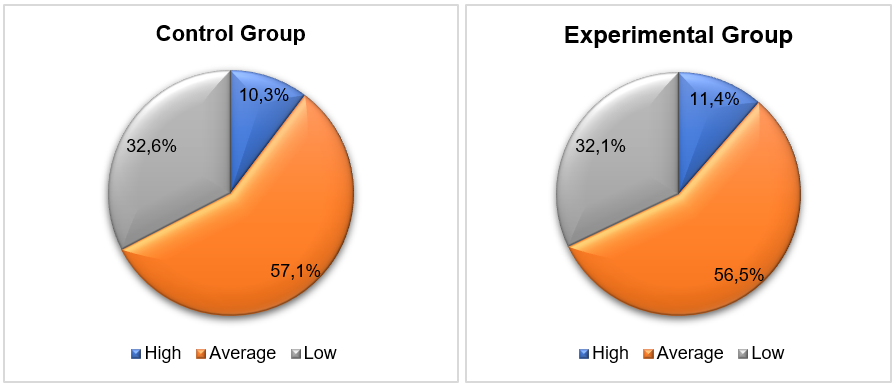
Figure 1. Results of the baseline assessment of professional competence levels among future educators in higher education.
So, using methods such as interviews and questionnaires, the experiment's ascertaining stage was conducted, and the level of professional competence of future educators during professional training was determined. Senior students who had completed pedagogical practice participated in the survey.
The survey results revealed that the majority of students have an average-to-low level of professional competence. The majority of respondents independently mastered the digital knowledge necessary for professional activity. It noted difficulties during this learning process, indicating the need to improve the professional training system for future specialists in blended learning by developing and implementing an integrated educational environment based on blended learning in higher education.
It was found that, in a blended-learning context, an important aspect of the functioning of the integrated educational environment system is the organization of interaction between students and educators. In the professional training of future educators, pedagogical interaction in blended learning conditions was conducted using a synchronous system (text conferences, video communication tools, videos, webinars) and an asynchronous system (e-mail, forums, wiki sites, etc.).
As a result of testing the integrated educational environment system based on blended learning implemented in a higher school, in the EG, the formative stage of the experiment showed a significant change in the level of formation across all components in the experimental group. Moreover, in the control group, we observe a slight increase in the phenomenon under study; that is, the results have changed, but only slightly.
Table 2.
Results of the formative stage of the experiment assessing the levels of professional competence formation among future educators in higher education

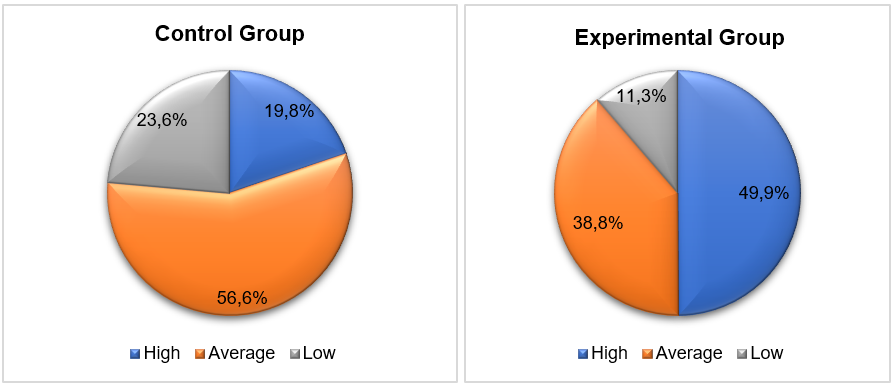
Figure 2. Results of the formative stage of the experiment assessing the levels of professional competence formation among future educators in higher education.
Using Fisher’s exact test, the reliability of the results was calculated. Two hypotheses were proposed: working and alternative.
H0 (working): the proportion of students in the experimental group is not greater than the proportion of students in the control group who scored above 80% or at the same level.
H1 (alternative): the proportion of students in the experimental group is greater than the proportion of students in the control group who scored above 80% or at the same level.
We used Fisher’s exact test to assess the statistical significance of the difference between the percentages of the two samples. The Fisher angular transformation, measured in radians, converts the central angle to percentages. A larger angle corresponds to a larger percentage, and a smaller angle corresponds to a smaller percentage. Therefore, the values of were determined for both groups using the Fisher angular transformation method.


The empirical value of 4.8 falls within the significance zone; accordingly, we reject H0 and accept H1: the proportion of students in the experimental group who received scores above 80% is greater than that in the control group.
We can conclude from the results obtained after the formative stage of the experiment that the proportion of students in the experimental group is greater than in the control group at both high and average levels of professional competency formation. It can be argued that the system we proposed contributes to increasing professional competencies and is effective through blended learning, which is an important aspect of the functioning of an integrated educational environment in higher education.
To determine the statistical significance of the obtained differences between the experimental and control groups, Fisher’s angular transformation (φ)* was applied. This method is appropriate for comparing proportions between two independent samples and allows reliable analysis of categorical data distributions.
The empirical value obtained during the analysis (φ = 4.8) exceeded the critical value at the p < 0.05 significance level, which indicates statistically significant differences between the experimental and control groups.
Therefore, the null hypothesis stating that there is no difference between the groups was rejected, while the alternative hypothesis was accepted. This confirms that the implementation of the integrated educational environment based on blended learning had a statistically significant positive effect on the formation of professional competence among future educators.
Overall, the results of the pedagogical experiment demonstrate that the integration of digital learning technologies with traditional forms of instruction creates favorable conditions for improving students’ professional competence. The significant increase in the proportion of students with high competence levels and the simultaneous decrease in the number of students with low competence levels confirm the effectiveness of the proposed educational model.
Thus, the obtained empirical data provide reliable evidence that the implementation of a blended learning-based integrated educational environment contributes to improving the quality of professional training of future educators in higher education.
The results of this study generally confirm the conclusions presented in previous research on the effectiveness of blended learning in higher education. In particular, the findings support the arguments of Sandoval-Cruz et al. (2022), who emphasize that blended learning models contribute to increasing students’ engagement and flexibility in the educational process. Similar to their conclusions, the present study demonstrates that the integration of digital technologies with traditional instruction creates favorable conditions for the development of professional competencies among future educators.
At the same time, the obtained results extend the findings of Marín-Zapata et al. (2022), who primarily focused on the organizational and technological aspects of implementing blended learning. While their research highlights the importance of digital platforms and online learning tools, the results of the current study indicate that the effectiveness of blended learning depends not only on technological infrastructure but also on pedagogical conditions, methodological support, and the active involvement of students in the learning process.
Furthermore, the results are consistent with the conclusions of Cespedes-Panduro et al. (2023) and Vielma Puente and Ruano (2021), who emphasize the importance of interactive and practice-oriented learning technologies in professional training. However, unlike these studies, which mainly analyze theoretical or methodological aspects of blended learning, the present research provides empirical evidence of statistically significant improvements in students’ competence levels after the implementation of a blended learning environment.
Nevertheless, some differences with earlier studies can also be observed. While several researchers highlight the dominant role of digital learning environments in improving educational outcomes, the findings of this study suggest that the most effective results are achieved through a balanced integration of traditional and digital learning formats. Thus, the effectiveness of blended learning should be viewed not only as a technological innovation but also as a comprehensive pedagogical system that integrates methodological, organizational, and technological components of the educational process.
Conclusions
The study investigated the effectiveness of implementing a blended learning environment in the professional training of future educators in higher education institutions. The results of the pedagogical experiment demonstrated that the integration of traditional teaching methods with digital learning technologies contributes to a significant improvement in the level of students’ professional competence. In particular, the experimental group showed a noticeable increase in the proportion of students with a high level of competence and a decrease in the number of students with a low level of competence compared with the control group. These results confirm the effectiveness of the integrated educational environment based on blended learning and highlight its potential for improving the quality of professional training in higher education.
The findings also demonstrate that the effectiveness of blended learning depends not only on the use of digital tools but also on the pedagogical organization of the educational process, the application of interactive learning methods, and the development of methodological support for students’ independent and collaborative learning activities. The integration of digital platforms, multimedia resources, and practice-oriented tasks creates favorable conditions for the development of critical thinking, creativity, and professional skills among future educators.
Despite the positive results obtained, the study has several limitations: the research was conducted within a limited sample of students from one higher education institution, which may restrict the generalizability of the findings to other educational contexts; the study focused primarily on the assessment of professional competence levels and did not examine in detail other potential outcomes of blended learning, such as long-term learning retention, students’ digital literacy, or psychological factors influencing learning motivation. In addition, the duration of the experiment was limited, which makes it difficult to evaluate the long-term sustainability of the observed improvements.
The practical implications of this study are related to the possibility of using blended learning as an effective pedagogical approach in the professional training of future educators. The proposed model of an integrated educational environment can be applied in higher education institutions to improve the organization of the educational process, enhance student engagement, and support the development of professional competencies required in the modern educational environment. The results of the study may also be useful for educators, curriculum developers, and university administrators when designing innovative educational programs and integrating digital learning technologies into teacher education.
Future research should focus on expanding the empirical base of the study by involving a larger and more diverse sample of participants from different higher education institutions and countries. It would also be useful to investigate the long-term impact of blended learning on students’ professional development and career readiness. Further studies may explore the effectiveness of specific digital tools, adaptive learning technologies, and artificial intelligence in blended learning environments, as well as analyze the relationship between students’ motivation, digital competence, and academic performance in the context of blended education.
Bibliographic references
Beltrán del Río, N. (2021). A useful framework for teacher professional development for online and blended learning to use as guidance in times of crisis. Educational Technology Research and Development, 69, 7–9. https://doi.org/10.1007/s11423-021-09953-y
Cabezas, V., Pereira, S., Figueroa, C., & Straub, C. (2023). Teachers’ perceptions about the delivery and methodology of a blended learning mentor training course: A case from Chile. International Journal of Mentoring and Coaching in Education, 12(2), 177–193. https://doi.org/10.1108/IJMCE-05-2022-0032
Çemçem, G.D., Korkmaz, Ö., & Kukul, V. (2024). Readiness of teachers for blended learning: A scale development study. Education and Information Technologies, 29, 23631–23655. https://doi.org/10.1007/s10639-024-12777-x
Cespedes-Panduro, B., Ticona-Arapa, H.C., Zela-Payi, N.O., Chambi-Condori, N., Sucari-León, A., Chipana-Loayza, P., Sardon-Quispe, W.W., Callupe-Cueva, P.C., Torres-Chuco, M.S., Aguilar-Pichón, F.M., & Tilwani, S.A. (2023). Important teacher qualities for integrating blended learning in higher education. Information Sciences Letters, 12(5), 2189–2201. https://doi.org/10.18576/isl/120553
García-Ponce, E., & Mora-Pablo, I. (2020). Challenges of using a blended learning approach: A flipped classroom in an English teacher education program in Mexico. Higher Learning Research Communications, 10(2). https://doi.org/10.18870/hlrc.v10i2.1209
Garcez, A., Silva, R., & Franco, M. (2022). The hard skills bases in digital academic entrepreneurship in relation to digital transformation. Social Sciences, 11(5), 192. https://doi.org/10.3390/socsci11050192
Huilcapi-Collantes, C., Hernández Martín, A., & Hernández-Ramos, J.P. (2020). The effect of a blended learning course of visual literacy for in-service teachers. Journal of Information Technology Education: Research, 19, 131–166. https://doi.org/10.28945/4533
Marín-Zapata, S.I., Román-Calderón, J.P., Robledo-Ardila, C., & Jaramillo-Serna, M.A. (2022). Soft skills: Do we know what we are talking about? Review of Managerial Science, 16, 969–1000. https://doi.org/10.1007/s11846-021-00474-9
Ota, M. A., Nagata, A.C., & Ferreira, T.C. (2020). Blended teacher training program: Rethinking learning spaces and evaluating active learning in basic education schools. In Handbook of research on determining the reliability of online assessment and distance learning (pp. 337–357). IGI Global. https://doi.org/10.4018/978-1-7998-4769-4.ch014
Saboowala, R., & Manghirmalani Mishra, P. (2021). Readiness of in-service teachers toward a blended learning approach as a learning pedagogy in the post-COVID-19 era. Journal of Educational Technology Systems, 50(1), 9–23. https://doi.org/10.1177/00472395211015232
Sandoval-Cruz, R.I., Navarro Rangel, Y., González Calleros, J.M., & Perales-Escudero, M.D. (2022). Pre-service EFL teachers’ conceptions of learning about SLA through online discussion forums and WhatsApp in blended learning. RELC Journal, 53(1), 165–179. https://doi.org/10.1177/0033688220917221
Vielma Puente, J.E., & Ruano, M.A. (2021). Análisis de la utilidad del programa básico de formación docente en modalidad semipresencial. Estudios Pedagógicos, 47(2), 289–298. https://doi.org/10.4067/S0718-07052021000200289

Este artículo no presenta ningún conflicto de intereses. Este artículo está bajo la licencia Creative Commons Atribución 4.0 Internacional (CC BY 4.0). Se permite la reproducción, distribución y comunicación pública de la obra, así como la creación de obras derivadas, siempre que se cite la fuente original.