
Original Article
Eduweb, 2026, enero-marzo, v.20, n.1. ISSN: 1856-7576
Doi: https://doi.org/10.46502/issn.1856-7576/2026.20.01.5
Tecnologías digitales para el desarrollo de la competencia investigativa en estudiantes de educación superior
Olga Chashechnikova
Doctor of Pedagogical Sciences, Professor of the Department of Mathematics, Head of the Department of Mathematics, Physics and Teaching Methods, Sumy State Pedagogical University named after A. S. Makarenko, Ukraine.
https://orcid.org/0000-0003-1101-5534
Oksana Odintsova
PhD in Mathematics, Associated Professor of Department of Mathematics, Associated Professor of Department of Mathematics, Physics and their Methodics, Sumy State Pedagogical University named after A.S. Makarenko, Ukraine.
https://orcid.org/0000-0002-9948-3801
Zoriana Chukhrai
Candidate of Pedagogical Sciences, Associate Professor, Department of Higher Mathematics, National University of Water and Environmental Engineering, Ukraine.
https://orcid.org/0000-0002-0963-0522
Nataliia Kulchytska
Candidate of Pedagogical Sciences, Associate Professor, Chairperson of the Department of Mathematics and Informatics and Methods of Teaching, Vasyl Stefanyk Carpathian National University, Ukraine.
https://orcid.org/0000-0001-9308-6840
nataliia.kulchytska@pnu.edu.ua
Olena Bielikova
Candidate of Pedagogical Sciences, Senior Lecturer at the Department of Practical Psychology, Kryvyi Rih State Pedagogical University, Ukraine.
https://orcid.org/0000-0001-7074-5030
Cómo citar:
Chashechnikova, O., Odintsova, O., Chukhrai, Z., Kulchytska, N., & Bielikova, O. (2026). Digital technologies for the development of research competence in higher education students. Revista Eduweb, 20(1), 70-88. https://doi.org/10.46502/issn.1856-7576/2026.20.01.5
Recibido: 14/10/25 Aceptado: 10/02/26
Abstract
The study describes the content, components, and specific features of research competence. The importance of the problem of the modern scientific space of human existence is shown in compliance with academic integrity. The roles of virtual reality technologies, artificial intelligence, and blockchain in developing students' research competence are clarified, and the role of the pan-European platform for higher digital education for students is demonstrated. The significance of independent work by higher education applicants in developing research competence and participating in academic mobility programs through the use of digital technologies is demonstrated. In the course of the study, a technology for the formation of research competence in future specialists through the use of digital technologies, which is necessary for modern professional human activity, was developed and substantiated, along with pedagogical conditions and a special course.
Keywords: research competence, future specialists, use of digital technologies, virtual reality, artificial intelligence.
Resumen
El estudio describe el contenido, los componentes y las características específicas de la competencia investigadora. Se demuestra la importancia del problema del espacio científico moderno de la existencia humana en el cumplimiento de la integridad académica. Se aclara el papel de las tecnologías de realidad virtual, la inteligencia artificial y la cadena de bloques en el desarrollo de la competencia investigadora de los estudiantes, y se demuestra el papel de la plataforma paneuropea para la educación superior digital para estudiantes. Se demuestra la importancia del trabajo independiente de los solicitantes de educación superior en el desarrollo de la competencia investigadora y la participación en programas de movilidad académica mediante el uso de tecnologías digitales. En el curso del estudio, se desarrolló y fundamentó una tecnología para la formación de la competencia investigadora en futuros especialistas mediante el uso de tecnologías digitales, necesaria para la actividad profesional humana moderna, junto con las condiciones pedagógicas y un curso especial.
Palabras clave: competencia investigadora, futuros especialistas, uso de tecnologías digitales, realidad virtual, inteligencia artificial.
Introduction
The development of modern society is characterized by high dynamics of modernization, covering all spheres of human activity and life. In the context of digital transformation and rapid technological progress, interest in scientific research is constantly increasing, aimed at solving problems that arise from the ongoing introduction of innovations across all spheres of society. Every year, the scientific literature is replenished with a large number of significant studies across various fields. Therefore, in the context of modern challenges, individual areas of scientific research need to be revised. The digital direction opens up entirely new areas of research that align with contemporary trends in educational development.
The development of research competence in specialists deserves special attention because it fosters a critical approach and analytical thinking, enabling them to generate innovative solutions and solve unique problems. One aspect of solving problems using digital technologies to develop research competence in each person is a new look at the education and professional activities of future specialists.
In today's conditions, the level of requirements for an individual's research competence is increasing, as there is constant entry into the market of digitalization services and technologies, and the development of artificial intelligence by future specialists. Inseparable from the digitalization of education and professional activities of a person are adherence to the principles, norms, and rules of academic integrity, the ability to critically evaluate information, the culture of business communication, the ability to find primary sources and reliable facts, etc. Therefore, the formation of research competence in future specialists in the conditions of digitalization is a process of developing an integrative purposeful quality of the individual, which provides experience in scientific and research activities, provides the ability to combine motivation, skills, abilities, knowledge, values, and professional interests, to develop the capabilities of the individual in the field of education, solve issues of using the latest digital technologies, improve skills for improving professional activities, conduct research, and provide conditions for professional continuous self-development throughout life (Rodríguez et al., 2024).
Research competence of future specialists focuses on the properties and professionally essential qualities of the individual through the use of digital technologies, as manifested in the ability and willingness to conduct research. The mentioned competence includes the researcher's experience, skills, abilities, knowledge, personal traits and value orientations; it is manifested in programming the course of one's own research activities, the ability to determine the goal, objectives of the research, subject, object and vision of the essence of the problem, using a creative approach, evaluating results and analyzing research activities, etc.
No less important for future specialists are the ability to apply research competence to analyze the results of research activities, the ability to present one's own achievements using digital technologies, and the ability to formulate conclusions. Research competence of a future specialist is an integral part of professional and general education.
Literature Review
Recent research demonstrates a growing convergence around the importance of digital competence and research competence as core outcomes of higher education in the context of digital transformation. However, the literature also reveals conceptual ambiguities, methodological differences, and gaps between general frameworks of digital competence and concrete pedagogical technologies for developing research competence.
Gisbert Cervera & Caena (2022) treat digital literacy and digital competence as largely synonymous, emphasizing their systemic role in teacher education and professional development. While this broad conceptualization supports the integration of digital tools into higher education, it does not sufficiently differentiate how digital competence specifically contributes to the formation of research competence. In contrast, Skakun (2021) grounds digital competence in national curricular frameworks and highlights its practical relevance for professional training. Although both approaches stress the necessity of digital skills, a tension emerges between generalized models of digital competence and the need for discipline-specific, research-oriented applications, which are central to the present study.
Beaulieu et al. (2024) extend the discussion by focusing on collaborative research competencies, particularly reflective and boundary-spanning competences. Their work highlights the importance of researchers’ ability to move between academic and practitioner contexts. This perspective converges with the present study in recognizing research competence as a dynamic, practice-oriented construct. However, their analysis is primarily situated within collaborative and organizational research settings and provides limited guidance on how such competencies can be systematically formed through pedagogical technologies in higher education curricula.
Empirical intervention studies further demonstrate the effectiveness of integrating pedagogical strategies with digital tools to enhance research competence. Paucar-Curasma et al. (2025) show that combining Pólya’s problem-solving framework with a STEM educational kit significantly improves students’ analytical, planning, and critical thinking skills. Similarly, Winchez Aylas & Bejarano Alvarez (2025), in their systematic review, identify flipped learning, Lean startup approaches, and research workshops as effective strategies for developing both technical and transversal research skills. These studies converge in emphasizing active, problem-based, and technology-supported learning. Nevertheless, they primarily focus on isolated methods rather than on a holistic pedagogical technology that integrates motivation, cognition, and technological components, as proposed in the current research.
Espinoza-Montes et al. (2025) draw attention to assessment practices in research competence development, noting a predominance of summative assessments and a relative underuse of formative approaches. This finding highlights a critical gap between the recognized need for continuous competence development and the prevailing evaluation practices in higher education. The present study addresses this gap by embedding assessment within a comprehensive pedagogical technology that aligns formative and summative dimensions with the staged development of research competence.
Overall, the literature demonstrates broad agreement on the importance of digital technologies for supporting research competence. At the same time, important gaps remain: (1) limited integration of digital competence frameworks with concrete pedagogical technologies for research competence formation; (2) insufficient alignment between instructional strategies and assessment models; and (3) a lack of holistic models that systematically combine motivational, cognitive, and technological components. The present study builds on these convergences while addressing these gaps by proposing and empirically validating an integrated pedagogical technology for the formation of research competence through the use of digital technologies.
Research purpose. Formation of research competence of future specialists through the use of digital technologies.
Methodology
Research Design
This study employed a quasi-experimental research design with control (CG) and experimental groups (EG) to examine the effectiveness of an innovative pedagogical technology for the formation of research competence in future specialists through the use of digital technologies. The design included an ascertaining (pre-test) stage and a formative (post-test) stage, enabling the assessment of changes in research competence over time and comparison between groups.
Participants
The participants were 184 higher education students enrolled in professional training programs at higher education institutions. The sample was divided into an experimental group (EG) and a control group (CG). At the ascertaining stage, 132 students participated in the diagnostic procedures to determine baseline levels of research competence. Statistical analysis using the Kolmogorov–Smirnov test confirmed that there were no statistically significant differences between the EG and CG at baseline (p > 0.05), indicating group equivalence prior to the intervention.
Participation was voluntary, and all respondents provided informed consent. The study was conducted in accordance with institutional ethical standards and principles of academic integrity.
Intervention: Pedagogical Technology
The experimental group was exposed to an innovative pedagogical technology designed to develop research competence through the systematic use of digital technologies. The technology was grounded in competence-based, systemic, personality-oriented, axiological, situational, and synergistic approaches.
The intervention included:
The control group followed the standard curriculum without the implementation of the proposed pedagogical technology.
Instruments and Measures
Research competence was operationalized through three components: motivational, cognitive (gnostic), and technological. For each component, specific indicators were defined in accordance with the conceptual framework of the study.
Data were collected using a комплексний діагностичний інструментарій, which included:
Each component was evaluated across three levels of formation: low, average, and high. The instruments were reviewed by subject-matter experts to ensure content validity.
Procedure
The study was conducted in three main stages:
Data Analysis
Quantitative and qualitative data analyses were employed. Descriptive statistics were used to determine the distribution of students across levels of research competence. To test group equivalence and the effectiveness of the intervention, the Kolmogorov–Smirnov λ-test was applied to compare empirical distributions between the EG and CG at both pre-test and post-test stages.
The level of statistical significance was set at p ≤ 0.05. The null hypothesis (H0) stated that there were no statistically significant differences between the distributions of research competence levels in the EG and CG, while the alternative hypothesis (H1) stated that significant differences existed as a result of the intervention.
Ethical Considerations
The study adhered to ethical standards for educational research. Participation was voluntary, anonymity and confidentiality of respondents were ensured, and data were used exclusively for research purposes. The study complied with institutional requirements and principles of academic integrity.
Results and Discussion
Content of the concept, components, and specific features of research competence. An important problem in modern scientific space for human existence is the observance of academic integrity.
Research competence is a personal-professional and integrated quality of a specialist that reflects the level of mastery of scientific research methodology, motivation for scientific search, and the personally significant qualities of the researcher: the ability to engage in innovative and creative activity and to think innovatively.
Important components of the research competence of future specialists include the ability to work with large amounts of data, adapt to a digital environment, and apply modern digital technologies in scientific activities. Active use of digital resources is widespread across all spheres of society, and the educational and scientific fields are no exception. Educational realities have flooded the digital space with new means of information processing and search, and digital programs and gadgets have become assistants and substitutes in performing the main stages of research work (Peters et al., 2022).
Research competence of a specialist involves the implementation of clear stages of activity, which can be equated with the ability to search for solutions with unknown outcomes, to answer research tasks, and to engage in creative exercises. The research competence of a specialist is an integrative, holistic characteristic of the personality of a specialist, which for professional activity in order to obtain new knowledge combines the means of research activity, skills, knowledge at the level of technology, value attitude, personal qualities, which are manifested in the ability and willingness to carry out research activities of a higher school student by solving educational problems, applying methods of scientific knowledge, building an educational digital process (Padilla-Hernández et al., 2020).
The main goal of a specialist's research activity is high-quality professional training through self-realization and self-development, improving the quality of digitalization, revealing scientific and creative potential, developing a value-based attitude towards one's own activities, forming the necessary skills and abilities, and improving education in general. Therefore, the formation of research competence of future specialists involves the manifestation of the ability to self-education, continuous self-development, and the improvement of the quality of digitalization of professional and educational activities, and not only the mastery of scientific research methods. Moreover, such components contribute to increasing a specialist's competitiveness, deepening his skills and knowledge, expanding his scientific worldview, and developing his own professional position on typical problems (Martzoukou et al., 2020).
Let us identify the specific features of the research competence of future specialists that stem from the interdisciplinary nature of their activities. Future specialists must have the ability to implement innovative technologies, critically evaluate innovative technologies and modern methods, digital technologies that are most appropriate to apply in professional activities; be able to combine knowledge from different fields to increase the effectiveness of their professional work; must be able to apply tools and methodological approaches in scientific activities; in particular, be able to use innovative and typical situations, research and problem-solving approaches in solving problems; constantly strive for professional mastery; actively participate in self-development and the process of self-education.
The creation of a modern educational environment is facilitated by the introduction of digital technologies, which increase the efficiency of the educational process and provide access to self-education and virtual resources. The development of research competence among future specialists is facilitated by tools such as online courses, digital platforms, interactive materials, and applications. Such an educational process contributes to improving the quality of higher education classes. This stimulates the development of critical thinking among future specialists, the systematization and analysis of information, and active involvement in scientific activity, as well as the independent search for necessary materials in educational and professional activities (Chumpitaz Campos & Lomba-Portela, 2024).
The use of digital resources in the development of research competence among future specialists requires students to adhere to academic integrity, which is an important problem in modern scientific life. However, students and young scientists do not always adhere to the principles of academic integrity because they are little aware of the consequences of non-compliance and are also not motivated to engage in open scientific activity. When forming research competence in future specialists, it is worth realizing that an honest scientist, student, future specialist is a person who can identify relevant important scientific research through training and work in a digital environment and direct it to solving modern problems, can identify errors, critically evaluate scientific materials, and, if necessary, cancel outdated data from scientific circulation (Zapata Ancajima, 2022).
Digitalization contributes to the formation of an innovative space in research activities, which ensures students' access to resources, stimulates their educational activities for continuous development, allows them to implement and create an individual digital educational trajectory of future specialists, provides an opportunity to introduce innovative author's developments into the educational process, improve the research system of science and education, in particular. The formation of a digital educational environment during the development of research competence in future specialists is a modern approach to innovative training of a new generation of specialists who, in the context of digital transformations, are focused on modernizing the educational paradigm (Chumpitaz Campos & Lomba-Portela, 2024).
The roles of virtual reality, artificial intelligence, and blockchain technologies in developing students' research competence. The role of the pan-European platform for higher digital education of students.
Digital solutions, blockchain, virtual reality technologies, and artificial intelligence provide practical support in developing students' research competence. In particular, digital tools such as electronic journals, databases, online libraries, and collaboration platforms provide students with access to research materials and a large amount of information, thereby enabling more effective use of data for research, analysis, and search. Artificial intelligence (AI) technologies help automate some aspects of research and data analysis, provide recommendations for ideas and literature, and generate forecasts based on collected data. Virtual reality (VR) technologies enable in-depth study of research objects and complex concepts by simulating real environments. Blockchain technology provides students with data reliability and security in their research, which is helpful for surveys and for preserving the results of experiments used in the study (Moreira et al., 2023).
The student needs to master research competencies in educational and cognitive activities in order to:
Today, to expand cooperation between EU Member States, a pan-European platform for higher digital education has been created. With the support of Erasmus+, the new platform is a single resource for blended mobility, online learning, the exchange of best practices across all subjects at higher education institutions (teachers, researchers, students), and virtual campuses (Serrano de Moreno et al., 2024).
To systematically promote digital competence and support scientific research in Europe, continuous training courses in higher education institutions on open science have been introduced for all subjects (researchers, students, teachers). In order to promote media literacy, cyber hygiene, and online security, the EU Member States’ educational initiative on cybersecurity, based on the developed system of citizens’ digital competence by addressing digitalization issues in education through a pan-European information and educational campaign aimed at parents, teachers, and students, has been supported by society (Moncada et al., 2025).
In order to encourage the development of entrepreneurial and digital competences in students, it is necessary to mobilize all stakeholders to teach digital skills, based on entrepreneurial and digital competences for citizens and to improve the education system by collecting and analyzing forecasting and statistical data through research in educational institutions on digitization and digital technologies, which is an important contribution to the development of digitalization. In this segment, data coordination and more effective collection at the EU level are needed (Zhao et al., 2021).
Research competence reflects personal traits, values, knowledge, and experience of scientific research; it is manifested in the ability to determine the goal, subject, object, task, research hypothesis, research methods, see the programming and essence of the problem, and self-assess the results.
The role of independent work of higher education students in the formation of research competence and participation in academic mobility programs through the use of digital technologies. Independent student work is a cognitive activity that allows students to master practical skills and knowledge in a specific professional field under a teacher's guidance, without the teacher's intervention. Independent work is of great importance in the formation of research competence, because it is this work that orients students to search for new professional scientific information, its generalization, synthesis, analysis, and use in further practical activities. In the course of independent work, it is also appropriate to direct higher education applicants to develop valuable methodological techniques of their own, to test them in the workplace. This approach develops students' research skills, introduces methods of scientific research, and helps solve problems in the field of professional activity; it contributes to the deepening of professional knowledge and skills. This approach recognizes the importance of a specialist's research competence as a means of expanding his professional growth, as a tool for communication, and for improving professional skills. In the mobile application of the digital education system, students use resources and services such as Google Classroom, Google Chat, Google Meet, Google Hangouts, Webex, Lucidspark, Zoom, Agile (for planning study of the material), Mentimeter, Canva, Piktochart, and Kahoot. These services enable the student to independently and qualitatively oppose theoretical professional material, where a system of constructive, analytical, and research tasks is of particular importance, the solution and resolution of which contribute to the improvement of students' research skills (González Ramírez et al., 2024).
The formation of research competence in higher education applicants involves their active participation in academic mobility programs. Academic mobility programs are an effective means and an important component in the formation of research competence, aiming to develop a comprehensively developed, innovative researcher with an international academic orientation. Involving future specialists in such programs allows: to gain experience in intercultural scientific communication; to know the research methodology of leading foreign scientific and educational institutions; to develop critical and analytical thinking, a scientific worldview; to compare different approaches to organizing research activities; to establish professional ties with the international scientific community, which is important for joint future projects, publications, grants; improve your level of proficiency in a foreign language (Lagunes et al., 2016).
Experimental research
In the course of our research, a technology for the development of research competence in future specialists through the use of digital technologies, which is necessary for modern professional human activity, has been developed and substantiated.
The features of the formation of research competence in future specialists through the use of digital technologies have been highlighted, including pedagogical conditions, a special course, methods, forms, and principles (significance, pedagogical expediency, methodological effectiveness of the use of digital technologies, educational value). It has been proven that introducing innovative technology should be implemented in higher education.
The following components of the formation of research competence have been identified: motivational, cognitive, and technological.
The following criteria have been outlined, reflecting the specifics of the formation of research competence: motivational, gnostic, and activity, along with their indicators and levels of formation (low, average, high).
The motivational criterion is characterized by development and a stable focus on improving professional results and the personal qualities of a specialist. The key aspect of the use of digital technologies in the concept of motivation for the formation of research competence in future specialists is the possibility of a personal development path, with higher education applicants freely choosing their development trajectory, which is directly related to society and professional activity through research.
Indicators of the motivational criterion include motives and cognitive interest in professional activity based on digital technologies; a perceived need to master research activities, digital technologies in self-education, self-improvement, and awareness of the role of digital technologies for a modern specialist, and their impact on the formation of research competence.
The gnostic criterion characterizes the knowledge acquired for the formation of research competence through the use of digital technologies that improve the educational process. This criterion, in the context of society's digitalization, includes the acquisition of professional knowledge.
The gnostic criterion correlates with the indicators: knowledge of search information systems, knowledge of various digital information sources, and knowledge of methods and forms of research with digital technologies to develop research competence.
The activity criterion includes the presence of professional skills and abilities necessary for specialists to use and implement digital technologies in their professional activities effectively.
The indicators of this criterion include: the use of digital technologies for the formation of research competence, the implementation of information and methodological support for the activities of future specialists; the use of digital technologies during the teaching of new material and for organizing control and verification of knowledge, for organizing joint work, organizing group work, visualizing educational material, for ensuring the research competence of students using various resources; drawing up individual learning trajectories.
Next, we assessed the state of students' research competence development. For this, an ascertaining stage of the experiment was conducted, the purpose of which was to assess the current level of the development of research competence through the use of digital technologies, according to the selected criteria, their indicators, and the named levels.
Table 1.
Levels of research competence formation among future specialists at the ascertaining stage (using digital technologies)

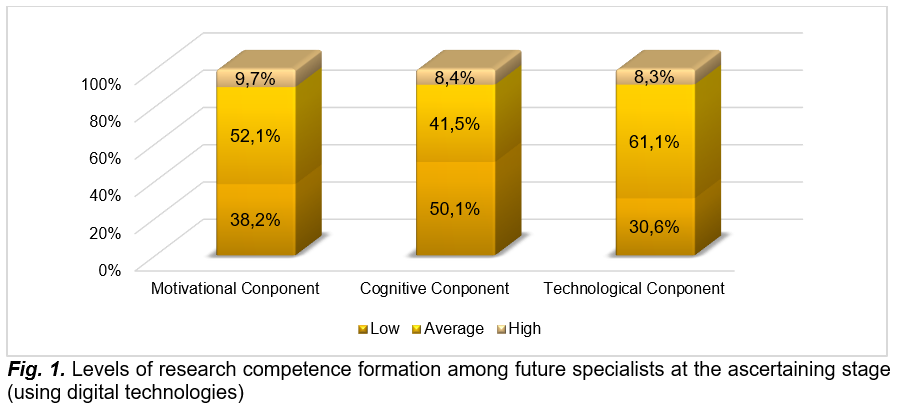
As we can see, most students have an average and low level of research competence in their future professional activities.
We formulated the following statistical hypotheses for the mathematical processing of the data obtained during the study, which were tested according to each criterion:
Null hypothesis (H0): the differences between the two distributions are not significant;
Alternative hypothesis (H1): the two distributions differ significantly.
We used the Kolmogorov-Smirnov λ-criterion to test the formulated hypotheses, allowing us to determine whether they are consistent and to compare the two empirical distributions. Calculations were performed using Microsoft Excel spreadsheets. The analysis of the calculation results at the 0.05 level indicates that the distributions of the students' scores are not statistically different.

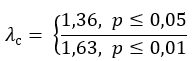

It is proven that there are no statistically significant differences between the respondents of the CG and EG in terms of the levels of formation of indicators and components of digital competence. That is, according to this studied characteristic, the groups (EG and CG) are similar to each other.
At the beginning of the experiment, the empirical value of Kolmogorov-Smirnov λ does not exceed the critical 1.36 for all criteria. Comparing the distributions of students, we found differences at the 0.05 level for all criteria (exceeding the critical value of 1.36 for the empirical Kolmogorov-Smirnov statistic λ). Calculations were performed using Microsoft Excel spreadsheets.
Based on the conducted research, we have identified the problem area of the formation of research competence in professional training through the use of digital technologies: the need to modernize the higher education system in connection with the expansion of the areas of use of digital technologies, digitalization processes in modern society, increasing the qualitative characteristics of the development of methodological computer-oriented training systems; insufficient formation of research competence through the use of digital technologies; introduction and implementation of reforms of the digitalization of higher education.
Thus, the conclusions obtained regarding the conducted ascertaining stage of the experiment (132 respondents were interviewed), which aimed to assess the current level of formation of research competence of students through the use of digital technologies in educational and professional activities, showed that the majority of students have a low and average level of formation of research competence.
Introduction of pedagogical technology for the formation of research competence in future specialists through the use of digital technologies, developed pedagogical conditions, and an author's special course
The presented results of the ascertaining stage of the experiment made it possible to develop and substantiate the need for a pedagogical technology for the formation of research competence in future specialists through the use of digital technologies, developed pedagogical conditions, and an author's special course in the educational and professional activities of specialists, and to select the appropriate tools for this purpose.
In the study of all subjects trained in higher education in the EG, we will focus on creating conditions for positive motivation to use digital technologies.
When developing the author's technology, the following approaches were used (competence, synergy, system, personality, axiological, situational) and principles (general: scientificity, strength of knowledge, adaptability, accessibility, manageability, individualization; specific: expediency of using digital technologies, use of software, visualization, clarity, gamification, identification, activity, interactivity of learning).
The choice of methods and forms used in the author's technology developed by us was based on their universality and interactivity, to involve all participants in the EG of the experimental study in the educational process. It was believed that such an approach would enable a high level of activity in the subjects' EGs. In particular, the following forms of the educational process were used: multimedia lecture, lecture-visualization, lecture-press conference, lecture-debate, binary lecture, master classes, trainings, seminar classes, round tables, virtual consultations, webinars, blended learning, and video conferences. The following teaching methods were effective: mobile learning interaction, brainstorming, interactive portfolio, problem-based case method, flipped learning, scribing, game design, and web-quest.
The following digital resources were selected for the implementation of EG technology: tools for working in real time: Genially, Sway, Zeetings, Canva, Classtime, Pear Deck, Classkick; tools for visualization: Genially, Padlet, H5p, Learningapps, Thinglink, Smore, Bitmoji; tools for organizing research work: Notion, Google Calendar, Wakelet, Exel, Google Chrome, Word; Internet services for using group research: Google Slides Presentation, Padlet; assessment programs: Liveworksheets, Wizer, Core, Classtime, Quizizz, Learningapps, Wordwall, Classtime, Kahoot, Triventy, Edpuzzle, Quillionz, Mentimeter; tools for implementing 3D technologies in research: Google Arts & Culture, Emaze, Learnis, Prezi; Internet services for creating interactive tasks: LearningApps, Genially, Quizlet, H5P, Wordwall, Playfactile, Baamboozle, Quizlet.
Analysis and interpretation of research results
We will present and analyze the results of experimental work on the implementation of pedagogical technology for the formation of research competence in future specialists through the use of digital technologies, developed pedagogical conditions, and an author's special course offered to EG during the students' studies at the university. The experimental work consisted of sequential, interrelated stages aimed at achieving the goal set at the beginning of the study.
At the first search stage, the study's goal was set, and the main directions of the analysis of the scientific literature were selected, which allowed us to investigate the conditions for the formation of research competence (principles, forms, and methods) and identify the main components: motivational, cognitive, and technological.
The experimental stage contributed to the development of criteria for the formation of research competence: motivational, gnostic, and activity. The levels and indicators of the problem under study (high, average, low) were described.
The declarative stage of the experiment involved an assessment of the existing level of research competence development.
The beginning of the creative stage was the development of a pedagogical technology for the formation of research competence in future specialists through the use of digital technologies, the establishment of pedagogical conditions, and an author's special course, during which approaches, criteria, and principles were identified.
The formative stage of the experiment, conducted after the development of pedagogical technology, conditions, and a special course, provided for their practical implementation in students' educational process to verify and confirm the research's effectiveness. 184 respondents with the same level of research competence, developed through the use of digital technologies, participated in the experiment. They were divided into two groups: control (CG) and experimental (EG).
The content of the pedagogical technology includes the developed pedagogical conditions:
We monitored the level of development of research competence through the use of digital technologies in educational and professional activities in the experimental and control groups, using all criteria. The final element was the statistical processing of the results.
We formulated the following statistical hypotheses to conduct a mathematical analysis of the research data we received.
Null (H0) hypothesis - the level of readiness for the formation of research competence through the use of digital technologies of the control group did not significantly differ from the level of readiness of students in the experimental group according to each assessment criterion, and the corresponding differences between the groups are due to random factors.
Alternative (H1) hypothesis: There are significant differences in readiness levels between the experimental and control groups for each assessment criterion.
We used the Kolmogorov-Smirnov λ-statistic to test the formulated hypotheses. Results of comparison of distributions of control and experimental groups of students, future teachers of humanities, by levels of readiness to use digital technologies in professional activities at the ascertaining and formative stages of the experiment. Calculations were performed in Microsoft Excel.
Analysis of the results of calculations at the 0.05 level between the experimental group and the control group for all criteria at the beginning of the experiment indicates a statistically insignificant difference. The empirical value of Kolmogorov-Smirnov λ does not exceed the critical 1.36.
When comparing the control group before and after the experiment, no statistically significant differences were identified, as the empirical value of the Kolmogorov–Smirnov test did not exceed the critical value (λcrit = 1.36).
In contrast, the comparison of the experimental group based on the results of the experiment revealed statistically significant differences. The empirical values of the Kolmogorov–Smirnov test (λ = 2.539; 2.878; 4.120; 3.136; 2.935) exceeded the critical value, confirming the effectiveness of the implemented pedagogical conditions.
Note that when comparing the distributions of the control and experimental groups before the experiment, we test the null hypothesis H0; after the experiment, we test the alternative hypothesis H1. Therefore, we conclude that at the beginning of the experiment, respondents in both groups had the same statistically indistinguishable level of formation of research competence through the use of digital technologies; however, at the end of the experiment in the EG, statistically significant dynamics are observed in the levels of formation of research competence for each of the components. No significant changes occurred in the control group.
Thus, we can say that the changes that occurred in the experimental groups are not accidental; the increase in the level of formation of research competence through the use of digital technologies in educational and professional activities is the result of the innovative pedagogical technology developed and introduced into the EG, the developed pedagogical conditions, and the author's special course.
Using the methodology described above, we will analyze the obtained EG results separately for each component.
Let us consider the level of formation of research competence of future specialists through the use of digital technologies for all components (formative stage).
The results showed that the number of respondents at the average and high levels increased, thereby reducing the percentage of respondents at the low level.
Table 2.
Levels of research competence formation among future specialists at the formative stage (using digital technologies)

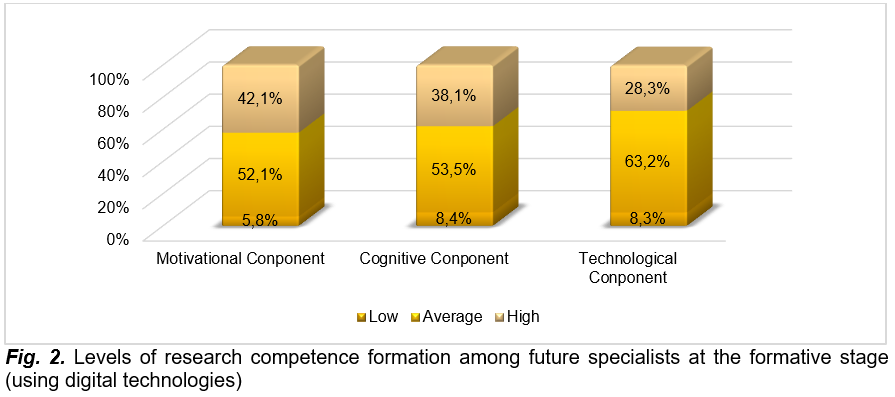
During the formative experiment, the experimental group showed significant increases in digital competence, whereas the control group showed practically no change.

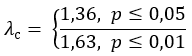
Regarding their statistical validity, in particular, the changes identified.
Thus, the analysis of the experimental results showed that in the EG, most respondents have a high and average level of formation of research competence through the use of digital technologies (formative stage based on the results of the experiment). In comparing the experimental and control groups, we observed significant differences according to all criteria for the formation of research competence at the 0.01 level (the empirical value of λ for the Kolmogorov-Smirnov test exceeds the critical value of 1.63). Regarding the comparison of the experimental group results, we observe significant differences (the empirical value of λ for the Kolmogorov-Smirnov test exceeds the critical value of 1.63). Therefore, the changes observed in the experimental groups are not accidental; the increase in the level of formation of research competence among students in these groups is the result of the pedagogical technology we proposed, the developed pedagogical conditions, and the author's special course.
The findings of this study provide empirical support for the effectiveness of an integrated pedagogical technology in developing research competence through digital technologies. While prior research has consistently emphasized the importance of digital tools and active learning strategies in fostering research-related skills, the present results extend this body of knowledge by demonstrating the added value of a holistic, multi-component pedagogical model.
Critical Comparison with Previous Studies
The significant improvements observed in the experimental group are consistent with previous intervention-based studies that highlight the role of problem-based and technology-supported learning in enhancing research competence (Paucar-Curasma et al., 2025; Winchez Aylas & Bejarano Alvarez, 2025). However, unlike these studies, which typically focus on isolated instructional strategies (e.g., problem-solving methods, flipped learning, or workshops), the present study implemented a comprehensive pedagogical technology integrating motivational, cognitive, and technological components. This integrated approach may explain the stronger and more systematic improvements observed across all components of research competence.
Furthermore, the results partially converge with Beaulieu et al. (2024), who emphasize reflective and boundary-spanning competencies in collaborative research contexts. While their framework is primarily organizational and practice-oriented, the present study demonstrates how such competencies can be pedagogically scaffolded within higher education through structured instructional design and targeted digital tools. In this respect, the current findings bridge a gap between conceptual models of research competence and their operationalization in formal educational settings.
The dominance of summative assessment practices identified by Espinoza-Montes et al. (2025) contrasts with the approach adopted in the present study, which embedded continuous monitoring and formative feedback within the pedagogical technology. The observed post-test gains suggest that aligning instructional strategies with formative-oriented assessment may be a critical factor in achieving sustainable development of research competence.
Interpretation of the Findings
The statistically significant gains in the experimental group across motivational, cognitive, and technological components indicate that research competence development is not solely a function of exposure to digital tools. Rather, the findings suggest that structured pedagogical conditions and purposeful instructional design mediate the impact of digital technologies. This supports theoretical perspectives that conceptualize competence as an integrative construct, combining knowledge, skills, values, and motivation, rather than as a purely technical capacity.
Importantly, the strongest gains were observed in components directly linked to active engagement and self-directed learning, suggesting that the pedagogical technology facilitated not only skill acquisition but also the internalization of research-oriented attitudes and practices. This finding aligns with constructivist and competence-based learning theories, which posit that sustained competence development requires meaningful learner participation and reflective engagement.
Original Contribution of the Study
The original contribution of this study lies in the development and empirical validation of a holistic pedagogical technology that systematically integrates digital tools, pedagogical conditions, and an author’s special course into a coherent instructional model. Unlike many previous studies that examine individual digital tools or isolated pedagogical techniques, this research offers a scalable and theoretically grounded framework for the formation of research competence in higher education.
Additionally, the study contributes methodologically by operationalizing research competence through a three-component structure (motivational, cognitive, technological) and by empirically testing changes using a quasi-experimental design. This provides a more nuanced understanding of how different dimensions of research competence respond to pedagogical intervention.
Methodological and Contextual Limitations
Despite these contributions, several limitations must be acknowledged. First, the quasi-experimental design, while appropriate for educational settings, limits the ability to draw strong causal inferences compared to fully randomized controlled trials. Second, the sample was drawn from a specific institutional and national context, which may restrict the generalizability of the findings to other educational systems or cultural environments.
Third, the measurement instruments relied in part on self-reported data and expert evaluations, which may be subject to response bias and subjectivity. Future studies should incorporate additional objective performance-based measures and longitudinal designs to examine the sustainability of the observed effects over time.
Finally, the intervention was implemented within a relatively defined academic period. Longer-term implementation and replication across disciplines would be necessary to assess the robustness and transferability of the proposed pedagogical technology.
Conclusions
This study examined the formation of research competence in future specialists through the use of digital technologies and provides empirical evidence for the effectiveness of an integrated pedagogical technology. The findings demonstrate that the systematic alignment of pedagogical conditions, instructional methods, and digital tools leads to statistically significant improvements in students’ motivational, cognitive, and technological components of research competence. These results suggest that research competence development is not achieved through the mere introduction of digital technologies, but rather through their pedagogically structured and theoretically grounded integration into the educational process.
The study makes an original contribution by developing and empirically validating a holistic pedagogical technology that integrates digital resources, an author’s special course, and clearly defined pedagogical conditions within a coherent instructional framework. Unlike previous studies that have primarily focused on isolated tools or individual teaching methods, this research offers a comprehensive model that operationalizes research competence as a multidimensional construct and demonstrates how its components can be systematically developed in higher education. This integrated approach represents a novel contribution to the literature on research competence and digital pedagogy.
At the same time, the results should be interpreted in light of several methodological and contextual limitations. The quasi-experimental design limits the strength of causal inferences, and the sample was drawn from a specific institutional and national context, which may restrict the transferability of the findings to other higher education systems. In addition, the reliance on a combination of self-reported measures and expert assessments may introduce subjective bias. The relatively limited duration of the intervention also constrains conclusions regarding the long-term sustainability of the observed effects.
Despite these limitations, the findings have important theoretical and practical implications. The results support competence-based and constructivist perspectives by demonstrating that integrated pedagogical design enhances not only technical skills but also motivational and cognitive dimensions of research competence. For practice, the study underscores the need for higher education institutions to move beyond fragmented uses of digital tools and to adopt comprehensive pedagogical technologies aligned with clearly articulated competence outcomes.
Future research should focus on replicating the proposed pedagogical technology in diverse institutional, disciplinary, and cultural contexts, as well as on conducting longitudinal studies to assess the durability of its effects. Such research would further clarify the generalizability and scalability of the model and contribute to the development of evidence-based strategies for fostering research competence in digitally transformed higher education environments.
Bibliographic references
Beaulieu, M., Rebolledo, C., & Lissillour, R. (2024). Collaborative research competencies in supply chain management: The role of boundary spanning and reflexivity. The International Journal of Logistics Management, 35(2), 305–331. https://doi.org/10.1108/IJLM-07-2022-0277
Chumpitaz Campos, L., & Lomba-Portela, L. (2024). Teaching of research competences in educators mediated by technology in higher education: Systematic review. Revista de Investigacion en Educacion, 22(2). https://doi.org/10.35869/reined.v22i2.5381
Espinoza-Montes, F., Cavero-Carrasco, J. R., García-Bautista, E. D. C., & Pucuhuaranga-Espinoza, T. N. (2025). Research competences in university education: A systematic review of assessment approaches and instruments. Prometeica, 32, e20087. https://doi.org/10.34024/prometeica.2025.32.20087
Gisbert Cervera, M., & Caena, F. (2022). Teachers’ digital competence for global teacher education. European Journal of Teacher Education, 45(4), 451–455. https://doi.org/10.1080/02619768.2022.2135855
González Ramírez, C., Cárdenas- Claros, M., & Venegas, R. (2024). Competencias de Investigación y Reflexión en Formación Inicial Docente. Revista Complutense de Educación, 35(2), 381-393. https://doi.org/10.5209/rced.85755
Lagunes, A., Judikis, J. C., & Flores, M. A. (2016). Development of a research competence in university students through blended learning. TOJET: The Turkish Online Journal of Educational Technology, 11(1), 668–673. https://acortar.link/FKnCne
Martzoukou, K., Fulton, C., Kostagiolas, P., & Lavranos, C. (2020). A study of higher education students' self-perceived digital competences for learning and everyday life online participation. Journal of Documentation, 76(6), 1413–1458. https://doi.org/10.1108/JD-03-2020-0041
Moncada, J. A., Báez-Morales, W. E., Zambrano, M. B., & Álvarez, S. R. (2025). Research competences addressed by university professors: Case of Universidad Técnica del Norte. Formación Universitaria, 18(2), 95–106. https://doi.org/10.4067/S0718-50062025000200095
Moreira, J. A., Nunes, C. S., & Casanova, D. (2023). Digital competence of higher education teachers at a distance learning university in Portugal. Computers, 12(9), 169. https://doi.org/10.3390/computers12090169
Padilla-Hernández, A. L., Gámiz-Sánchez, V. M., & Romero-López, M. A. (2020). Evolución de la competencia digital docente del profesorado universitario: incidentes críticos a partir de relatos de vida. EDUCAR, 56(1), 109–127. https://doi.org/10.5565/rev/educar.1088
Paucar-Curasma, R., Mercado Rivas, R. Y., & García Mendoza, P. J. (2025). Promoting Sustainable Research Competence Through a Problem-Solving Method and a STEM Educational Kit: A Case Study with Nursing Students at a Newly Established Public University in Peru. Sustainability, 17(16), 7381. https://doi.org/10.3390/su17167381
Peters, M., Elasri Ejjaberi, A., Jesús Martínez, M., & Fabregues, S. (2022). Teacher digital competence development in higher education: Overview of systematic reviews. Australasian Journal of Educational Technology, 38(3), 122–139. https://doi.org/10.14742/ajet.7543
Rodríguez, D. I. R., Loor, M. I. G., Correa, X. P. C., & Peñas-Moreno, M. C. (2024). Research competences focused on trainee teachers in early childhood education. Journal of Ecohumanism, 3(7), 4090–4100. https://doi.org/10.62754/joe.v3i7.4531
Serrano de Moreno, M. S., Castellanos Herrera, S. J., & Andrade, D. J. (2024). Competencias en investigación del profesorado universitario: Desafíos en la construcción de la cultura investigativa. Revista De Ciencias Sociales, 30(1), 381-397. https://doi.org/10.31876/rcs.v30i1.41662
Skakun, I. (2021). Digital competencies of the teacher of the future. Futurity Education, 1(2), 39–48. https://doi.org/10.57125/FED/2022.10.11.18
Winchez Aylas, C. L., & Bejarano Alvarez, P. (2025). Development of research competences in undergraduate students. International Journal of Evaluation and Research in Education (IJERE), 14(6), 4928–4936. https://doi.org/10.11591/ijere.v14i6.33724
Zapata Ancajima, J. C. (2022). E-research and technological research competence in teacher training. HUMAN REVIEW. International Humanities Review / Revista Internacional De Humanidades, 12(5), 1–11. https://www.historicoeagora.net/revHUMAN/article/view/3984
Zea, M. P. C., García, E. S., & González, C. G. (2021). The training of research competence mediated by ICT in university teachers. Universidad y Sociedad, 13(6), 51–58. https://acortar.link/o5Dc7Y
Zhao, Y., Pinto Llorente, A. M., & Sánchez Gómez, M. C. (2021). Digital competence in higher education research: A systematic literature review. Computers & Education, 168, 104212. https://doi.org/10.1016/j.compedu.2021.104212

Este artículo no presenta ningún conflicto de intereses. Este artículo está bajo la licencia Creative Commons Atribución 4.0 Internacional (CC BY 4.0). Se permite la reproducción, distribución y comunicación pública de la obra, así como la creación de obras derivadas, siempre que se cite la fuente original.